A viral video alleging that thousands of people died or disappeared at a detention facility in southern China sparked a wave of online discussion before it was swiftly censored. Several former detainees shared accounts of abuse in the facility that operated for decades.Posted online on April 8 by a Chinese blogger, the video identified a site in Dongguan city’s Zhangmutou township as a “mass grave” and called for an investigation into missing persons linked to a now-defunct detention facility there. The blogger estimated that between 1992 and 2003, at least several thousand people may have died, gone missing, or otherwise vanished after being detained at the facility.The Epoch Times could not independently verify the claims.The video spread rapidly across Chinese social media, prompting responses from netizens who said they had experienced the system firsthand. Within days, the related posts and discussions appeared to have been removed by Chinese censors.Accounts of Violence and Forced LaborThe facility, formally known as the Dongguan Zhangmutou Baoshan Custody and Repatriation Station, was once among the largest in the Pearl River Delta region. It primarily detained individuals—mainly rural migrant workers—lacking proper household registration (or “hukou”), identification documents, residency permits, or stable employment.Under the hukou system, citizens are formally registered at a specific locality, which determines access to public services such as education and health care. While people can relocate and work in larger cities, those without local registration often face significant barriers to accessing public benefits and services, particularly in major urban centers.China’s custody and repatriation system, in place from 1961 to 2003, allowed police to detain and return China’s domestic migrant workers to their registered hometowns without a formal judicial process. It was abolished after the 2003 death of Sun Zhigang, a migrant worker who was beaten to death in custody in Guangzhou, triggering national outrage.Although the custody and repatriation system was formally ended, some former detainees and rights advocates say similar forms of detention have persisted under different names.Five men who said they had been detained at the facility recently spoke to The Epoch Times on condition of anonymity out of fear of reprisal. They described harsh conditions, violence, and arbitrary detention.The first former detainee recalled that in 1995, he was detained because he lacked a temporary residence permit. He described being kept in a small room with more than 30 other people and surviving on limited food.He alleged that officers confiscated and destroyed his train ticket, which he said could have proved he had just arrived in Dongguan, and beat him when he could not produce it again. He was later sent to forced labor, including quarrying stone and working on railway construction, until a friend paid to bail him out.He said that many others never returned to their hometowns.“People used to say that millions came to Guangdong Province to work, but every village had someone who never returned,” he said.The second former detainee said he was detained twice around two decades ago and described a system in which detainees were fined or beaten if they could not pay.“People were picked up in industrial zones and sent to detention centers,” he added.The third former detainee said he had been detained multiple times in the 1990s and described frequent beatings that left some detainees seriously injured or dead. He also recounted being held at age 16 in a Guangzhou facility that he described as a “work-study class,” where detainees performed labor under harsh conditions.According to his account, such facilities served less as educational institutions and more as detention centers where violence was common. He said detainees were typically held for months at a time.The fourth former detainee said he was briefly detained as a teenager in 2002 while working at a factory in Dongguan. He said those who could pay the fine were released, while others remained in custody.The fifth former detainee said he spent three years in detention after being apprehended in Guangzhou in 1997. He described being assigned to daily manual labor, including quarrying stone used in infrastructure projects.An illustration of a labor camp in China. Courtesy of Minghui.orgAllegations Involving Falun Gong PractitionersSome overseas Chinese advocates have linked the detention system to the treatment of Falun Gong practitioners in China.Falun Gong, also known as Falun Dafa, is a spiritual discipline based on the principles of truthfulness, compassion, and tolerance. It was first introduced to the public in China in 1992 and quickly grew in popularity, with at least 70 million people taking up the practice by the decade’s end, according to official estimates at the time.In 1999, the Chinese Communist Party launched a brutal campaign to eradicate the practice, believing its popularity threatened the Party’s authority. Since then, according to the Falun Dafa Information Center, hundreds of thousands of practitioners have been detained and tortured, and thousands have died as a result of abuse while in custody. Due to strict censorship in China, the true death toll is difficult to determine; it is likely far higher.Lucy Zhao, president of the Falun Dafa Association of Australia, told The Epoch Times that in addition to being held in prisons and detention centers, some practitioners were also sent to custody and repatriation facilities or forced to live in hiding. She said that during the early years of the persecution, some individuals who traveled to Beijing to petition the authorities to end the persecution later went missing and may have been among those detained in such facilities.According to Minghui.org, a U.S.-based website that tracks the persecution of Falun Gong practitioners in China, in 2000, detainees at a facility in Guangzhou were subjected to abuse, including beatings with electric batons and pepper spray. The report also described detainees being held in overcrowded rooms for extended periods.The recent video prompted widespread discussion online, with some users sharing memories of the system. By April 15, however, The Epoch Times found that searches related to Zhangmutou and the custody system returned limited results on major Chinese platforms.While the custody and repatriation system was abolished more than two decades ago, one rights advocate said its legacy remains contested.Wu Shaoping, a U.S.-based Chinese human rights lawyer, told the publication that the former system was inherently abusive and that similar practices could continue in different forms, such as in state-run assistance centers. He also raised broader concerns about reports of missing persons in China in recent years.Falun Gong practitioners are forced to watch Communist Party propaganda at a brainwashing session at a center run by the “610 Office,” which spearheaded the persecution campaign against Falun Gong. Courtesy of the Falun Dafa Information CenterA 2020 official report on missing persons in China estimated that about 1 million cases were recorded that year, according to Chinese media Consumption Daily via state-run outlet China Daily. However, due to the Chinese authorities’ past record of underreporting and covering up information, it is difficult to confirm the veracity of the numbers.Further, China does not publicly maintain detailed figures on deaths or disappearances linked to the former custody system, and allegations surrounding the Zhangmutou facility remain censored, leaving many claims unresolved and difficult to verify.Tang Bing, Gu Xiaohua, and Luo Ya contributed to this report.

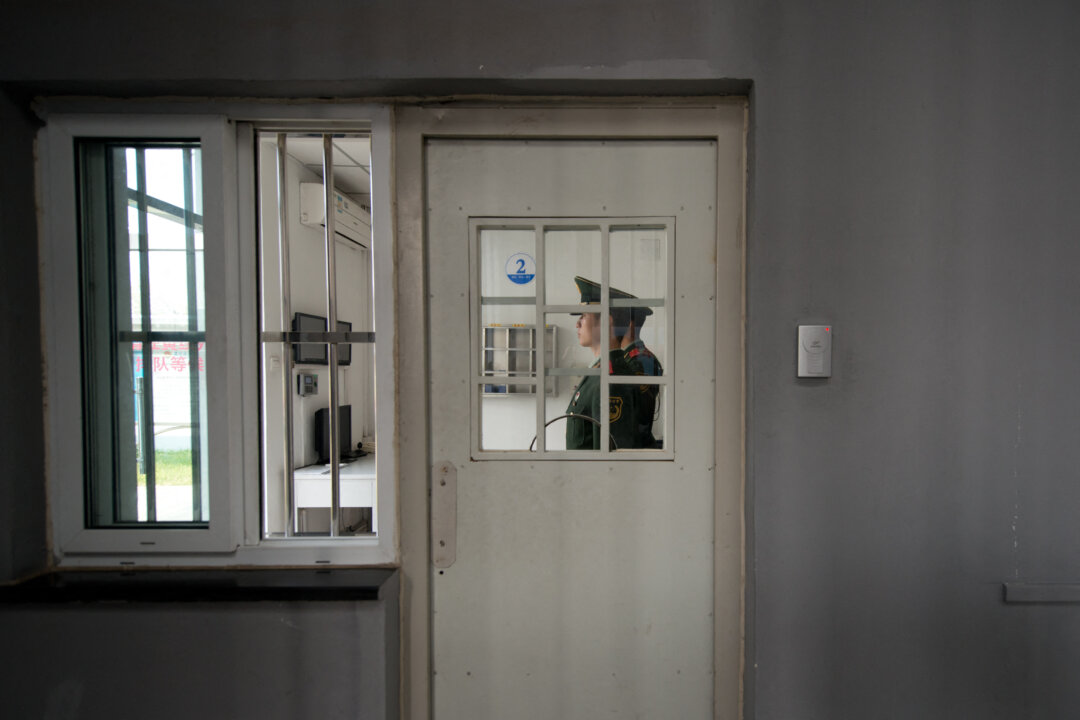
Viral Video Revives Allegations of Abuse and Missing Detainees in Southern China

![[replay]-trump:-“permanently-opening-the-strait”-china-cuts-iran,-whistleblower-goes-criminal](https://thealliancepress.com/wp-content/uploads/2026/04/47361-replay-trump-permanently-opening-the-strait-china-cuts-iran-whistleblower-goes-criminal-150x150.jpg)







Related Articles
China Business & EconomyChina NewsChina Technology
China Tech Index Plunges More Than 40 Percent From July Peak
China’s technology-heavy STAR 50 index has fallen by more than 40 percent...
China Military NewsChina NewsChinese RegimeInside CCP OfficialdomSpecial TopicsZhang Youxia
Xi Opens CCP Plenum Amid Sweeping Purges, Record-Low Attendance Forecast
Chinese Communist Party leader Xi Jinping opened a four-day meeting of senior...

China Business & EconomyChina NewsChinese RegimeFinance & Business TiesInside CCP OfficialdomSpecial Topics
Chinas Economic Woes Deepen as CCP Plenum Focuses on Political Control
The Chinese Communist Party (CCP) opened a four-day leadership meeting in Beijing...



China NewsEuropeGlobalUK NewsWorld News
UK Must Be Ready for War in 1,000 Days, Says British Defense Secretary
British Defense Secretary Wes Streeting has said the country must be ready...
