The United States will aid European NATO allies in the defense of the Baltic region, a U.S. general has said, as the alliance seeks to bolster the security of its eastern flank amid concerns of potential Russian aggression. “You’re ready to do more and following words with action, and the United States will be there alongside you,” Gen. Christopher Donahue said on June 30 during a ceremony in Valga, Estonia, as NATO assigned an additional headquarters to the Baltic region. “That is how deterrence is built: Not with words from a podium, but with boots in the mud,” said Donahue, commanding general of the U.S. Army Europe and Africa. Donahue, who has a background in special operations, is vacating his post on July 2. NATO troops in the Baltic states of Estonia, Latvia, and Lithuania, and in northern Poland, have been under the command of a single multinational headquarters based in the northwestern Polish city of Szczecin: the Multinational Corps North East.Multinational Corps North East has around 20 contributing NATO members. It was set up in 2017 in response to Russia’s 2014 annexation of Crimea.In May, the German and Dutch defense ministries announced that they would take command of a new, second multinational headquarters, under the 1 German-Netherlands Corps (1GNC), based in the German town of Muenster. The 1 German-Netherlands Corps states it will assume the command role specifically in the region of Estonia and Latvia. In its role, 1 German-Netherlands Corps will be responsible for directing exercises and other activities to prepare for conflict, and in the event of conflict, defending the eastern flank.German Defense Minister Boris Pistorius, who was also present in Valga, said that the shift in the security alliance’s posture “is a visible and strong demonstration of NATO’s unity, readiness, and of our collective determination to defend every inch of Allied territory.” NATO has said Russia could launch a major assault on allied territory as early as 2029, if its armament efforts persist—an intention that Moscow denies.New Era of WarfareAllies in Europe have been particularly incentivized to boost their own security since the start of the Russia–Ukraine war in 2022.Last week, however, senior military officials said that Europe needed to rethink its defense strategies to match current and future warfare tactics. Speaking at a defense conference in London, NATO’s deputy supreme allied commander in Europe, Air Chief Marshal Sir Johnny Stringer, said there needs to be a shift towards mass-producing low-cost equipment, including drones and interceptors, while becoming less reliant on more expensive arms that take longer to produce. Other priorities should include electromagnetic warfare, boosting air defense, and the ability to conduct deep precision strikes, he said. Stringer told the conference hosted by the Royal United Services Institute, a British defense and security think tank, that “the threat we face is at 360 degrees.” “We need to be looking much further north now in terms of the ranges where we’re needing to deal with Russian long-range aviation and with a potent surface and subsurface threat, most obviously from the [Russian navy’s] Northern Fleet,” he said. German army commander Lt. Gen. Christian Freuding, also speaking at the Royal United Services Institute, said that land warfare is “fundamentally changing,” and that in addition to increasing military spending and speeding up procurement, “we must fundamentally adapt how we will fight.”US Reorients Defense PrioritiesPressure on European NATO members to take more responsibility for their own defense has mounted following criticism from President Donald Trump, who has accused the bloc of not pulling its military weight. Trump has long been an advocate for the other members of the alliance to take more practical and financial responsibility for collective defense.In June last year, allies committed to increasing defense spending to 5 percent of gross domestic product (GDP) by 2035 and have been actively developing their security and defense strategies.NATO Secretary-General Mark Rutte said last week that allies are set to reaffirm their commitment to the defense alliance and announce billions in defense spending during July’s summit in Ankara, Turkey.He said that since NATO set the 5 percent of GDP target, allies have already been working to increase their defense spending. The drive for Europe to do more to secure its own defense also comes as the United States reorients its defense and security priorities. The United States has already ordered a troop drawdown from Germany.The Pentagon, on Jan. 23, released its National Defense Strategy, which outlines the U.S. plan to prioritize homeland defense, including by “defending America’s interests throughout the Western Hemisphere.”It also stated that the United States would encourage partners in other parts of the world, including Europe, to take primary responsibility for their own defense “with critical but limited support from U.S. forces.”Reuters contributed to this report.

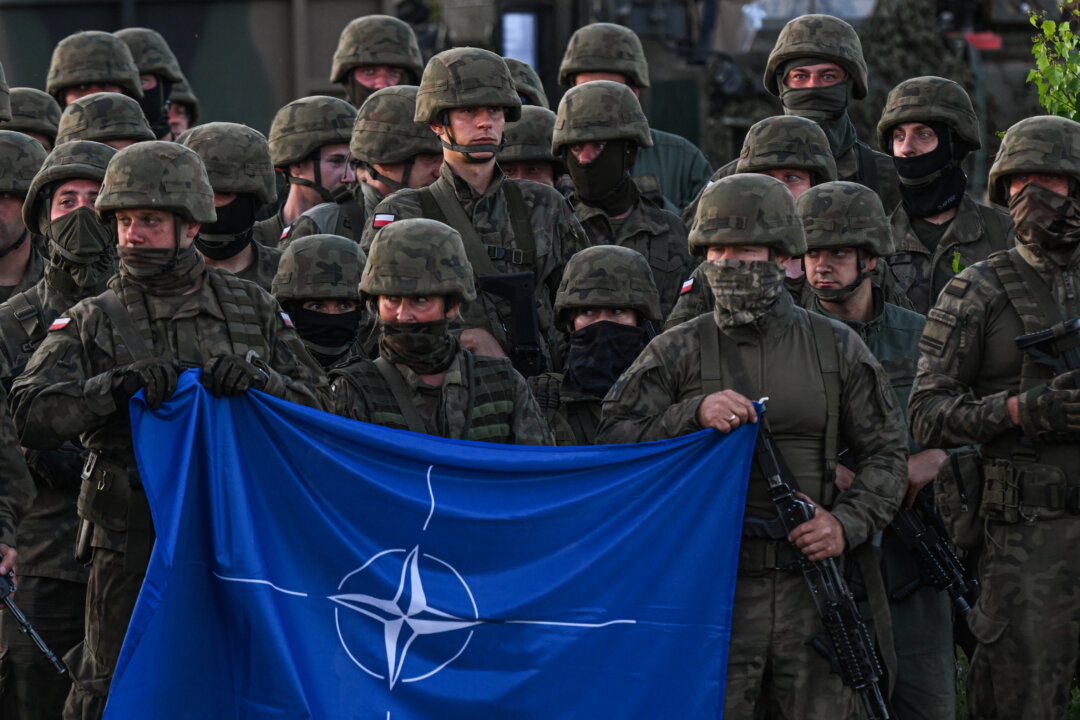
US General Affirms Support for European NATO Allies in Defense of Baltics









Related Articles

EuropeThe Final wakeup call
Lula wins a miracle election in Brazil. Now comes the hard part: putting the country back on the right track
Three weeks ago, Brazilian President Luiz Inácio Lula da Silva’s political obituaries...

EuropeThe Final wakeup call
US midterms: what a new Congress could and could not change for Europe
US midterm elections traditionally attract fewer voters than presidential contests. But this...

EuropeThe Final wakeup call
Political power without balance leads to the erosion of democracy, what Montesquieu can teach modern-day France
KEY TAKEAWAYS Democratic erosion does not start by doing away with elections;...



China Business & EconomyChina NewsChina Technology
China Tech Index Plunges More Than 40 Percent From July Peak
China’s technology-heavy STAR 50 index has fallen by more than 40 percent...
