The Chinese Communist Party (CCP) has removed 14 delegates from China’s rubber-stamp legislature in an expanding political purge aimed less at fighting corruption than consolidating loyalty ahead of the Party’s next leadership reshuffle, analysts say.The Standing Committee of China’s National People’s Congress (NPC) announced on June 26 via state media Xinhua News Agency that the delegates’ qualifications had been terminated following its latest session in Beijing. More than one-third of those removed were senior military figures, while the list also included Politburo member and former Xinjiang Party Secretary Ma Xingrui.The latest removals continue a years-long campaign that has swept through both the military and civilian bureaucracy. Analysts interviewed by The Epoch Times say the pattern increasingly suggests the campaign is evolving into a broader effort to eliminate potential political rivals before the CCP’s 21st National Congress, expected in 2027.According to Xinhua News Agency, the officials stripped of their NPC delegate status include former provincial and municipal leaders as well as six military officials.The official announcement also stated that former Chongqing Vice Mayor and Public Security Bureau chief Zhang Anjiang’s delegate status had ended following his death from illness. However, unverified reports circulating online have claimed Zhang died after falling from the 15th floor of the Chongqing Public Security Bureau building on May 7.High-Profile Military Figures Remain UntouchedThe latest announcement also drew attention to who was not included.Former Central Military Commission Vice Chairman Zhang Youxia and former Chief of the Joint Staff Department Liu Zhenli, both of whom the CCP announced were under investigation in January, were absent from the list despite four separate NPC Standing Committee meetings this year removing other delegates.Both men also continue to appear on the NPC’s official roster of delegates representing the People’s Liberation Army (PLA) and the People’s Armed Police.The omission has fueled speculation over the timing and political calculations surrounding Chinese leader Xi Jinping’s military reshuffle.Since the current 14th NPC was established in 2023, 42 senior military officers have lost their delegate status, including 19 full generals, 17 lieutenant generals, and six major generals.Shift From Anti-Corruption to Political ConsolidationSu Tzu-yun, a Taiwanese researcher at the Institute for National Defense and Security Research, told The Epoch Times the latest removals represent another stage in an ongoing political campaign rather than a routine anti-corruption effort.He said the purge can only be understood within what he described as the CCP’s political system, where independent legislative, judicial, and media oversight is absent.“China has no independent legislature, no independent judiciary, and no independent media,” Su said. “Within such a system, whether officials rise or fall ultimately serves political objectives. Allegations of wrongdoing are therefore widely viewed through the lens of political struggle.”Su said Xi appears to be treating senior military leaders differently from civilian officials because mishandling influential generals could provoke resistance from within the armed forces.In his view, Xi’s priorities remain clear—political control comes first, while the military, security apparatus, propaganda system, and economic institutions all ultimately serve that political objective.He expects the current purge to continue until at least the CCP’s Fourth Plenum later this year, when personnel arrangements for the 21st National Congress are expected to become clearer.Personnel Reshuffle May Extend Beyond Next Party CongressMark Cao, a U.S.-based military analyst and host of the Chinese-language YouTube channel Mark Space, told The Epoch Times that the campaign has evolved beyond its original anti-corruption narrative and is now primarily focused on ensuring political loyalty.“Xi Jinping is thinking about remaining in power over the long term,” he said. “He is no longer governing as though he plans to step down after another term or two.”Cao said the fact that Politburo member Ma Xingrui was publicly removed before Zhang Youxia and Liu Zhenli suggests that political considerations—not simply the sequence of disciplinary investigations—are driving the process.He believes Xi’s ultimate objective is to clear potential obstacles ahead of the 21st and even the 22nd National Congress by reshaping both the military and civilian leadership.Cao also pointed to recent propaganda from state media praising the CCP’s “Three Major Transformations”—the socialist campaigns of the 1950s that nationalized private industry—as a sign of the leadership’s broader ideological direction.He argued that Xi increasingly views market-oriented reforms as a source of corruption, and said the leadership intends to further weaken the private sector in favor of greater state control.According to Cao, the broader goal is not simply personnel changes, but a comprehensive restructuring of China’s political and economic system that moves the country closer to the centralized governance model associated with former CCP leader Mao Zedong’s era.Li Jing and Luo Ya contributed to this report.

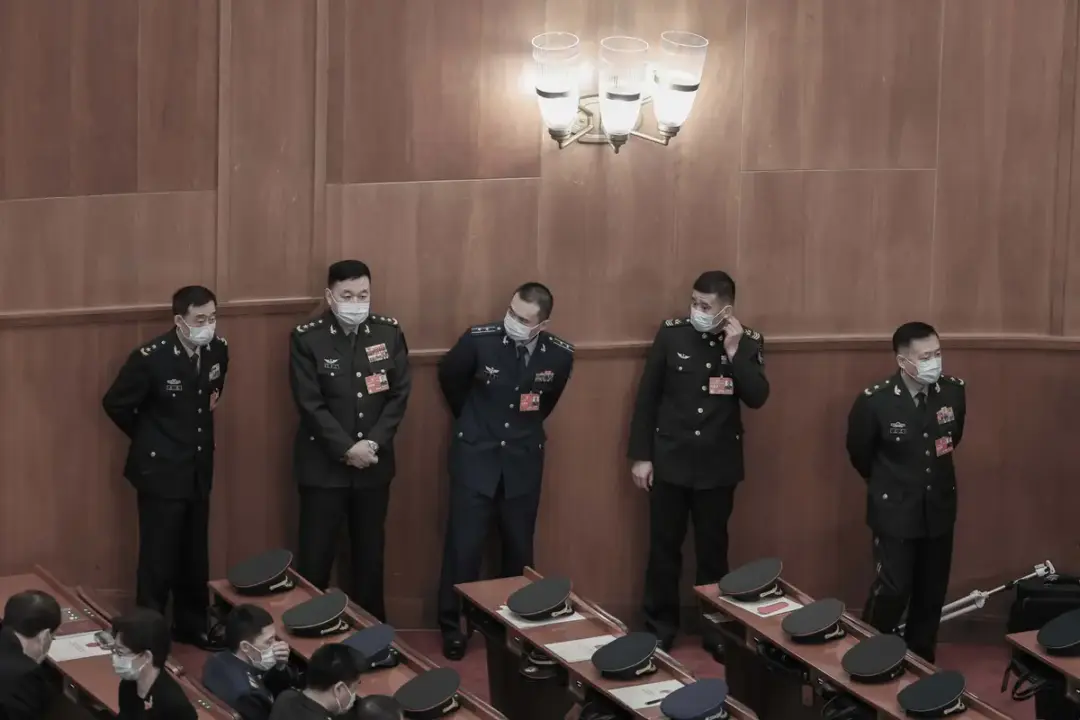
Latest CCP Purge Suggests Xi Is Clearing the Way for Next Leadership Congress, Analysts Say








Related Articles

China Business & EconomyChina NewsChina Technology
China Tech Index Plunges More Than 40 Percent From July Peak
China’s technology-heavy STAR 50 index has fallen by more than 40 percent...
China Military NewsChina NewsChinese RegimeInside CCP OfficialdomSpecial TopicsZhang Youxia
Xi Opens CCP Plenum Amid Sweeping Purges, Record-Low Attendance Forecast
Chinese Communist Party leader Xi Jinping opened a four-day meeting of senior...
China Business & EconomyChina NewsChinese RegimeFinance & Business TiesInside CCP OfficialdomSpecial Topics
Chinas Economic Woes Deepen as CCP Plenum Focuses on Political Control
The Chinese Communist Party (CCP) opened a four-day leadership meeting in Beijing...


China NewsEuropeGlobalUK NewsWorld News
UK Must Be Ready for War in 1,000 Days, Says British Defense Secretary
British Defense Secretary Wes Streeting has said the country must be ready...
