U.S. Trade Representative Jamieson Greer said Washington is looking “very closely” at a record 3 billion euro ($3.4 billion) European Investment Bank (EIB) loan package for Airbus, saying the United States would act if the European Union was providing unfair loans to the European planemaker.Airbus and Boeing have been at the center of a nearly two-decade dispute over government support, with the United States and the European Union accusing each other of providing illegal subsidies to their aircraft manufacturers before agreeing in 2021 to suspend retaliatory tariffs.Speaking to CNBC on July 21, Greer said he had “made representations” to his counterpart at the European Commission and that the administration was discussing the matter with Boeing.Greer said the United States welcomed competition but wanted U.S. companies to compete “on a level playing field.”“If the European Union is giving unfair loans, then we need to take care of it and address it,” Greer added.The EIB, the EU’s lending arm, announced the package on June 29 and said it is meant to support research and development across Europe’s aerospace sector, with projects located in France, Germany and Spain.EIB President Nadia Calvino called it a “flagship operation” at a signing ceremony in Brussels, saying it showed “Europe can move with speed and at scale to support its champions.”The loan is the largest corporate financing package the EIB has ever authorized.DisagreementThe latest disagreement follows nearly two decades of litigation over government support for the two aircraft manufacturers.The dispute began in October 2004, when the United States and the European Union each filed complaints at the World Trade Organization (WTO), accusing the other of illegally subsidizing its aircraft industry.Washington argued Airbus had benefited from government-backed “launch aid” loans and financial support from France, Germany, Spain, and the United Kingdom. Brussels alleged Boeing had received illegal subsidies through NASA and Pentagon research contracts as well as tax incentives from U.S. states.A Boeing logo displayed before the opening of the 55th International Paris Airshow at Le Bourget Airport near Paris on June 13, 2025. Benoit Tessier/ReutersAfter years of legal rulings, the WTO authorized the United States in 2019 to impose tariffs on about $7.5 billion worth of European goods.In 2020, the WTO authorized the European Union to impose tariffs on about $4 billion of U.S. exports, allowing both parties to levy duties on products ranging from aircraft parts to food and industrial goods.The United States and EU stepped back from the dispute in 2021, when the Understanding on a Cooperative Framework for Large Civil Aircraft (LCA) was reached.In March 2021, the EU and United States agreed to suspend for four months all retaliatory tariffs imposed in the disputes.A five-year suspension was agreed on June 15, 2021, and the European Commission then adopted a measure in July 2021 to extend the suspension until July 10, 2026.This month, the commission extended the EU suspension, saying that the United States had not reimposed countermeasures and there is no “substantive change in the factual and legal circumstances underlying the WTO disputes on large civil aircraft.”A European Commission spokesperson told The Epoch Times in a July 22 emailed statement that the EIB loan is “unrelated to the agreed extension of the LCA truce, and should not affect that extension.”The spokesperson said the EIB and Airbus had signed a 1 billion-euro ($1.1 billion) loan as part of a broader 3 billion-euro ($3.4 billion) financing package to support research, development, and innovation in the European aerospace sector.“This funding is granted by the EIB under the so-called Article 19 EIB loan mechanism and is not a subsidy. This repayable loan was provided on market-terms; it is not a grant or other form of financial assistance that would amount to a subsidy,” the spokesperson added.Strong Demand, Production OutlookAirbus CEO Guillaume Faury told Bloomberg TV on July 20 that demand for commercial aircraft remained strong despite geopolitical tensions and higher oil prices, adding that the Middle East conflict was “actually fuelling some demand because [the] price of oil is very high, and fully efficient aircraft are in more demand.”Faury also said Airbus remained on track to deliver around 870 aircraft this year and had “absolutely no doubt” it would reach its target production rate of 75 A320-family aircraft a month.Looking ahead, Faury said Airbus planned to launch its next-generation single-aisle aircraft around 2030 for entry into service in the second half of the next decade.A Delta Air Lines Airbus A220 airplane prepares to take off at Ronald Reagan Washington National Airport in Arlington, Va., on July 10, 2025. Saul Loeb/AFP via Getty ImagesBoeing CEO Kelly Ortberg said on July 20 that the company was making progress as it worked to restore production and rebuild confidence.He said Boeing was increasing production across several aircraft programs while demand remained strong.Boeing has aspirations to increase monthly 737 production from 47 to 63 aircraft and raise 787 production from eight aircraft a month to 10 later this year, before increasing it further, Ortberg said.Despite geopolitical tensions and higher oil prices, Ortberg described aviation as a “super resilient market” and said Boeing continued to forecast demand for about 44,000 new aircraft over the next 20 years.The Epoch Times reached out to Boeing and the Office of the U.S. Trade Representative for comment but did not receive a response by publication time.

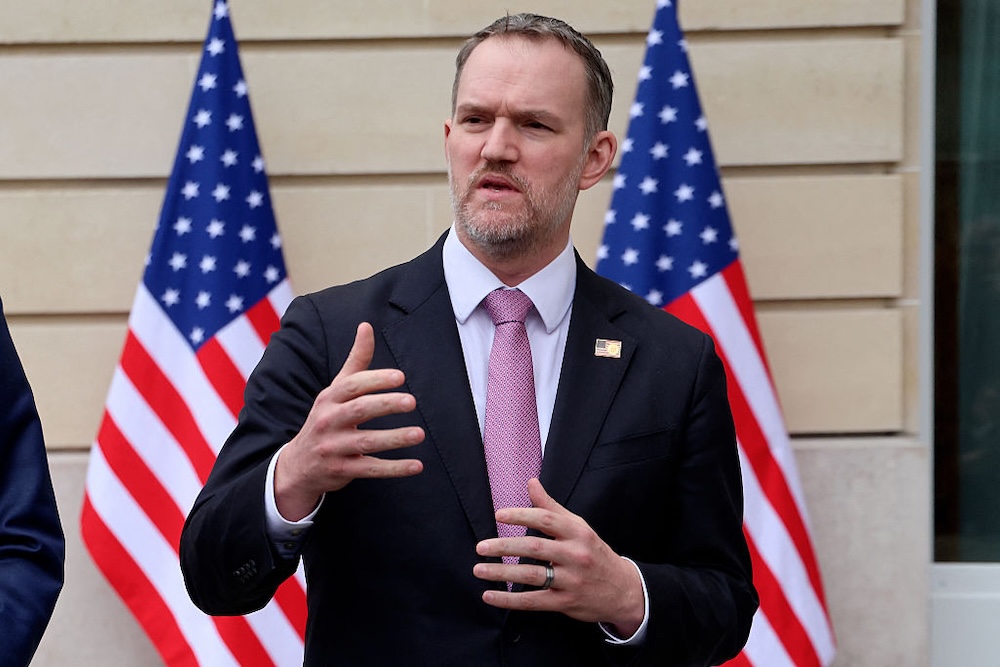
Greer Says US Could Act Over $3.4 Billion EU Airbus Loan








Related Articles

EuropeThe Final wakeup call
Lula wins a miracle election in Brazil. Now comes the hard part: putting the country back on the right track
Three weeks ago, Brazilian President Luiz Inácio Lula da Silva’s political obituaries...
EuropeThe Final wakeup call
US midterms: what a new Congress could and could not change for Europe
US midterm elections traditionally attract fewer voters than presidential contests. But this...

EuropeThe Final wakeup call
Political power without balance leads to the erosion of democracy, what Montesquieu can teach modern-day France
KEY TAKEAWAYS Democratic erosion does not start by doing away with elections;...


China Business & EconomyChina NewsChina Technology
China Tech Index Plunges More Than 40 Percent From July Peak
China’s technology-heavy STAR 50 index has fallen by more than 40 percent...
