China is showcasing humanoid robots as symbols of its technological ambitions. However, as the industry moves from flashy demonstrations toward commercial deployment, investors and experts are questioning whether the technology is advancing as quickly as the hype surrounding it.More than 2,000 humanoid robots from 16 countries competed in Beijing from Aug. 22 to Aug. 26 at the second World Humanoid Robot Games. The robots raced, jumped, played sports, and performed other feats, offering a high-profile showcase of China’s rapidly developing robotics industry.Yet at almost the same time, investors were sending a very different signal.Unitree Robotics, widely regarded as China’s leading humanoid robotics company, made its debut on the Shanghai Stock Exchange’s STAR Market on Aug. 19. Its shares surged nearly sixfold on the first day before retreating sharply. By Aug. 28, the stock had fallen about 46 percent from its listing-day peak, erasing more than 200 billion yuan ($30 billion) in market value.The dramatic reversal has raised questions over whether China’s humanoid robotics boom reflects technological progress or a speculative rush ahead of the industry’s ability to generate profits.Several experts interviewed by The Epoch Times said humanoid robotics remains a long-term technological race rather than a short-term sprint. The technology combines AI, computing, sensors, mechanical engineering, materials science, and complex supply chains.“Humanoid robots are not a sprint. They are like quantum computers—they are a marathon,” Hsueh Tsung‑chih, a former procurement manager at the world’s leading chipmaker, Taiwan Semiconductor Manufacturing Company (TSMC), told The Epoch Times.“If you expect humanoid robots to be running everywhere in two or three years, entering ordinary homes, doing things for us and serving coffee, you will definitely be disappointed.”From Spectacle to Useful WorkChina has made humanoid robots increasingly visible to the public.Earlier this year, robots performed martial-arts movements and elaborate dances during the annual Lunar New Year television gala.At the Beijing games, Chinese media outlet Red Star News reported via news portal NetEase that one China-developed robot beat the men’s 100-meter world record set at the 2009 World Athletics Championships by 0.19 seconds. However, after sprinting at full speed and crashing into a padded barrier, the robot fell and had to be carried away.Another robot fell during a spinning-kick demonstration.Taiwanese aerospace scientist Chen Yen-sheng told The Epoch Times the frequent falls expose weaknesses in the robots’ control systems.Robots still have difficulty determining how to prevent themselves from falling, Chen said. Some suffer serious damage after falling, suggesting they also lack the ability to anticipate physical damage or determine how to fall safely.“Therefore, Chinese manufacturers are still a long way from achieving mature designs,” he said.Yu Tsung-chi, former dean at Taiwan’s National Defense University, told The Epoch Times that a critical question is whether robots can develop what he called a “humanoid brain”—the ability to interpret their surroundings intelligently and make rapid decisions through computing.Their cost will also be crucial, Yu said. He compared the potential development of China’s humanoid robotics industry with DJI, the Chinese company that became the world’s largest consumer-drone manufacturer.“Unitree could very likely become another DJI in humanoid robots in the future,” he said.However, becoming a major manufacturer is not the same as achieving widespread commercial use.Reuters on Aug. 27 cited six industry executives and researchers who said China-based manufacturers have achieved world-class hardware, but their robots still lack the intelligence needed for general-purpose tasks. They struggle particularly when situations require intuitive judgment or a departure from preprogrammed instructions.Billions in Investment, Uncertain Returns Beijing has poured substantial resources into the sector. By 2025, the Chinese regime had provided more than $20 billion in direct subsidies for humanoid robots and related technologies.Yu said the industry remains heavily dependent on government support, with much of the investment effectively “buying expectations about the future.”“When they discover that the expectations are actually still far away, and that the gap is still very large, it will gradually become a bubble,” he said.Hsueh described the broader investment frenzy as short-term hype.“There are a lot of people frantically rushing in to invest. This is indeed a bubble because it is short-term hype,” he said. “It is like bidding for an antique at an auction—you just keep raising the bid, without a third party saying what it should actually be worth.”Chen said many companies could eventually be eliminated as the market matures.“After this wave of enthusiasm, there will definitely be many companies eliminated by the market,” he said.Fei Zhen contributed to this report.

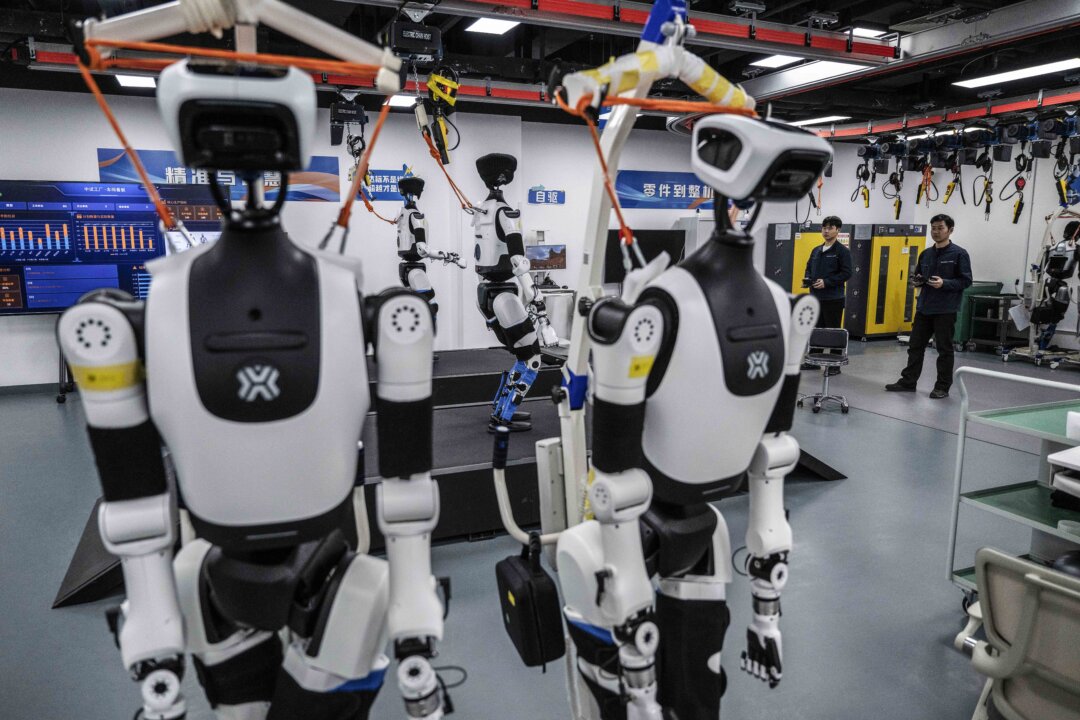
Chinas Humanoid Robot Companies Face Reality Check









Related Articles

China News
Americans at Serious Risk of Wrongful Detention in China: State Department
The State Department is warning Americans living in or traveling to China...

and CoercionAttacksAustralia Featured NewsAustralia NewsAustralia Top NewsChina NewsChina-Australia RelationsInfluence Operations and EspionageInternational RelationsThreatsTransnational RepressionWorld News
US Embassy Condemns CCP-Linked Transnational Repression in Australia
Dave Brat, dean of Liberty University's School of Business, in Washington on...

Asia & PacificChina NewsChinese RegimeGlobalUSUS NewsWorld News
Chinas Transplant System Masks Human Rights Abuses, Report Finds
Doctors in China are more likely to stay silent in the face...



China NewsEuropeGlobalRussia-Ukraine WarWorld News
NATO to Increase Black Sea Presence Following Drone Attacks on Shipping
NATO will send additional military equipment and aircraft to the Black Sea,...
