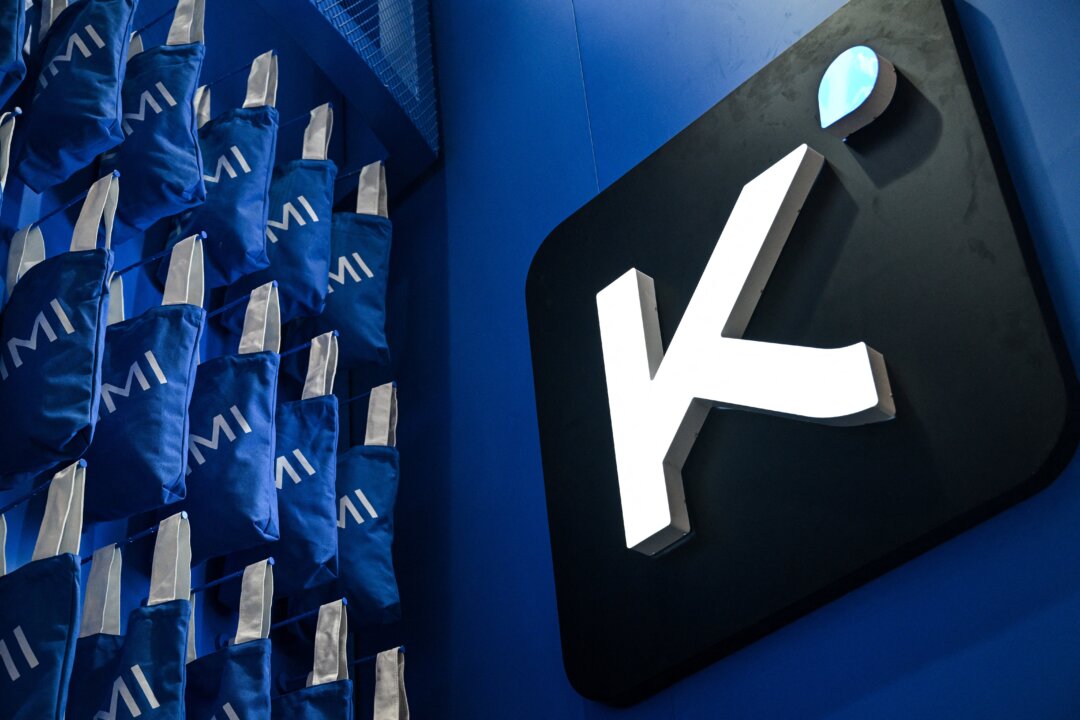
Last week, a new Chinese artificial intelligence (AI) model called Kimi K3 outranked the most powerful systems from the United States on a widely watched coding test. Its arrival sent chip stocks tumbling in Asia and the United States. Days later, the company that built it could not keep the model running for new users.On July 19, the Beijing-based startup Moonshot AI said it had paused new subscriptions to Kimi K3 because demand in the model’s first 48 hours had pushed its computing power close to its limits.The step highlighted a gap at the center of China’s AI drive: Its firms can now build systems that match the world’s best, but U.S. controls have restricted their access to the advanced chips needed to run those systems at scale.Moonshot announced the pause in a message to users on X. It said demand over the previous two days had come close to the limits of its capacity, and that its graphics processing units (GPUs)—the specialized chips that run AI models—were under strain. Existing paying subscribers would keep their access while the company added capacity and reopened new sign-ups in stages, it said.Moonshot also said it would split its paid plans, charging new users separately for its main Kimi product and its coding tool.A Model That Shook MarketsMoonshot released Kimi K3 on July 16 and showed it off at the World Artificial Intelligence Conference in Shanghai. The company described it as the largest openly available AI model ever built, with 2.8 trillion parameters, the internal settings a model uses to weigh information. It could take in about a million tokens—the chunks of text a model reads—in a single request, enough to hold an entire software project at once.People visit the Moonshot AI stand, featuring the Kimi K3 model, during the World Artificial Intelligence Conference in Shanghai on July 18, 2026. Hector Retamal/AFP via Getty ImagesMoonshot said the model performed on par with Anthropic’s Claude Fable 5, one of the most capable systems available, and outperformed OpenAI’s GPT-5.6 Sol and Anthropic’s Claude Opus 4.8. On Arena.AI, an independent site that ranks AI models, Kimi K3 took the top spot for front-end coding, ahead of the leading American systems.It also costs far less. Moonshot charged about $3 for every million tokens fed into the model and $15 for every million it produced, compared with roughly $50 for the same volume of output from Fable 5.The launch unsettled investors. Taiwan Semiconductor Manufacturing Co. (TSMC), the world’s largest contract chipmaker, fell about 7 percent on July 17, even after reporting a 77 percent jump in quarterly operating profit. SoftBank, the Japanese group closely tied to OpenAI, dropped about 9 percent, and technology shares slid on Wall Street.Investors worried that if a Chinese company could match the best American models at a fraction of the cost, the vast sums U.S. firms spend on computing power might not secure their lead.It was the second time in about 18 months that a Chinese model jolted the market. In early 2025, the release of a system from another Chinese startup, DeepSeek, wiped some $600 billion from the value of chip giant Nvidia in a single day, on fears that AI would need less computing power than investors had assumed.DeepSeek had matched leading U.S. models at a fraction of their cost. Its success also drew accusations that it had copied American work to get there.White House AI czar David Sacks said there was “substantial evidence” that DeepSeek had distilled knowledge from OpenAI’s models—using their answers to train its own—and he called such systems “copycat models.”OpenAI later told a U.S. congressional committee that DeepSeek was working to “free-ride on the capabilities developed by OpenAI and other U.S. frontier labs.” DeepSeek did not respond to the accusations.A Chip CeilingThe subscription freeze pointed to the other side of that story. Chinese firms have made fast progress in building advanced models, but they must do so under U.S. rules that block the sale of the most powerful chips and chipmaking equipment to China. Some users had already reported that Kimi K3 ran noticeably slower than leading American models.Kimi K3 is one of several Chinese models challenging U.S. leaders this year. DeepSeek has put out an updated system, and Alibaba previewed a model, Qwen 3.8, it says ranks just behind Fable 5, though it has published no independent results to back the claim.Moonshot said it planned to release the full version of Kimi K3 on July 27, letting anyone download and run it free. The company did not say when it would take on new subscribers again.

Chinas New AI Rivaled Americas Best, Then Ran Short of Computing Power









Related Articles
China Business & EconomyChina NewsChina Technology
China Tech Index Plunges More Than 40 Percent From July Peak
China’s technology-heavy STAR 50 index has fallen by more than 40 percent...
China Military NewsChina NewsChinese RegimeInside CCP OfficialdomSpecial TopicsZhang Youxia
Xi Opens CCP Plenum Amid Sweeping Purges, Record-Low Attendance Forecast
Chinese Communist Party leader Xi Jinping opened a four-day meeting of senior...

China Business & EconomyChina NewsChinese RegimeFinance & Business TiesInside CCP OfficialdomSpecial Topics
Chinas Economic Woes Deepen as CCP Plenum Focuses on Political Control
The Chinese Communist Party (CCP) opened a four-day leadership meeting in Beijing...



China NewsEuropeGlobalUK NewsWorld News
UK Must Be Ready for War in 1,000 Days, Says British Defense Secretary
British Defense Secretary Wes Streeting has said the country must be ready...
