China’s technology-heavy STAR 50 index has fallen by more than 40 percent from its July peak, following a sharp reversal in semiconductor and other high-tech shares that rallied earlier this year.The index, which tracks 50 major companies on Shanghai’s technology-focused STAR Market, closed at 1,315.50 on Oct. 26, down 2.23 percent for the day. That was 41.7 percent below its July 1 intraday high of 2,255.25, according to calculations using published market data.On Oct. 26, the broader STAR Composite Index also fell by 2.03 percent, while Shanghai’s main stock benchmark edged up by 0.19 percent.The STAR Market, established in 2019, includes semiconductor manufacturers and other technology companies working in industries Beijing has designated as strategic priorities. Chinese authorities have promoted the market as a way for these businesses to raise financing, including companies pursuing technologies subject to foreign export restrictions.Filings Document Heavy LossesQuarterly disclosures from investment funds tracking the technology sector provide further details of the selloff, which followed substantial gains earlier in the year.Southern Asset Management’s STAR 50 exchange-traded fund reported a 29.9 percent decline in net asset value during the three months ending Sept. 30. Its enhanced STAR 50 fund fell 28.4 percent over the same period. The underlying STAR 50 index declined 30.7 percent during the quarter.Puyin Fund Management’s chip-design ETF lost 34.9 percent during the quarter, while the chip-design index it tracks fell by 35.6 percent. The fund, established in March 2026, invests in semiconductor design companies listed on the STAR Market.The fund returns measure changes in the value of their investment holdings, rather than the total amount of money investors withdrew.Southern attributed the reversal partly to investors cashing in gains following the earlier technology rally. Its enhanced STAR 50 fund report identified AI computing, semiconductors, optical communications, and printed circuit boards among the sectors that lost ground.A Puying fund manager said investors became more selective about technology stocks after a period when enthusiasm for AI-related businesses had driven share prices higher. Companies’ ability to deliver actual earnings, rather than expectations of future growth alone, became a greater concern.The fund manager also cited high valuations, investors reducing borrowed positions, and concerns about future AI-related spending as contributors to the chip-design selloff. The manager described how selling by investors using borrowed money could intensify a market decline as prices fell.Technology Shares Remain Highly ValuedShanghai Stock Exchange figures for the trading week ending Oct. 23 put the STAR Market’s average price-to-earnings ratio at 100.96, compared with 13.40 for main-board A-shares. This ratio indicates how many times a company’s reported earnings investors are paying for its stock.Such a wide difference indicates that investors were paying considerably more for each unit of earnings generated by companies on the STAR Market. Stocks carrying those higher valuations can face sharper price declines when expectations for their future profits weaken.The technology decline came despite continued investment growth in electronics manufacturing. China’s National Bureau of Statistics reported that investment in computer, communications, and other electronic-equipment manufacturing rose by 9.6 percent in the first nine months of 2026 from the same period in 2025, while private investment overall fell by 10.4 percent.

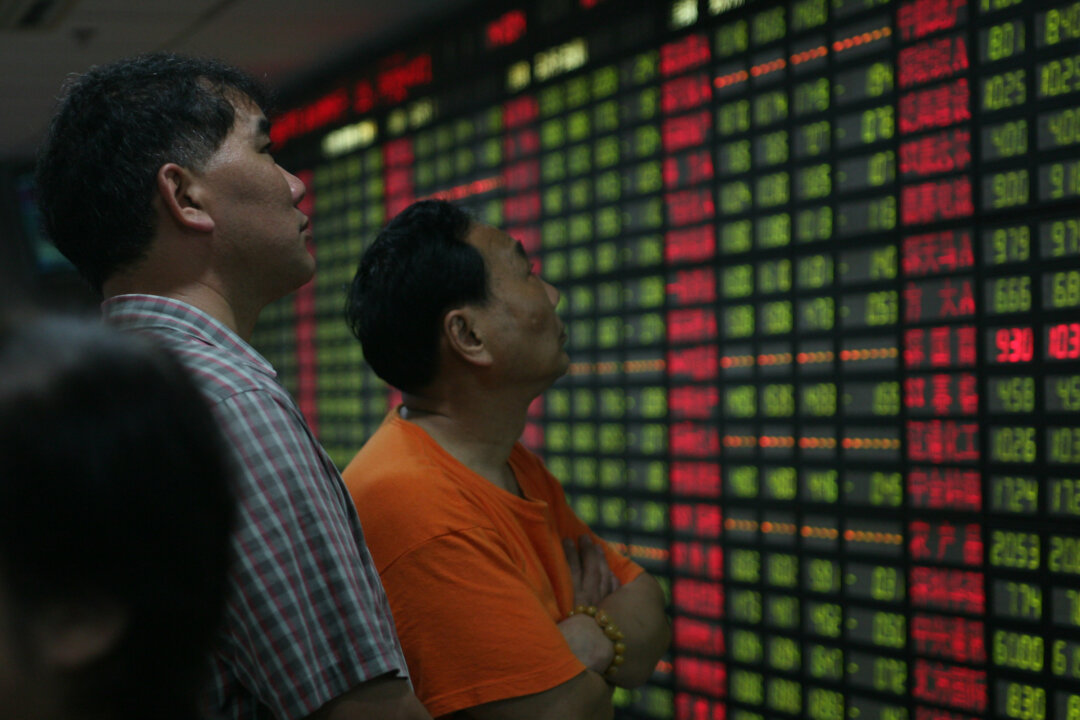
China Tech Index Plunges More Than 40 Percent From July Peak









Related Articles
China Military NewsChina NewsChinese RegimeInside CCP OfficialdomSpecial TopicsZhang Youxia
Xi Opens CCP Plenum Amid Sweeping Purges, Record-Low Attendance Forecast
Chinese Communist Party leader Xi Jinping opened a four-day meeting of senior...
China Business & EconomyChina NewsChinese RegimeFinance & Business TiesInside CCP OfficialdomSpecial Topics
Chinas Economic Woes Deepen as CCP Plenum Focuses on Political Control
The Chinese Communist Party (CCP) opened a four-day leadership meeting in Beijing...

China NewsEuropeGlobalUK NewsWorld News
UK Must Be Ready for War in 1,000 Days, Says British Defense Secretary
British Defense Secretary Wes Streeting has said the country must be ready...



China NewsEuropeGlobalUK NewsUK Top NewsWorld News
UK Prime Minister Says He Agrees With Principle of Migration Reform
British Prime Minister Andy Burnham said on Oct. 26 that he agreed...
