China’s escalating aggression aims to systematically seize control of the South China Sea, prompting Washington to expand security cooperation with allies and weigh whether it should trigger its mutual defense treaty with Manila to deter the regime, experts say.China Coast Guard vessels subjected Philippine state ships to “a series of water cannon attacks and dangerous maneuvers” in the South China Sea for a second consecutive day on July 24, per the Philippine News Agency, the country’s state-run news outlet.The harassment occurred as a Philippine Coast Guard vessel was conducting a maritime patrol near Scarborough Shoal—a contested coral reef controlled by Beijing since a 2012 standoff that remains a major flashpoint with Manila.All Philippine personnel were safe, but the Philippine Coast Guard “strongly condemned” the China Coast Guard’s actions, the report said.A similar water cannon attack took place on July 23 during a Philippine fuel and food resupply mission near the shoal.Despite the Chinese actions, the Philippine vessels successfully distributed the supplies to local fishing boats.These clashes are far from isolated, as the Philippine Navy accused China Coast Guard personnel on July 20 of striking a sailor with a wooden baton in a violent confrontation near the South China Sea’s Second Thomas Shoal, a Manila-held reef within its asserted exclusive economic zone.Philippine President Ferdinand Marcos Jr. summoned the Chinese ambassador in Manila on July 21, hours after condemning the China Coast Guard’s assault on Philippine Navy personnel during a palace press briefing.Beijing claimed the Philippines had provoked and attacked China Coast Guard personnel at Second Thomas Shoal, and also lodged formal protests with the Philippine ambassador that same day, Chinese state media Xinhua News Agency reported.The territorial dispute between the two Asian powers has grown increasingly hostile. China Daily—the Chinese regime’s mouthpiece—released a video on July 10 depicting a monkey clad in Filipino garb being blasted with water cannons, which critics denounced as a racist smear.In this photo, taken from video by the Armed Forces of the Philippines, China Coast Guard personnel (L) on rigid hull inflatable boat chases Philippine Navy personnel aboard a rubber boat at the Second Thomas Shoal, locally known as Ayungin Shoal, at the disputed South China Sea on July 20, 2026. Armed Forces of the Philippines via APAlthough the Permanent Court of Arbitration in The Hague struck down the expansive “nine-dash line” claims of the Chinese Communist Party (CCP) over the South China Sea as legally baseless in 2016, Beijing has consistently dismissed the landmark ruling as invalid and non-binding.‘New Normal’ Julio S. Amador III, chief executive officer of Manila-based geopolitical consultancy Amador Research Services, said the CCP is trying to prove Manila has no ability to push back.“Beijing possessing escalation dominance means that it’s really not the Philippines that will ever make the situation negative,” Amador told The Epoch Times.“It wants to show that the Philippines, despite working with its ally and partners, cannot effectively respond to China’s provocation.”Arthur Zhin-sheng Wang, secretary general of the Asia-Pacific Elite Interchange Association in Taiwan, said that China’s real goal is not merely to block a single Philippine resupply mission, but to systematically transform the South China Sea into a domain where Beijing dictates the rules.“It wants to force the Philippines to accept that all future resupply operations, law enforcement patrols and even routine navigation require prior consent from China,” Wang told The Epoch Times.“If Manila tacitly accepts this arrangement, it effectively concedes jurisdiction, which is the ‘new normal’ Beijing is truly aiming to establish.”Wang added that the regime’s broader objective is to override international law through de facto control of the waterway.“China aims to prove that its sustained, day-to-day enforcement will eventually force the international community to recognize it as the waterway’s true administrator,” he said.“In doing so, even the 2016 South China Sea arbitration invalidating its nine-dash line claims would fail to deter Beijing’s hegemonic actions.”Accidental Escalation Amador doubts the friction between the two nations will spiral into a fatal confrontation.“We also have to be realistic about to what extent that China will want something that could actually trigger the mutual defense between the Philippines and the United States,“ he said, referring to the 1951 Mutual Defense Treaty, which obligates Washington to defend Manila’s forces and vessels if attacked.“These moves are a bit more calculated, dangerous, but they’re not yet to the level where one would see a shooting war go on.”A Philippine Air Force Black Hawk helicopter lands in Mavulis Island, Batanes, Philippines, on June 29, 2023. Ezra Acayan/Getty ImagesWang said while a full-blown war remains unlikely, the true danger lies in an accidental escalation.The threat of a misfire naturally surges when skirmishes involve direct physical force against personnel, he said.“Therefore, the most likely outcome isn’t an all-out war, but localized bloodshed, a brief firefight or a seized vessel,” Wang said.He said that this could trigger a limited armed clash, as a single miscalculation by either side could drag Beijing, Manila and even Washington into a “broader crisis.”No Ambiguity on Blame As the Philippines and China trade accusations, U.S. Secretary of State Marco Rubio raised the South China Sea dispute during talks with Chinese Foreign Minister Wang Yi on the sidelines of the Association of Southeast Asian Nations (ASEAN) foreign ministers’ gathering in Manila on July 22.Addressing the press later that day, Rubio warned that an escalation in the South China Sea “is very negative and benefits no one.”“We’ve reiterated in every meeting we’ve had that the U.S. has a treaty arrangement with the Philippines,” he said.U.S. Secretary of State Marco Rubio (C) looks on during a bilateral meeting with China’s Foreign Minister Wang Yi on the sidelines of the Association of Southeast Asian Nations (ASEAN) Foreign Ministers’ Meeting in Pasay, Metro Manila, Philippines, on July 22, 2026. Brendan Smialowski/ POOL / AFP via Getty ImagesAmador said he doubts Washington holds Manila partially responsible for the mounting tensions.“I believe that U.S. commitment to the alliance is there,“ he said.“Nevertheless, Rubio’s statement does show frustration at China’s attitude. Beijing is really pushing buttons here and there.”Wang said Washington’s subsequent messaging leaves no ambiguity about who is at fault.“The Philippines is simply running resupply missions and defending its rights within its own exclusive economic zone, while China responds with armed blockades,” he said.“The two are fundamentally unequal in both legal standing and conduct.”Countermeasures Wang said rather than an immediate military showdown, Washington is expected to roll out a comprehensive strategy to drive up the Chinese regime’s costs.“The United States will step up real-time intelligence sharing through satellites, drones, and reconnaissance flights, helping the Philippines better track China’s coast guard and maritime militia,” he said.As part of the U.S.–Philippines joint military exercise “Balikatan,” a U.S. soldier guides an MQ-9 Reaper drone as it lands at Subic Bay Freeport Zone, Philippines, on April 23, 2023. Jam Sta Rosa /AFP via Getty ImagesThe United States could also expand joint naval and air patrols with Japan, Australia, and the Philippines, turning the South China Sea dispute into a regional security priority, according to Wang.“Through this cooperation, Washington can equip the Philippines with radars, missiles, and other maritime security hardware to reinforce its coastal defenses,” he said.Wang said if China’s actions cause severe casualties, the United States might even impose targeted sanctions on the Chinese coast guard, its command structures or affiliated companies.“Overall, Washington’s approach will focus on strengthening deterrence and backing Manila, while steering clear of a direct war,” he said.

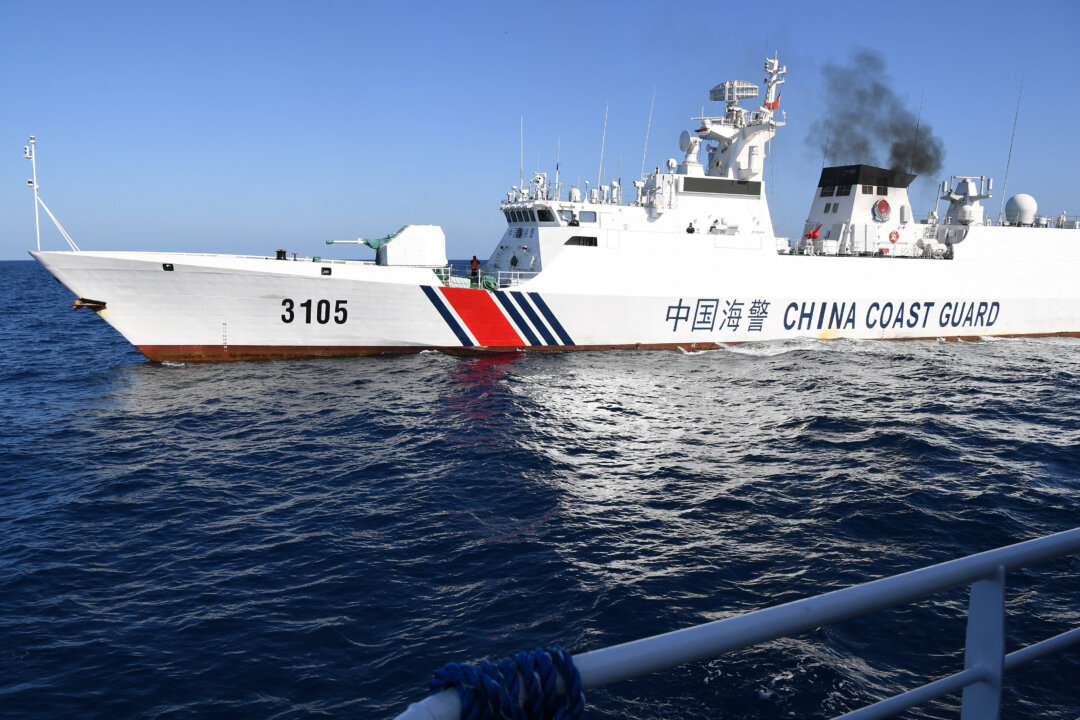
Chinas Aggression a Tactic to Systematically Seize Control of South China Sea: Analysts









Related Articles
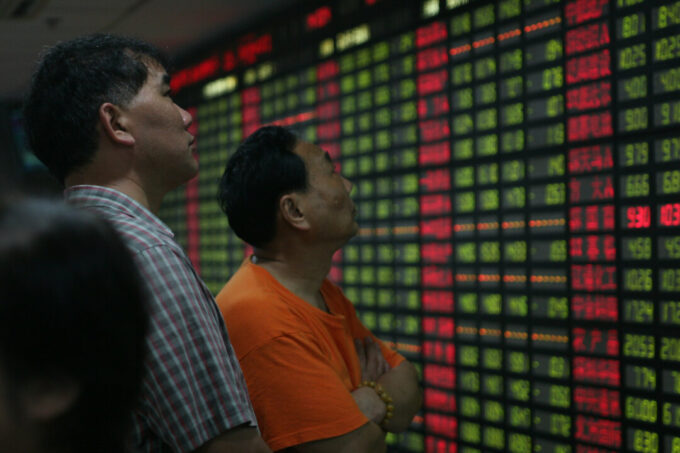
China Business & EconomyChina NewsChina Technology
China Tech Index Plunges More Than 40 Percent From July Peak
China’s technology-heavy STAR 50 index has fallen by more than 40 percent...
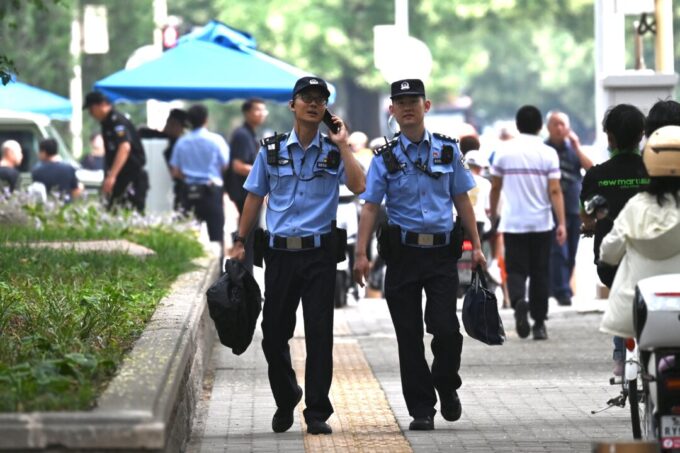
China Military NewsChina NewsChinese RegimeInside CCP OfficialdomSpecial TopicsZhang Youxia
Xi Opens CCP Plenum Amid Sweeping Purges, Record-Low Attendance Forecast
Chinese Communist Party leader Xi Jinping opened a four-day meeting of senior...
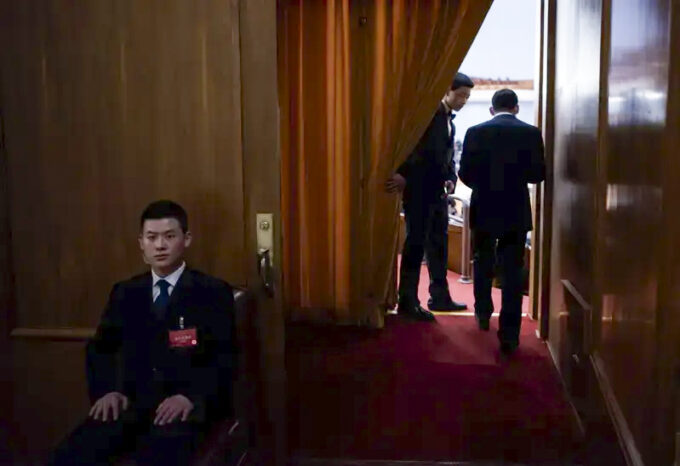
China Business & EconomyChina NewsChinese RegimeFinance & Business TiesInside CCP OfficialdomSpecial Topics
Chinas Economic Woes Deepen as CCP Plenum Focuses on Political Control
The Chinese Communist Party (CCP) opened a four-day leadership meeting in Beijing...



China NewsEuropeGlobalUK NewsWorld News
UK Must Be Ready for War in 1,000 Days, Says British Defense Secretary
British Defense Secretary Wes Streeting has said the country must be ready...
