The Chinese regime is urging residents across multiple provinces to enroll in the country’s public health insurance program before the end of June, warning that those who miss the deadline could lose government subsidies and face significantly higher co-premiums.The campaign comes as concerns grow over the financial health of China’s medical insurance system. An insider from within the Chinese Communist Party (CCP) told The Epoch Times that funding pressures have become so severe that even Beijing’s elite military hospital has begun limiting hospital stays for retired senior officers.The insider and observers spoke to The Epoch Times on condition of anonymity or only publishing their surname out of fear of reprisal.Notices issued in provinces including Yunnan, Fujian, Qinghai, and Heilongjiang state that residents who enroll by June 30 will pay an individual contribution of 400 yuan ($59) annually for the 2026 Urban and Rural Resident Basic Medical Insurance program, according to Chinese media The Paper. Those enrolling on or after July 1 will no longer receive the annual government subsidy and instead must pay the full cost—about 1,100 yuan (about $162) per person. Several local governments also warned that late enrollees would face a three-month waiting period before becoming eligible for benefits, with longer lapses in coverage resulting in even longer waiting periods.Insurance Fund Under PressureThe policy has sparked frustration among some Chinese residents, who say medical costs have steadily shifted onto individuals despite years of rising insurance contributions.A resident in Yunnan Province told The Epoch Times he was alarmed after reading the government’s reminder.“My first reaction was that the government is putting even more of the burden onto ordinary people,” he said. “If this continues, I may just stop participating in the insurance program. Even now, I still have to pay about 30 percent of my medical bills out of pocket, and sometimes even more. Now they’re saying that if I don’t pay before July 1, it’ll cost 1,100 yuan. For a family of three, that’s 3,300 yuan. If the government has no money, it just takes it from the people.”The CCP said that the country’s medical insurance fund has come under increasing strain since the COVID-19 pandemic.According to the insider, the system now relies heavily on continuous premium payments from participants to cover current medical expenses, operating increasingly like a pay-as-you-go system.“They’re running out of money,” he said. “The premiums collected from participants are no longer enough to cover reimbursement costs. They’ve already been supplementing the insurance fund with revenue from sports lotteries, taxes, and fines, but it’s still not enough.”The insider also said the elite wards at China’s People’s Liberation Army General Hospital have begun limiting hospital stays for retired senior officers to three months. Previously, he said, former senior cadres could remain hospitalized indefinitely. However, current members of the CCP’s Central Committee are exempt from the new limit.Unemployment Benefits Rise Only ModestlyAt roughly the same time, Shanghai announced a relatively modest increase in its unemployment benefits, according to the local media Shanghai Observer.Beginning July 1, monthly unemployment payments for recipients in their first year of benefits will increase by 35 yuan ($5.15) to 2,340 yuan ($344). Payments for longer-term recipients will also rise slightly.A Chinese author contrasted the small increase in unemployment benefits with the significant additional cost people could face if they miss the health insurance enrollment deadline.Sun, an independent author from Henan Province, told The Epoch Times the contrast illustrates what he sees as Beijing’s growing fiscal constraints.“The CCP is shifting the cost of medical insurance subsidies onto residents while giving unemployed people a symbolic increase of just 35 yuan,” he said. “That hardly solves anything.”Sun also said that eligibility requirements exclude many people who are out of work, including those who voluntarily left their jobs, people with disabilities, retirees, those who never contributed to social insurance, and individuals who are not officially registered as unemployed.A Longer-Term Shift in PolicyThe latest enrollment push follows a policy introduced by China’s State Council in 2024 establishing a long-term participation mechanism for the country’s basic medical insurance program, which took effect in 2025.State media People’s Daily reported at the time that people who fail to enroll during the designated period or who allow their coverage to lapse would face waiting periods before benefits become available, with longer interruptions resulting in longer delays.The reminders issued across multiple provinces indicate that the policy has now entered the enrollment cycle for the 2026 coverage year.Sun said official descriptions of the reforms emphasize phrases such as “long-term mechanisms,” “precision management,” and “expanded insurance participation,” but that many ordinary people in China experience the changes differently.“Medical insurance was supposed to reduce the financial risks of getting sick,” he said. “Instead, it’s become a system that requires continuous payments while imposing more restrictions. Over the past two decades, premiums have increased dramatically, yet many people feel they’re getting less in return.”Wang Yibo contributed to this report.

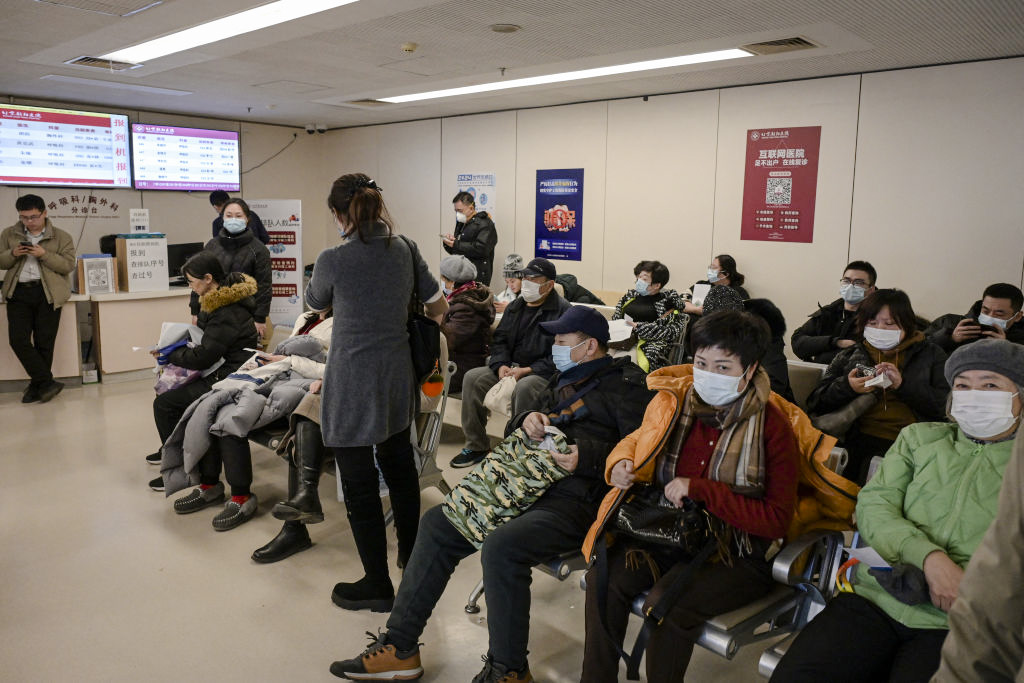
China Raises Health Insurance Costs for Late Enrollees as Funding Strains Deepen








Related Articles
China Business & EconomyChina NewsChina Technology
China Tech Index Plunges More Than 40 Percent From July Peak
China’s technology-heavy STAR 50 index has fallen by more than 40 percent...
China Military NewsChina NewsChinese RegimeInside CCP OfficialdomSpecial TopicsZhang Youxia
Xi Opens CCP Plenum Amid Sweeping Purges, Record-Low Attendance Forecast
Chinese Communist Party leader Xi Jinping opened a four-day meeting of senior...
China Business & EconomyChina NewsChinese RegimeFinance & Business TiesInside CCP OfficialdomSpecial Topics
Chinas Economic Woes Deepen as CCP Plenum Focuses on Political Control
The Chinese Communist Party (CCP) opened a four-day leadership meeting in Beijing...



China NewsEuropeGlobalUK NewsWorld News
UK Must Be Ready for War in 1,000 Days, Says British Defense Secretary
British Defense Secretary Wes Streeting has said the country must be ready...
