In Canada, most people associate the nation’s day with parades, painted faces, flag-waving, and friendly get-togethers. Across the country, a sea of red and white fills parks and city streets as Canadians mark the anniversary of Confederation on July 1.Just three days later, Americans celebrate Independence Day in much the same fashion, with barbecues, displays of patriotism, and fireworks lighting up the night sky. While some of the details differ, both holidays reflect the desire to celebrate national identity, history, and community.Around the world, however, national day celebrations can take very different forms. From greased-poll climbing contests in Indonesia and canoe races in the Pacific, to royal receptions in Liechtenstein and colourful kite-flying festivals in India, many countries have developed traditions that reflect their uniqueness.Here’s a look at some of the world’s distinctive national day celebrations.Crowds celebrate King’s Day with orange smoke and confetti on the canals of Amsterdam in the Netherlands on April 27, 2026. Shutterstock/Steve PhotographyNetherlands: Orange WaveOn April 27, the Netherlands comes alive with celebrations for King’s Day (“Koningsdag”), a tribute to the reigning monarch. The royal family’s ties to the House of Orange-Nassau have made orange a symbol of Dutch identity, and each year the nation is transformed into a sea of orange as people gather to celebrate.Celebrants party on the canals of Amsterdam, and orange-clad revellers mark the day with music, festivities, and visiting nationwide secondhand street markets known as “vrijmarkten,” where citizens can sell goods without permits.Although the day is more of a national street party than a formal patriotic occasion, it has become an enduring expression of Dutch national identity and pride, with millions taking part in celebrations each year.A Portuguese military officer carries a reliquary with the heart of Brazil’s former emperor Dom Pedro I in Brasilia, Brazil on Aug. 23, 2022. AP Photo/Eraldo PeresBrazil: the Emperor’s HeartBrazil’s Independence Day is celebrated each year on Sept. 7, marking its 1822 separation from Portugal.The holiday features military parades, concerts, and air force flyovers, but one of its most unusual symbols is the preserved heart of Dom Pedro I, the prince who declared Brazil’s independence and later became the country’s first emperor.Before his death in 1834, the prince had asked that his heart remain in the Portuguese city of Porto. While his body is buried at the Independence Monument in São Paulo, his heart has been preserved separately for nearly two centuries.For Brazil’s bicentennial celebrations in 2022, Portugal loaned the emperor’s heart to Brazil for the first time, where it was displayed with state honours during Independence Day festivities.Participants in a greased-pole climbing competition, held to celebrate Indonesia’s 80th Independence Day, on Aug. 17, 2025. AP Photo/Tatan Syuflana Indonesia: Climbing Greased PolesIndonesia marks its Independence Day on Aug. 17 with celebrations including a competition known as “panjat pinang,” in which teams compete to climb greasy poles by working together and climbing over one another to reach the top.Prizes include household appliances, food, clothes, and bicycles which are suspended from the top of the poles for those who scale the heights.The tradition originated during Indonesia’s colonial era when members of the Dutch royal family held similar competitions known as “klimmast.” In these competitions, poor Indonesians would try to get to the top of a greased pole as colonial spectators looked on.The annual event, which also includes tug-of-war competitions, sack races, and cracker-eating competitions, commemorates Indonesia’s 1945 declaration of independence from the Netherlands.Junior college graduates march during the celebration of Iceland’s National Day in Akureyri, Iceland. Shutterstock/Fotokon Iceland: The Mountain WomanIceland celebrates National Day on June 17 with marching bands, concerts, public speeches, and the unique tradition of the appearance of the “Fjallkonan,” or Mountain Woman.The role is acted out by a different woman each year and she serves as a representation of Iceland. Clad in traditional dress, she delivers a speech or reads poetry during state ceremonies held in the capital of Reykjavik. After she speaks, bands play music for crowds and treats are handed out to children.The identity of the woman chosen for the role is traditionally kept secret until she arrives at the official ceremony.The tradition to celebrate Iceland’s independence from Denmark began in 1944 and is held on the birthday of independence leader Jón Sigurðsson.A delegation from Papua New Guinea during the International Tourism Fair in Berlin on March 8, 2007. AP Photo/ Jan BauerPapua New Guinea: Tribal TraditionsPapua New Guinea’s Independence Day, held annually on Sept. 16, celebrates the strong tribal traditions of the island nation, which also includes part of the main landmass of New Guinea.Comprised of more than 600 islands, atolls, and island groups in addition to its mainland, Papua New Guinea has more than 800 languages and hundreds of distinct ethnic groups. National celebrations often feature large cultural festivals that showcase this diversity.Tribes from across the country congregate in traditional apparel, face paint, shells, and ceremonial costumes to mark the country’s independence from Australia in 1975.Among the most unique traditions of Papua New Guinean independence celebrations are “singsings,” which can be competitive gatherings held among different tribal and village groups to showcase their heritage and culture.Aerial view of Vaduz Castle, overlooking Vaduz, the capital of Liechtenstein, with the Alps in the background. Shutterstock/Gideon IkigaiLiechtenstein: Drinks With the PrinceNational Day in the small Alpine principality of Liechtenstein is done a little differently.Each Aug. 15, the 40,000 or so residents of the country are invited to party with the royal family, headed by Hans-Adam II.Patriots gather in the capital of Vaduz for formal ceremonies and speeches, then they’re invited to the royal family’s Vaduz Castle to share refreshments with the royal family. Celebrations continue into the night with bonfires, food, concerts, and torch-lit processions.Aug. 15 was selected as the national day in 1940 as it was already a religious holiday and was one day before the birthday of Prince Franz Josef II, the country’s longest-serving monarch, who reigned from 1938 until his death in 1989.Sandy beach with coconut trees and huts on the island of Kiribati. Shutterstock/VyshnivskyyKiribati: Canoe RacesThe island nation of Kiribati, situated in the central Pacific Ocean, marks its Independence Day on July 12, drawing its people together from the over 3.5 million square kilometres of the Pacific Ocean comprising the country.The day commemorates the nation’s 1979 independence from the United Kingdom, when the former Gilbert Islands separated and was peacefully formed into the independent Republic of Kiribati.Celebrations include parades, cultural performances, kite flying, athletic competitions, and traditional dancing. One of the most distinctive events is a series of canoe races that reflect the nation’s maritime heritage.Traditional outrigger canoes crewed by teams from different communities race along the shoreline as spectators gather to cheer them on. For generations, canoes have been essential to life in the Pacific island nation, linking communities spread across a vast expanse of ocean.A group of tourists walking in downtown Ashgabat, the capital of Turkmenistan in Central Asia, on July 8, 2019. Shutterstock/LMspencerTurkmenistan: Trying for World RecordsThe central Asian nation of Turkmenistan celebrates Independence Day on Sept. 27, marking the nation’s 1991 independence from the Soviet Union.The holiday features military parades, concerts, and state ceremonies, but the country has also become known for using major national celebrations to pursue Guinness World Records.Among its achievements are the world’s longest single-line bicycle parade, with 1,995 cyclists in 2019, the largest architectural star, and the highest concentration of white marble buildings. It has also claimed a record for the most fountain pools in a public area, after unveiling 27 of them in 2008.Senegalese Security and Defence forces gesture an Independence Day parade in Dakar on April 4, 2025. Seyllou/AFP via Getty ImagesSenegal: Military ParadesThe African nation of Senegal holds its Independence Day on April 4, combining military parades in the capital of Dakar with cultural celebrations.Government officials watch the parades, while more informal events such as concerts, traditional dances, and public parties take place in the capital and throughout the country.Senegal gained independence from France on April 4, 1960, partnering with Mali in the briefly established Federation of Mali before becoming fully sovereign after the partnership dissolved.In addition to displaying military might, the nation of about 19 million holds festivities until late into the night, drawing large crowds throughout the country, from Dakar to Thiès and the colonial capital of Saint-Louis.People fly kites during the celebrations to mark India’s Independence Day in New Delhi on Aug. 15, 2023. Arun Sankar/AFP via Getty ImagesIndia: Colourful KitesIndia marks its Independence Day on Aug. 15, commemorating its 1947 independence from Great Britain.The main formal celebration occurs at the historic Red Fort in Delhi, where the Indian prime minister raises the flag and delivers a nationally broadcast speech.The Red Fort is an important historic location because it served as the seat of the Mughal emperors for nearly 200 years and became a symbol of Indian sovereignty when Prime Minister Jawaharlal Nehru raised the national flag there on the country’s first Independence Day in 1947.In addition to military parades, cultural festivities, and street parties, one of the most colourful celebrations in India is kite flying.Colourful kites dot the skies across the nation in large cities and small towns. Participants sometimes take part in informal kite battles, trying to cut the strings of other competitors as spectators cheer them on.Fireworks explode over the Peace Tower on Parliament Hill at the end of Canada Day celebrations, in Ottawa on July 1, 2018. The Canadian Press/Justin TangFrom Dominion Day to Canada DayCompared to many national days, Canada Day in its current form is comparatively young, at less than half a century old.Although Canadians have celebrated July 1 since Confederation in 1867, the holiday was known as Dominion Day until 1982, when Parliament officially renamed it Canada Day.The original name reflected Canada’s status as a self-governing dominion within the British Empire. Celebrations evolved alongside the country itself, shifting from a stronger emphasis on Canada’s British heritage to a broader celebration of Canadian identity.Today, Canada Day is marked by fireworks, concerts, community festivals, citizenship ceremonies, and gatherings with family and friends from coast to coast.

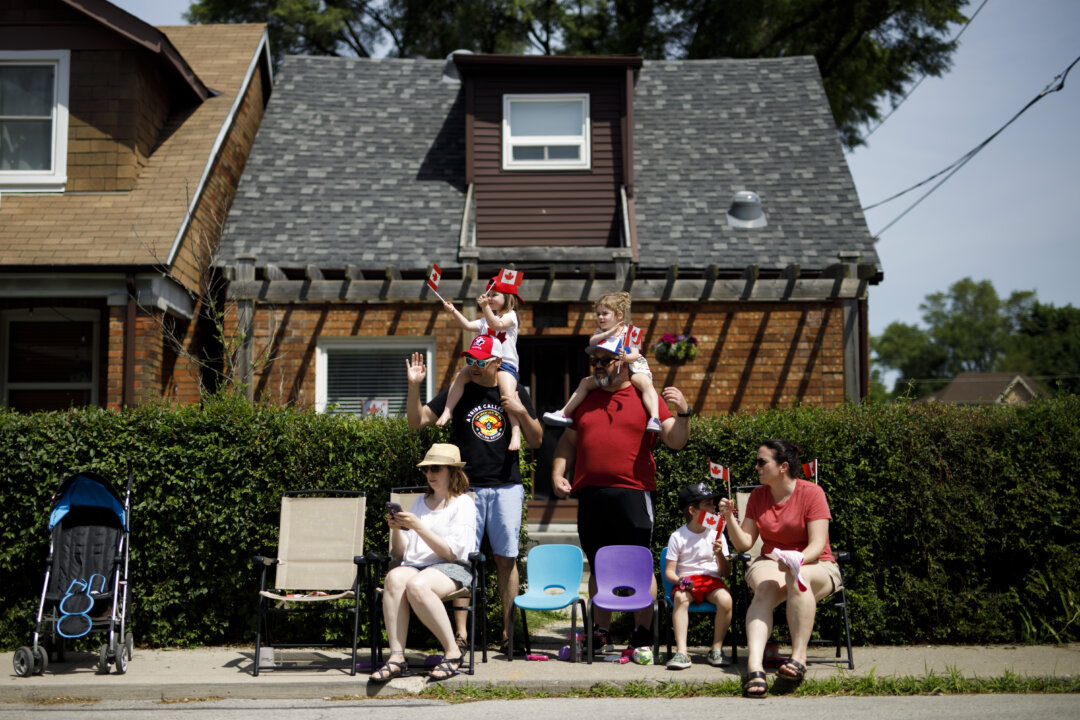
How Does Canada Day Compare With National Days Around the World?








Related Articles

EuropeThe Final wakeup call
Lula wins a miracle election in Brazil. Now comes the hard part: putting the country back on the right track
Three weeks ago, Brazilian President Luiz Inácio Lula da Silva’s political obituaries...

EuropeThe Final wakeup call
US midterms: what a new Congress could and could not change for Europe
US midterm elections traditionally attract fewer voters than presidential contests. But this...
EuropeThe Final wakeup call
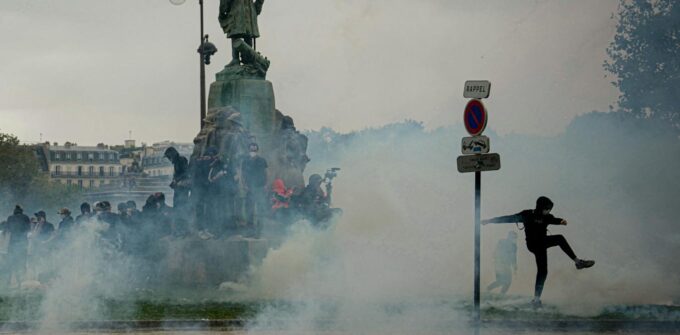
Political power without balance leads to the erosion of democracy, what Montesquieu can teach modern-day France
KEY TAKEAWAYS Democratic erosion does not start by doing away with elections;...


China Business & EconomyChina NewsChina Technology
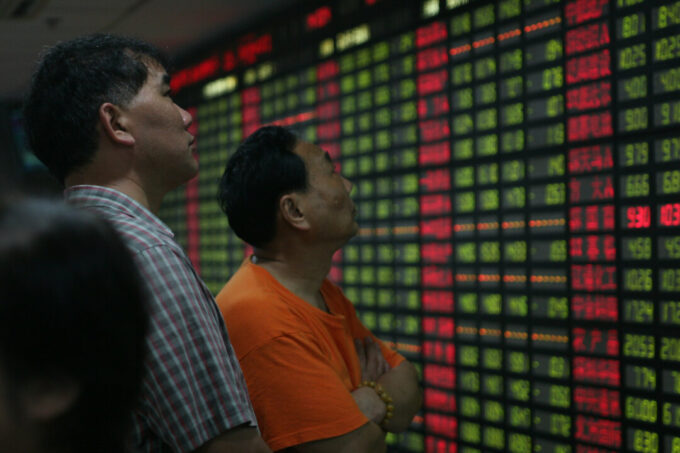
China Tech Index Plunges More Than 40 Percent From July Peak
China’s technology-heavy STAR 50 index has fallen by more than 40 percent...
