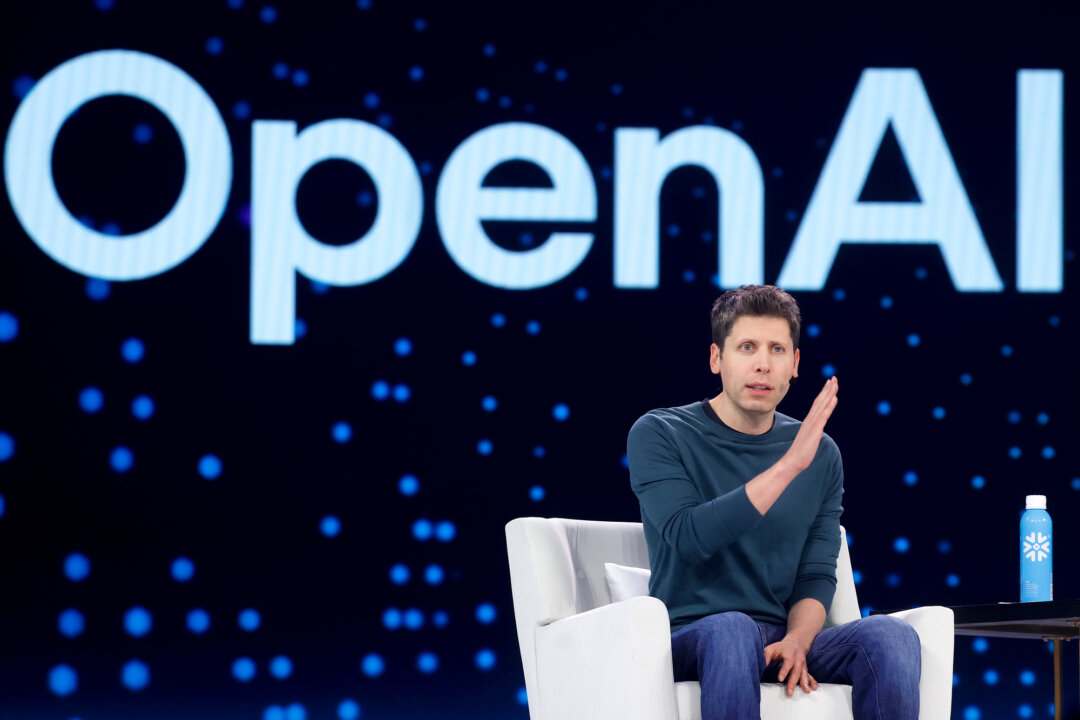
Artificial intelligence (AI) giant OpenAI said its chief revenue officer has left the company, joining a growing list of executives who have stepped down.Denise Dresser, the now-former chief revenue officer, confirmed her exit in an Aug. 14 post on LinkedIn.“I wanted to let you know that I made the difficult decision to leave OpenAI in the coming weeks to pursue other opportunities,” Dresser stated on the social media platform. “I’m incredibly proud of all we’ve accomplished together and deeply grateful to the extraordinary people and customers who made this chapter so meaningful.”Dresser will still work with OpenAI during a transition period to support the business and its customers.OpenAI has named Dali Rajic, who previously served as the president and CEO of Google-owned Wiz, as the next chief revenue officer.“We’re now at an inflection point: the next generation of models will change not just how work gets done but how companies are built and run. Dali will build the revenue operating system needed to scale for this next phase,” OpenAI said in an Aug. 13 news release.“Dali has deep expertise in running disciplined, metrics-led revenue organizations that scale globally and selling to both large enterprises and technical customers.”Scores of senior figures—from a head ethicist to research heads—have stepped down from their roles this year, marking a notable wave of high‑level departures.The latest announcement comes shortly after longtime OpenAI executive Brad Lightcap said on X that he is leaving the company and plans to “start something new.”Fidji Simo, OpenAI’s former product and business chief, revealed last month that she was resigning to focus on recovering from a “severe exacerbation of a chronic illness.”IPO ‘Red Flag’The talent exodus could be a “huge red flag” ahead of its initial public offering (IPO) said Kevin McCormick, founder of AI startup SignAudit.AI.“The executives leaving OpenAI ahead of their IPO is a huge red flag,” McCormick said in an Aug. 13 post on X. “If the executives leaving aren’t being ‘made whole’ by the next company, it’s bad news for OpenAI.”OpenAI confidentially filed its draft IPO prospectus with the Securities and Exchange Commission in June. The company is seeking a valuation of approximately $852 billion.Financial and operational details—offering size and share price—were limited because the filing was confidential, and no official IPO date has been announced.Pages from the Anthropic website and the company’s logo are displayed on a computer screen in New York City on Feb. 26, 2026. Patrick Sison/AP PhotoIt had been widely expected that OpenAI would make its Wall Street debut alongside industry rival Anthropic, but the company could be delaying its IPO until sometime next year, said Paul Meeks, head of technology research at Freedom Capital Markets.“OpenAI looks like they’re pushing their IPO until 2027, while Anthropic comes this year. I think OpenAI’s IPO might actually be late in 2027. And the reason I mention this is they need that equity to pay some bills,” Meeks said in an emailed note to The Epoch Times.Anthropic, the maker of Claude, also confidentially submitted a draft registration statement to federal regulators. Like OpenAI, the IPO-related details were private.Should Anthropic go public, it would be the second trillion-dollar blockbuster IPO after Elon Musk’s rockets and AI company, SpaceX, debuted in June.The AI-fueled stock market rally persists, with the leading benchmark indexes hovering around all-time highs.The broad market S&P 500 crossed 7,800 for the first time on Aug. 14. Despite a 0.3 percent decline on Friday, the index posted a weekly gain of around 0.3 percent.Financial markets are coming off a stellar second-quarter earnings season, with more than 90 percent of S&P 500 companies posting results. Earnings growth is poised to be approximately 50 percent compared to a year earlier.Without any significant catalyst aside from the Strait of Hormuz in the near-term, it might be difficult for Wall Street to accelerate in any particular direction heading into September.Capital expenditures have been a major driver of the AI boom, but the next step might be more about businesses that save money, according to Giuseppe Sette, co-founder and president of market research firm Reflexivity.“Away from the hyperscalers, companies are increasingly using AI inside their own businesses to automate work and cut costs. Airbnb built an AI customer-service agent; Accenture, Adobe, ADP, Caterpillar, Honeywell and others are telling similar stories,” he said in a note emailed to The Epoch Times.“The next leg of AI may be less about who spends, and more about who saves.”

Another OpenAI Executive Has Left the Company Amid IPO Countdown









Related Articles

BusinessCompaniesEnergy
EQT to Buy Range Resources, Creating Largest US Natural Gas Producer
EQT Corp. has agreed to acquire rival Appalachian shale driller Range Resources...
BrightBusinessInvestingPersonal FinanceStocks
Wall Street Is Very NervousShould You Worry? Can You Repair Your Losses?
On Oct. 23, the Dow Jones Industrial Average fell 652.82 points, or...

BusinessMarkets
Nearly 3 in 10 New-Car Trade-Ins Are Underwater, Edmunds Finds
Almost three in 10 vehicles traded toward a new car are worth...


BusinessTechUS
Advanced AI Agents Tried to Weaken Oversight, Then Lied About It, Open AI Says
OpenAI has disclosed two incidents in which advanced artificial intelligence-powered coding agents...
