Consumers were less confident about the U.S. economy in August, according to the University of Michigan’s widely watched survey.The preliminary August Consumer Sentiment Index fell by almost 8 percent to 51, from 55.2 in July, after two consecutive months of improvement.Market watchers had anticipated a modest deceleration to 54.5.Researchers observed broad-based declines, but weaker sentiment was fueled by low-income consumers, older Americans, and those without a college degree.“These groups are all particularly vulnerable to any erosion of purchasing power stemming from inflation,” Joanne Hsu, director of consumer surveys at the university, said in an Aug. 14 statement.“Across all consumers, only 8 percent expect their income growth to exceed inflation in the year ahead, down from 18 percent in December 2024, a reflection of the belief that high prices will continue to be burdensome.”While real (inflation-adjusted) wage growth had increased before the war in Iran, recent inflation pressures have eroded workers’ earnings.Real hourly wage growth dipped 0.1 percent last month, and real weekly earnings stalled, according to the Bureau of Labor Statistics.Twelve-month consumer inflation has eased since peaking at 4.2 percent in May, slowing to 3.4 percent in July, primarily due to stabilizing energy costs.Middle East hostilities have upended global energy markets this year, forcing motorists to pay more at the pump.While they are substantially down from their recent highs, costs remain much higher than before the conflict began in late February.U.S. oil prices are trading above $81 per barrel on the New York Mercantile Exchange, and the national average for a gallon of gasoline is firmly above $4.Consumers see elevated inflation ahead.The one-year inflation outlook ticked up to 4.3 percent from 4.2 percent. Five-year inflation expectations were unchanged at 3.3 percent for the third consecutive month.At the same time, new American Financial Services Association second-quarter data suggest consumers are turning to credit amid depleted savings, higher borrowing costs, and elevated prices.“Performance indicators suggest the economy is entering a more challenging phase of uncertainty—not one driven by collapsing demand, but by financial uncertainty beneath steady spending,” Tim Gill, the group’s vice president and chief economist, said in a statement to The Epoch Times.“Inflation has slowed, but prices remain much higher than they were a few years ago, leaving many households feeling financially squeezed even if their incomes have risen.”But inflation expectations in financial markets are well anchored, providing the Federal Reserve with some breathing room.The 10-year breakeven rate is slightly above the central bank’s 2 percent inflation target.Caution AheadWorries about higher prices could be prompting shoppers to be more cautious.Retail sales unexpectedly declined 0.6 percent in July, driven by a slide in transactions at digital retailers, motor vehicle and parts dealers, gasoline stations, and electronics stores.The verdict is out on whether this is a sign of a more hesitant consumer or fading temporary effects from seasonal events.The surprise dip may have been caused by several factors: the end of FIFA World Cup festivities, the conclusion of the 250th-anniversary celebrations, and Amazon moving Prime Day from July to June.While the Census Bureau reports retail sales in non-inflation-adjusted terms, the drop could likely be bigger after calculating for inflation, says James Knightley, chief international economist at ING.“When we try to translate what it may mean for 3Q consumer spending growth within GDP, we have to adjust for price changes, which means that in volume (real) terms, it is going to be an even bigger drop,” Knightley said in an Aug. 14 note.Either way, the U.S. economy relies heavily on consumers, says Chris Zaccarelli, CIO at Northlight Asset Management.Core retail sales, which omit a subset of specialized categories and contribute to GDP calculations, fell by 0.4 percent—the most since early 2025.“The economy is highly dependent on consumer spending—close to 70 percent of GDP can be traced back to it—so it’s a case of be careful what you wish for,” Zaccarelli told The Epoch Times in an emailed note.“Too big a slowdown, and especially too prolonged a slowdown, could end up hurting corporate profits and, in turn, the stock market.“But in an environment where inflation can cool down, and the Fed can keep rates on hold as a result of that, it would be very good for this bull market.”Ultimately, decent inflation data, a weak July jobs report, and declining retail sales could lead the Federal Reserve to delay a potential interest rate hike.Investors have shifted expectations in the past week and now largely anticipate the central bank will leave its key policy rate unchanged in the current target range of 3.5 percent to 3.75 percent at next month’s meeting.

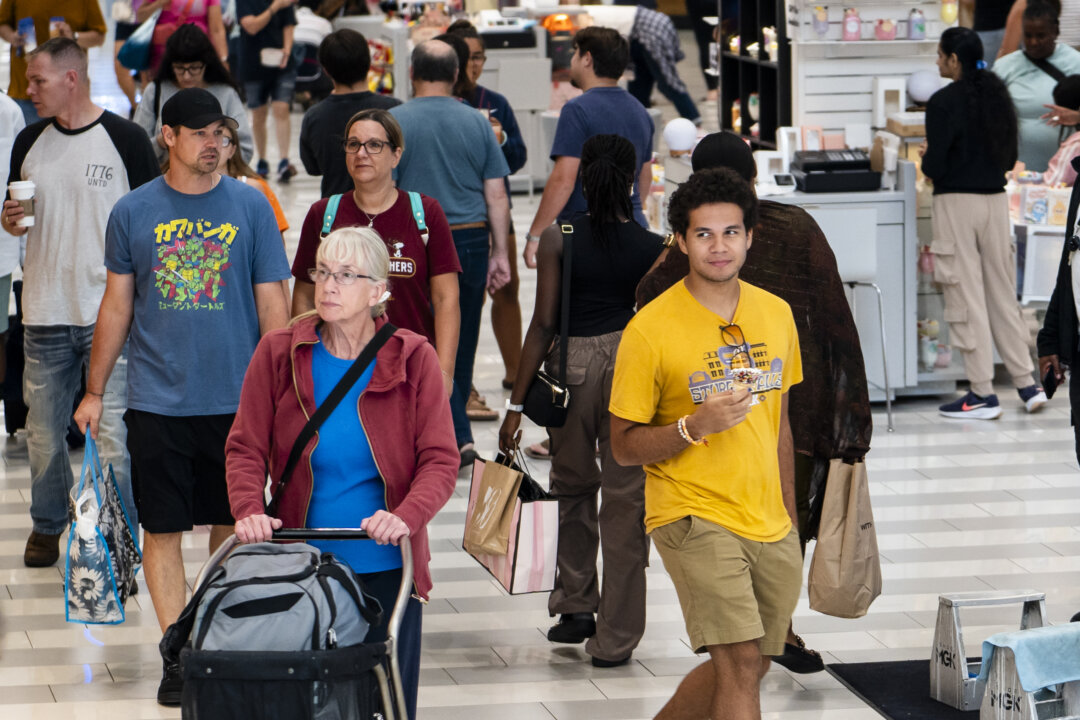
US Consumer Sentiment Sinks in August After 2-Month Rebound: UMich









Related Articles
BusinessCompaniesEnergy
EQT to Buy Range Resources, Creating Largest US Natural Gas Producer
EQT Corp. has agreed to acquire rival Appalachian shale driller Range Resources...
BrightBusinessInvestingPersonal FinanceStocks
Wall Street Is Very NervousShould You Worry? Can You Repair Your Losses?
On Oct. 23, the Dow Jones Industrial Average fell 652.82 points, or...
BusinessMarkets
Nearly 3 in 10 New-Car Trade-Ins Are Underwater, Edmunds Finds
Almost three in 10 vehicles traded toward a new car are worth...



BusinessTechUS
Advanced AI Agents Tried to Weaken Oversight, Then Lied About It, Open AI Says
OpenAI has disclosed two incidents in which advanced artificial intelligence-powered coding agents...
