The Chinese Communist Party (CCP) opened a four-day leadership meeting in Beijing on Oct. 26, as the country faces mounting fiscal pressure, a prolonged property downturn, and weakening investor confidence.The Fifth Plenum of the CCP’s 20th Central Committee, running through Oct. 29, is expected to emphasize what the regime calls “full and rigorous governance over the Party.”Analysts interviewed by The Epoch Times said the meeting is likely to focus on political control and personnel arrangements ahead of the Party’s next national congress in 2027, rather than economic recovery.The meeting comes as officials face pressure to show political loyalty while avoiding decisions that could invite criticism or punishment. Meanwhile, Chinese businesses are increasingly focused on protecting assets rather than expanding investment.Property Slump China’s Ministry of Finance reported on Oct. 23 that revenue from state-owned land-use rights transfers totaled 1.61 trillion yuan (about $241 billion) in the first nine months of 2026, down by 27.9 percent from a year earlier. Deed tax revenue fell by 14.2 percent, while land appreciation tax revenue declined by 13.6 percent.The property downturn has weakened a major source of local government funding, adding to the burden of debts accumulated during years of property-led growth.Cheng Cheng-ping, a finance professor at Taiwan’s National Yunlin University of Science and Technology, told The Epoch Times on Oct. 24 that some local governments in China are struggling to pay civil servants, while universities have faced funding cuts. He said the debt left by the property boom would be difficult to resolve in the short term.The slump is also weighing on household wealth and consumer confidence, complicating Beijing’s efforts to revive spending through new property support measures.Stock Market Decline China’s financial markets have also come under pressure. The benchmark CSI 300 index fell by 1.8 percent on Oct. 22, closing more than 20 percent below its June peak.Concerns over weak consumption, corporate earnings, and artificial intelligence company valuations have fueled the sell-off.U.S.-based Chinese economist Li Hengqing said China’s state-backed funds appear to be intervening to support stock prices.He told The Epoch Times that such interventions could temporarily stabilize the market but would not resolve the underlying lack of confidence.He said using public funds to support share prices could ultimately shift risks onto taxpayers.“The regime is supporting the market not to protect stock investors, but to protect Xi Jinping’s image and the political line he has put forward,” Li said.Questions Over Official Growth Figures China’s gross domestic product grew by 4.5 percent year over year in the third quarter, while growth for the first nine months reached 4.6 percent, according to the National Bureau of Statistics. The figures put the economy within the regime’s annual growth target of 4.5 percent to 5 percent.However, fixed-asset investment fell by 7.2 percent in the first three quarters, real estate development investment plunged by 20.6 percent, and retail sales grew by just 1.1 percent in September.The American Enterprise Institute questioned the credibility of China’s official gross domestic product figures in an Oct. 19 commentary by senior fellow Derek Scissors, citing a slowdown in the growth of M1, a measure of relatively liquid money.Cheng said exports and some high-tech industries were performing relatively well, while consumption, services, traditional industries, and public and private investment remained weak.He said growth in selected sectors has not necessarily translated into stronger domestic demand or broad-based corporate profitability.Political Discipline and Personnel Changes The plenum’s emphasis on Party discipline has drawn attention to the leadership’s political priorities.Pro-China outlet the Hong Kong Economic Times said a Politburo meeting on Oct. 23 stressed upholding Xi’s authority and demonstrating political loyalty, signaling that these themes would carry into the plenum.Personnel changes are another focus. An incomplete tally by The Epoch Times found that nearly 70 members of the Central Committee elected at the CCP’s 20th National Congress had been purged or disciplined, accounting for about 18 percent of its membership.Cheng said the meeting would likely focus on personnel arrangements ahead of the CCP’s 21st National Congress in 2027. Speculation about whether Xi might eventually adjust his leadership role remains unconfirmed.Officials, Businesses Caught in UncertaintyLi said officials face conflicting pressures since taking initiative risks accusations of misconduct, while inaction can also lead to punishment.Under Xi’s campaign against “lying flat,” a Chinese meme term describing withdrawal from intense competition or effort, officials are expected to act, but uncertainty over which decisions might expose them to political risk remains.Li said unpredictable policies and political pressure have also pushed entrepreneurs to prioritize preserving assets over expansion.“If ordinary people have no hope for the future, how can you expect them to take money out of their bank deposits?” Li said.“If employment and income expectations do not improve, it will be difficult to get people to keep increasing consumption through short-term [government] subsidies or administrative measures alone.”Cheng warned that when political objectives take precedence over market mechanisms, businesses may increase production without generating sufficient profits or jobs.He said continued emphasis on high-tech competition and political control could leave traditional industries and services struggling, further weakening private investment and economic activity.Li Jing and Gu Xiaohua contributed to this report.

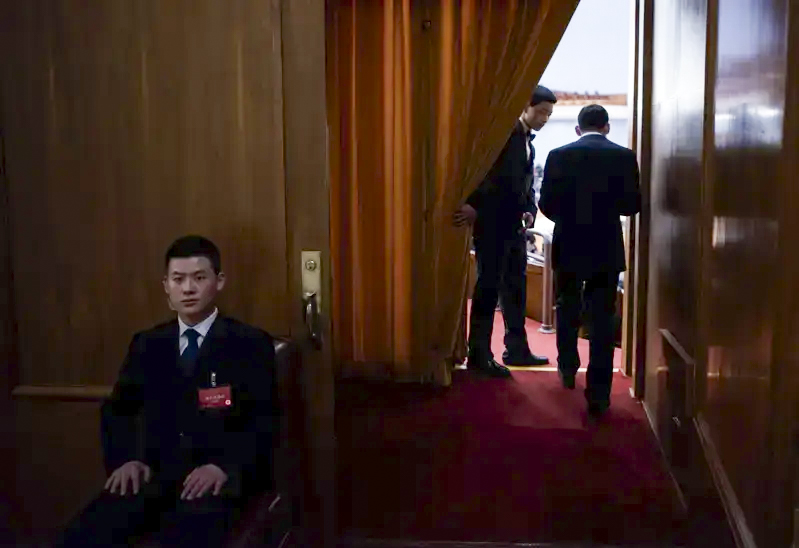
Chinas Economic Woes Deepen as CCP Plenum Focuses on Political Control








Related Articles
China Business & EconomyChina NewsChina Technology
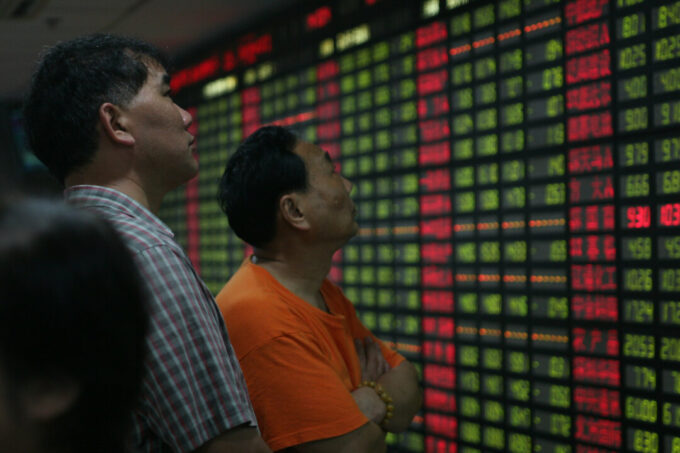
China Tech Index Plunges More Than 40 Percent From July Peak
China’s technology-heavy STAR 50 index has fallen by more than 40 percent...
China Military NewsChina NewsChinese RegimeInside CCP OfficialdomSpecial TopicsZhang Youxia
Xi Opens CCP Plenum Amid Sweeping Purges, Record-Low Attendance Forecast
Chinese Communist Party leader Xi Jinping opened a four-day meeting of senior...

China NewsEuropeGlobalUK NewsWorld News
UK Must Be Ready for War in 1,000 Days, Says British Defense Secretary
British Defense Secretary Wes Streeting has said the country must be ready...



China NewsEuropeGlobalUK NewsUK Top NewsWorld News
UK Prime Minister Says He Agrees With Principle of Migration Reform
British Prime Minister Andy Burnham said on Oct. 26 that he agreed...
