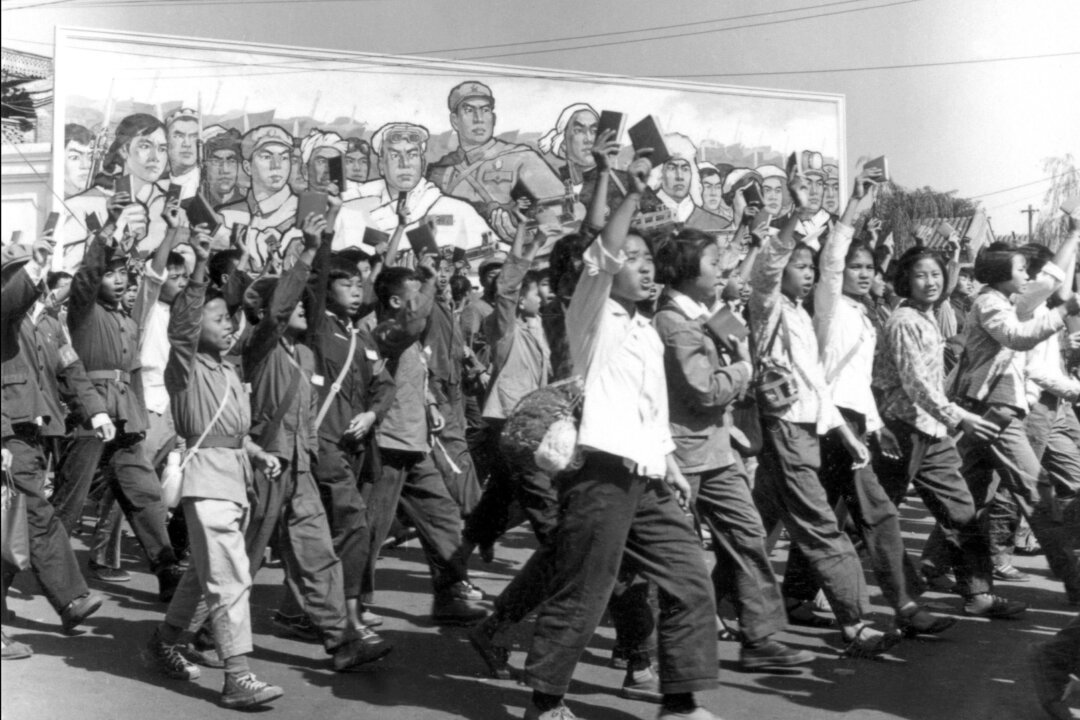
Six decades after the launch of communist China’s brutal Cultural Revolution, survivors of the decade-long political campaign say the slogans and directives that once mobilized millions still evoke memories of fear, persecution, and lives permanently altered.The year 2026 marks the 60th anniversary of the start of the Cultural Revolution in 1966, when Mao Zedong launched the movement that would plunge China into a decade of political chaos.Several survivors of the brutal campaign spoke to The Epoch Times on condition of anonymity or only publishing their surnames out of fear of reprisal.“It feels like a dream that lasted a lifetime,” a Guizhou-based Chinese historian and survivor said. “We experienced things we never imagined possible. Now old age has arrived almost in the blink of an eye.”Directive That Changed ChinaOn May 16, 1966, the Chinese Communist Party’s (CCP) Politburo approved a document commonly known as the “May 16 Notification.” The directive was the official start of the Cultural Revolution, according to the Hong Kong-based Academy of Chinese Studies.The campaign soon escalated beyond intellectual and cultural criticism into a sweeping political purge targeting alleged enemies within the CCP itself. Red Guards mobilized across the country. Schools shut down. Public denunciation rallies, violent factional clashes, and ideological campaigns spread nationwide.The CCP would later officially describe the Cultural Revolution as a “ten-year catastrophe.”The Guizhou-based historian said the “May 16 Notification” functioned as the movement’s political mobilization order.“It was the Cultural Revolution’s call to action—almost like a military order,” he said. “Many senior CCP officials at the time still did not understand what was happening.”Soon afterward, the CCP’s propaganda mouthpiece, People’s Daily, published the editorial “Sweep Away All Monsters and Demons,” urging attacks on perceived political enemies.The editorial branded the so-called “counterrevolutionaries” as capitalists and rightists and vowed to destroy China’s traditions as well as any forms of Western thought. It broadly characterized such forces as “Monsters and Demons” that needed to be destroyed and removed from society.“When the movement failed to gain enough momentum, they mobilized the Red Guards,” the historian recalled. “Mao met with Red Guards eight times. After that, everything turned upside down.”As a middle school student in 1966, the historian said he already had some awareness of elite political struggles because of his father’s experiences during earlier CCP political campaigns.He recalled how senior officials, including Beijing Party chief Peng Zhen, were removed from power as the Cultural Revolution spread through the Party apparatus.“Almost everyone in offices was overthrown,” he said. “They were replaced by Cultural Revolution groups at the central and local levels.”As violence and political instability spiraled, the CCP later deployed military representatives and propaganda teams to restore order, he said.Young Chinese people demonstrate during the “great proletarian Cultural Revolution” in front of the French embassy, in Beijing in January 1967. Jean Vincent/AFP via Getty ImagesA Turning Point After Lin Biao’s DeathThe historian’s father, now nearing 100 years old, told The Epoch Times he remembers the Cultural Revolution as unfolding in two distinct phases.“The first half was before the Lin Biao incident. The second half came after,” he said.Lin Biao, once Mao’s designated successor and China’s vice chairman, died in a mysterious plane crash in Mongolia on Sept. 13, 1971, after allegedly attempting to flee China following a failed coup plot. The Chinese regime later labeled the incident an act of treason.“After that, they gradually started pulling things back,” the historian’s aged father said.He recalled that many educated urban youths who had previously been sent to the countryside during Mao’s “Down to the Countryside Movement” gradually began returning to cities after Lin’s death.“My son was among those slowly called back from the countryside,” he said, recalling that local officials struggled to explain the shocking downfall of Lin, who for years had been publicly portrayed as Mao’s closest ally.Picture showing former Chinese leader Mao Zedong (L) and his officially designated successor Lin Biao in Beijing on July 29, 1971. AFP via Getty Images22 Years as ‘Child of a Political Outcast’The Cultural Revolution hit China’s intellectual class especially hard.The historian said his family had already fallen under political suspicion years before the Cultural Revolution formally began. His father was first investigated in the 1950s, then subjected to political restrictions during Mao’s Anti-Rightist Movement.At one point, his father—formerly employed in a higher-level position—was reassigned to teach at an elementary school and later ordered to perform manual labor hauling bricks and stones at a park construction site in Guiyang, China.By the Cultural Revolution, the CCP labeled him both a “historical counterrevolutionary” and part of a “black gang,” political terms frequently used during Mao-era purges.“Even things like not opening his mouth wide enough while reading Mao quotations aloud could be treated as evidence of counterrevolutionary thinking,” the historian said.He described his own experience as “22 years living as the child of a political outcast.”His father was imprisoned in 1966 and was not released until 1973. Official political rehabilitation came only in 1978, after Mao’s death and the end of the Cultural Revolution.During those years, the family’s income and political status steadily deteriorated.“My father’s salary kept being cut again and again,” the historian said. “By the most difficult years, our family had almost nothing left.”Depiction of women as soldiers during the Cultural Revolution. Public DomainFamilies Divided by PoliticsA 92-year-old resident of Zigong in Sichuan Province, surnamed Zhang, who also lived through the Cultural Revolution, told The Epoch Times the political turmoil fractured countless Chinese families.“Even within one family, everyone could belong to a different faction,” he said. “Students were in one faction. Fathers working in factories joined another. Mothers who were lower-level officials might support yet another.”Zhang blamed Mao for launching the movement to consolidate political power, only to lose control once mass political violence spread nationwide.“From 1967 to 1968, things became especially chaotic,” he said. “Factories stopped operating. Railways stopped functioning. Students stopped attending school. Everyone was focused on making revolution.”Armed factional fighting broke out in many regions, he said, with Red Guard groups using rifles, spears, large knives, and even homemade firearms.“Mao later said, ‘Use words, not weapons,’ but by then local factions had already established their own strongholds,” Zhang said.He added that even within the military, support for the radical direction of the movement was limited.“Many senior commanders had already been purged [by Mao],” he said.Reflecting on the past six decades, the interviewees said that the Cultural Revolution was not an isolated episode but part of a broader pattern of communist political campaigns that repeatedly upended ordinary lives—from the Yan’an Rectification Movement in the 1940s to the Anti-Rightist Campaign of the 1950s.The historian said Mao’s revolutionary system ultimately carried an inherent instability.“The legitimacy of those who seized power through rebellion always contains a hidden danger,” he said. “If others rebel too, then they themselves cannot remain secure.”Wang Yibo contributed to this report.

Decades After Chinas Cultural Revolution, Survivors Recall Lives Torn Apart by Maos Political Campaigns
Decades After Chinas Cultural Revolution, Survivors Recall Lives Torn Apart by Maos Political Campaigns







Related Articles
China Business & EconomyChina NewsChina Technology
China Tech Index Plunges More Than 40 Percent From July Peak
China’s technology-heavy STAR 50 index has fallen by more than 40 percent...
China Military NewsChina NewsChinese RegimeInside CCP OfficialdomSpecial TopicsZhang Youxia
Xi Opens CCP Plenum Amid Sweeping Purges, Record-Low Attendance Forecast
Chinese Communist Party leader Xi Jinping opened a four-day meeting of senior...
China Business & EconomyChina NewsChinese RegimeFinance & Business TiesInside CCP OfficialdomSpecial Topics
Chinas Economic Woes Deepen as CCP Plenum Focuses on Political Control
The Chinese Communist Party (CCP) opened a four-day leadership meeting in Beijing...


China NewsEuropeGlobalUK NewsWorld News
UK Must Be Ready for War in 1,000 Days, Says British Defense Secretary
British Defense Secretary Wes Streeting has said the country must be ready...
