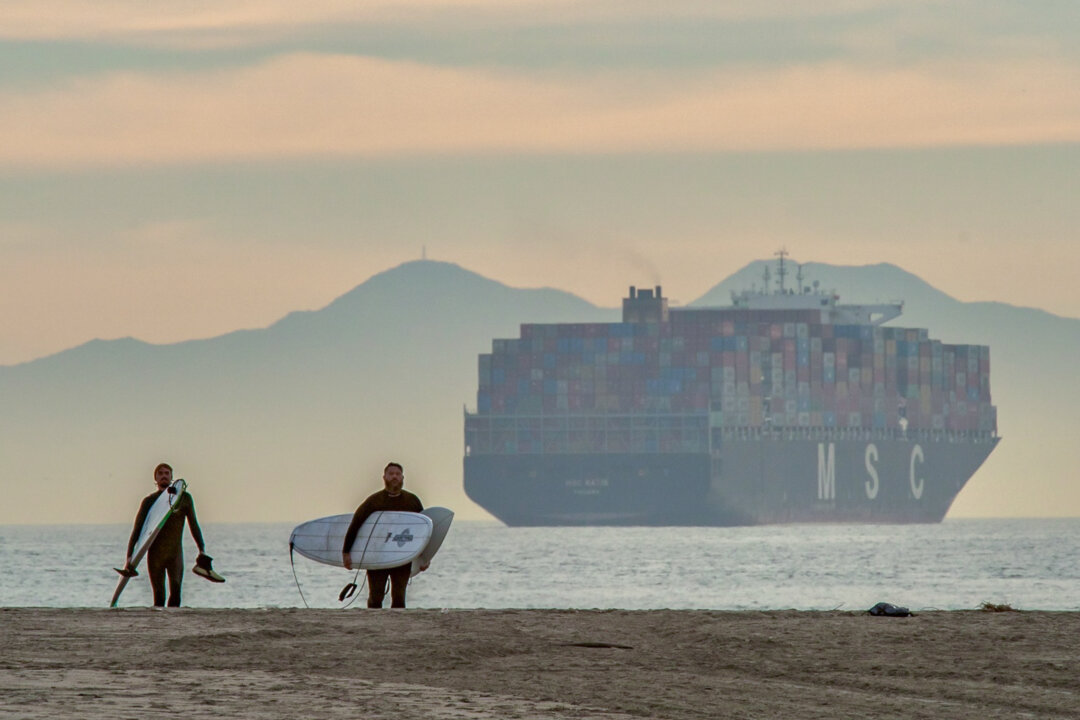
The cost of foreign goods entering the United States unexpectedly fell for the second straight month in July, new government data show.Import prices declined 0.4 percent, from June’s downwardly revised 0.3 percent decrease, the Bureau of Labor Statistics reported on Aug. 18. This represented the sharpest slide since May 2025.Markets had forecast a modest 0.1 percent jump.July’s decline was driven primarily by lower fuel prices, particularly for petroleum and petroleum products, which fell by almost 8 percent. This was partially offset by a more than 5 percent increase in the price of natural gas imports.Similar trends were observed in the latest Consumer Price Index and Producer Price Index as global energy markets stabilized in early July following the fragile ceasefire between the United States and Iran.Crude oil prices have reaccelerated as hopes have faded that Washington and Tehran will end hostilities.West Texas Intermediate—the U.S. benchmark for oil prices—topped $85 a barrel on the New York Mercantile Exchange. The global Brent oil benchmark reached $91 per barrel in overseas trading.Excluding fuel, import costs edged up by 0.4 percent, mainly due to capital goods. The surge in costs for computers, peripherals, and semiconductors reflected the buildout of artificial intelligence (AI) infrastructure in the United States.On a 12-month basis, import prices eased to below 6 percent, from the 7.1 percent increase in the previous month.Export prices, meanwhile, also fell sharply by 1.3 percent for the second straight month—the largest monthly decline since May 2023—the bureau said. June’s reading was revised to a 0.7 percent decrease.The consensus forecast called for a 0.2 percent increase.The surprise drop was driven mainly by an almost 2 percent decline in nonagricultural products, including a 4 percent decrease in industrial supplies and materials.Conversely, prices for automotive products, capital goods, and consumer goods were pushed higher.Export prices decelerated to 8.2 percent year over year.Geographic BreakdownPrices of goods coming from China and Japan ballooned last month.Chinese import prices rose by 0.8 percent, the largest monthly increase in almost 20 years. Over the past 12 months, costs of Chinese shipments climbed nearly 3 percent.The costs of Japanese imports have fluctuated in recent months. In July, import prices from Japan rose 0.6 percent, following a 0.5 percent drop in June and a 0.3 percent increase in May. Japanese import prices increased almost 2 percent year over year.President Donald Trump greets Canadian Prime Minister Mark Carney at the White House on Oct. 7, 2025. Madalina Kilroy/The Epoch TimesIn a White House report titled “The Great Transshipment Scam,” the administration said that more than 40 countries helped China evade tariffs for $60 billion in trade by rerouting trade through nations subject to lower U.S. import duties than China, a practice known as transshipping.Canada, Mexico, Japan, and the European Union were some of the markets identified in the report.“The United States faces a growing challenge from the illegal transshipment of goods through third countries to evade applicable tariffs and other trade remedies,” the White House stated.“Illegal transshipment may involve relabeling, repackaging, re-invoicing, minor processing, false country-of-origin claims, or other actions intended to secure tariff treatment that would not apply if the goods’ true economic origin were declared.”Import prices from Mexico, meanwhile, fell for the second straight month, sliding 0.3 percent.Prices for imports from Canada fell more than 2 percent, the first one-month decline since September 2025.Canada has been rushing to strike a deal with Washington to avoid a 50 percent tariff on approximately $20 billion in goods set to take effect on August 19.Officials, including Canada–U.S. Trade Minister Dominic LeBlanc and chief trade negotiator Janice Charette, have met with U.S. Trade Representative Jamieson Greer and Commerce Secretary Howard Lutnick in Washington in recent days.While Prime Minister Mark Carney did not provide details, he told reporters on August 17 that he spoke with the president by phone.Greer defended the administration’s actions, telling the press in Iowa on August 14 that the United States would not tolerate retaliation from Canada.“For us, this is not a trade war. We have domestic supply chains we’re trying to protect,” he said. “It’s not Canada-specific; we’re doing this globally. If a country retaliates against us, we’re not going to tolerate that. We’ll take action.”Ultimately, says Greer, the White House will do “what’s best for America.”Bilateral trade totaled close to $1 trillion in goods and services last year. America’s goods trade deficit with Canada fell $15.5 billion, or about 25 percent, to $46.4 billion.Emel Akan and Matthew Horwood contributed to this report.










Related Articles

BusinessCompaniesEnergy
EQT to Buy Range Resources, Creating Largest US Natural Gas Producer
EQT Corp. has agreed to acquire rival Appalachian shale driller Range Resources...

BrightBusinessInvestingPersonal FinanceStocks
Wall Street Is Very NervousShould You Worry? Can You Repair Your Losses?
On Oct. 23, the Dow Jones Industrial Average fell 652.82 points, or...

BusinessMarkets
Nearly 3 in 10 New-Car Trade-Ins Are Underwater, Edmunds Finds
Almost three in 10 vehicles traded toward a new car are worth...



Asia & PacificChina NewsEuropeInternational RelationsNational SecurityPolicies & ImpactsUSUS NewsUS-China RelationsWorld News
Japan Defense Academy Chief Calls for 3 Red Lines in Competition With China
Japan’s former top uniformed military officer has called for establishing three “red...
