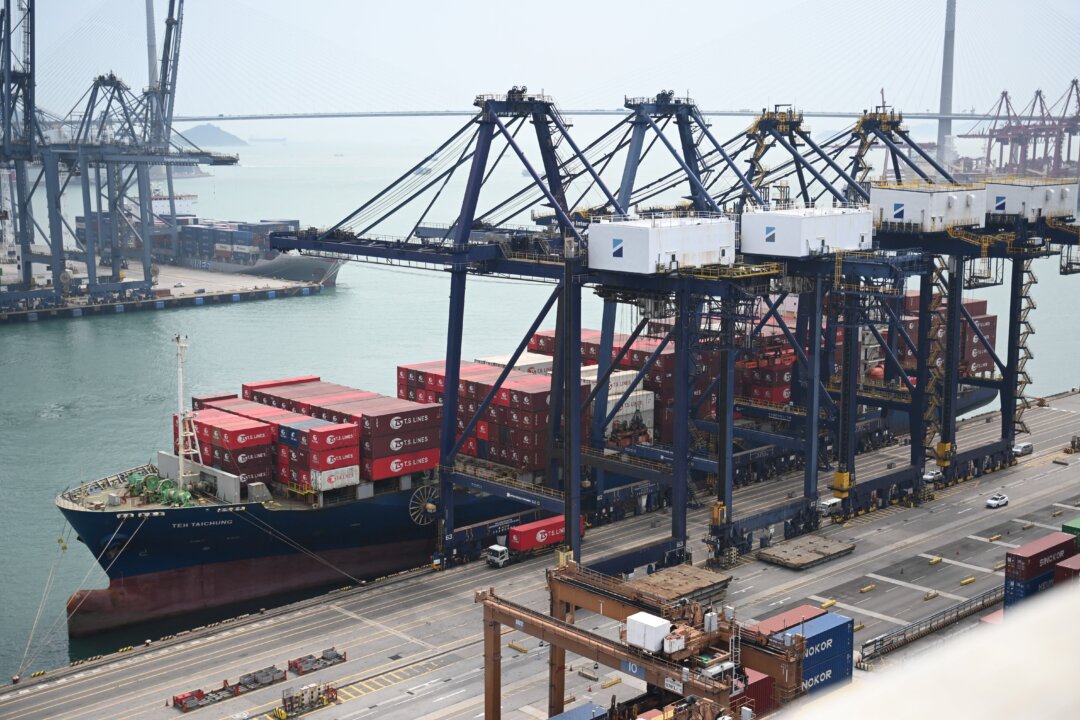
A container ship unloads its cargo at Kwai Chung Container terminal in Hong Kong on April 10, 2025. Peter Parks/ AFP via Getty ImagesThe United States will impose new tariffs ranging between rates of 10 percent and 12.5 percent on more than 60 trading partners beginning on July 24, the Trump administration announced on July 23. It comes as temporary 10 percent global levies are due to expire at midnight.The administration alleges that the 60 affected partners—which include the European Union—have failed to enforce bans on forced labor.It’s the first major push by the White House to impose across-the-board tariff duties internationally since the Supreme Court ruled in February that President Donald Trump had exceeded his authority when he imposed previous global tariffs.Trump indicated after the decision that his administration would explore alternative routes to imposing international tariffs.Shortly after the ruling, Trump imposed 10 percent global levies by invoking Section 122 of the Trade Act of 1974, a section of the legislation related to balance of payments crises. It’s these tariffs, which were limited by law to 150 days, that are set to expire at midnight, and the new tariffs are set to go into effect just as the old ones lapse.The new tariffs also rely on the Trade Act of 1974, this time invoking Section 301 of the legislation, a section related to forced labor.The tariffs would apply to nearly all U.S. imports, although many will be exempted, according to the administration.Exempted products include core essentials such as oil and gas, as well as fertilizer and food items. Items under Section 232 of the Trade Act, which governs national security tariffs on products such as cars, steel, aluminum, and copper, won’t be subject to the new tariffs.Goods that comply with the U.S.–Mexico–Canada Agreement on trade will also be exempted.In a press call, a senior administration official refuted suggestions that the forced labor tariffs were merely a direct replacement for the previous tariffs, in spite of their close timing and similar rates.The official said that the new tariffs are necessary as a result of the United States’ comparably stronger prohibitions on importing goods made with forced labor. Weaker bans in other countries gave them an unfair advantage in global trade, the official said.The official said that the administration is “responding to [the] call” from both Republicans and Democrats in Congress for the eradication of forced labor globally.Reuters contributed to this report.

Trump Imposes Tariffs on 60 Countries Over Forced Labor








Related Articles
BusinessCompaniesEnergy
EQT to Buy Range Resources, Creating Largest US Natural Gas Producer
EQT Corp. has agreed to acquire rival Appalachian shale driller Range Resources...
BrightBusinessInvestingPersonal FinanceStocks
Wall Street Is Very NervousShould You Worry? Can You Repair Your Losses?
On Oct. 23, the Dow Jones Industrial Average fell 652.82 points, or...
BusinessMarkets
Nearly 3 in 10 New-Car Trade-Ins Are Underwater, Edmunds Finds
Almost three in 10 vehicles traded toward a new car are worth...


Asia & PacificChina NewsEuropeInternational RelationsNational SecurityPolicies & ImpactsUSUS NewsUS-China RelationsWorld News
Japan Defense Academy Chief Calls for 3 Red Lines in Competition With China
Japan’s former top uniformed military officer has called for establishing three “red...
