
Europe has spent years building effective tools to measure media pluralism within its member states. This made sense because newspapers, broadcasters, regulators, ownership structures and public service media were organised within national borders. But the media environment is changing. News is now distributed through global digital platforms, and its provision is not necessarily mediated by professional journalists. Information is shaped by algorithms, exposed to foreign information manipulation, and increasingly summarised and generated by AI assistants. The result is a mismatch. Europe faces a plurality of risks to media pluralism that are European in scale, but it still mainly assesses them from national perspectives. National media systems still matter. Media law, journalists’ safety, ownership, public service media and political pressure vary sharply across countries. Any serious assessment must continue to examine conditions at national level. But if major risk factors operate across borders, through global platforms and AI mediation, Europe also needs to treat them as European risks. What Europe already has For more than a decade, the Media Pluralism Monitor (MPM) has provided a common framework for assessing risks to media freedom and pluralism. This scientific project of the Centre for Media Pluralism and Media Freedom at the European University Institute has become a trusted resource for understanding the complex factors that shape the media ecosystem. Media pluralism is often invoked as a democratic principle, but the Monitor helped turn it into something that can be systematically assessed. It has made risks visible, comparable and politically harder to ignore. Its value lies not only in the final risk scores, but in the method behind them. The MPM brings together legal, economic and socio-political evidence through a structured set of indicators, local expert assessment, primary and secondary data, peer review and a transparent risk-scoring methodology. It therefore does more than rank countries. It identifies where risks arise, whether from weak legal safeguards, concentrated market structures, pervasive political interference, polluted online environments or insufficient social inclusion. This has allowed the MPM to become more than an academic tool. It has created a shared European vocabulary for discussing media pluralism and has entered the EU’s democratic oversight architecture. Since 2020, the European Commission’s Rule of Law Report has used MPM results in its media pluralism pillar. Precisely because this framework has been successful, in the present chaotic technological transition, it raises a further question: should Europe continue to assess media pluralism only by looking at national systems? Since 2014 the Centre for Media Pluralism and Media Freedom (CMPF) has been using the Media Pluralism Monitor (MPM) to assess the risks for media pluralism across the EU. How the European Media Freedom Act changes the equation Most provisions of the European Media Freedom Act (EMFA) became applicable in August 2025, marking a turning point. The Act recognises that media freedom and pluralism are no longer only national matters. Its articles set essential conditions in the field of media for a well-functioning internal market and for liberal democracy across the European Union. If Europe now has a common legal framework for media pluralism and media freedom, it also needs the capacity to assess whether that framework is working at European level. Article 26 of the EMFA points in this direction, requiring monitoring of media markets, concentration, foreign information manipulation and interference, online platforms, editorial independence and state advertising. But measuring these only as national phenomena, as the MPM already does year after year, may now be insufficient. An “EU average” says several important things about general risk across member states. But it does not tell us whether Europeans can access reliable information about EU and global affairs across borders. It does not show whether language barriers still confine citizens within national silos. Nor does it reveal how platforms or AI interfaces affect the visibility of public-interest journalism. Above all, it does not account for the fact that while media ownership concentration is very high at national level, concentration of digital intermediaries is even higher at national, European and global level. Finally, it does not capture the full impact of foreign information manipulation and interference. Such interference moves through common digital infrastructures, targets European political debates and exploits the fragmentation of Europe’s information space. These are not national risks repeated 27 times. They are European systemic risks. What a European media monitor should measure Europe therefore needs a second layer of monitoring: not a replacement for national assessment, but a key complement. A European Media Pluralism Monitor should focus on risks that emerge across Europe’s shared news and information space. It should ask whether citizens can access plural and reliable news about European affairs beyond their domestic media sphere. It should assess whether language barriers are being reduced through translation, subtitling, multilingual publishing and AI tools, or whether they still prevent common debates. It should examine how public-interest journalism, especially about Europe, appears on platforms and AI interfaces. A European monitor should also measure dependency. Many publishers rely on a few digital intermediaries for traffic, audience reach and advertising revenue. This affects journalism’s sustainability and may disproportionately weaken smaller and local media. Furthermore, the choices made by AI providers when training their models might affect not only the economic sustainability of media by using media content without paying for it, but also content diversity by privileging more widespread languages and larger media markets. It should also look at mobile EU citizens, border communities and transnational audiences. A citizen living outside her country of origin may not fit neatly into a national media system. The same is true for people in border regions or following politics in more than one language. Finally, such a monitor should examine whether EU safeguards produce real convergence in practice across member states. Formal compliance is not enough. The question is whether European rules concretely improve journalism and citizens’ access to information. Measuring the European public sphere None of this implies that Europe is becoming a single media system. It remains linguistically diverse, politically uneven and institutionally layered. But that is precisely why an additional and complementary European layer of analysis, coordinated and incorporated within the MPM, is now necessary. If Europe’s information space is fragmented, asymmetrical and only partially integrated, those features and their evolution should themselves become objects of measurement. What is not measured is often not governed. With the EMFA, Europe has adopted a common framework for media freedom. But law alone does not guarantee protection. The European Union should now develop the tools to understand whether media pluralism is protected not only within member states, but also whether the conditions for a healthy European public sphere are improving or deteriorating across its shared information space. The Media Pluralism Monitor is a project co-funded by the European Union. A weekly e-mail in English featuring expertise from scholars and researchers. It provides an introduction to the diversity of research coming out of the continent and considers some of the key issues facing European countries. Get the newsletter!










Earth the school for souls
The breath of life, when an soul comes to experience in the...
You are uninstalling complete packages of ancient programs. Beliefs, limitations, and blocks...
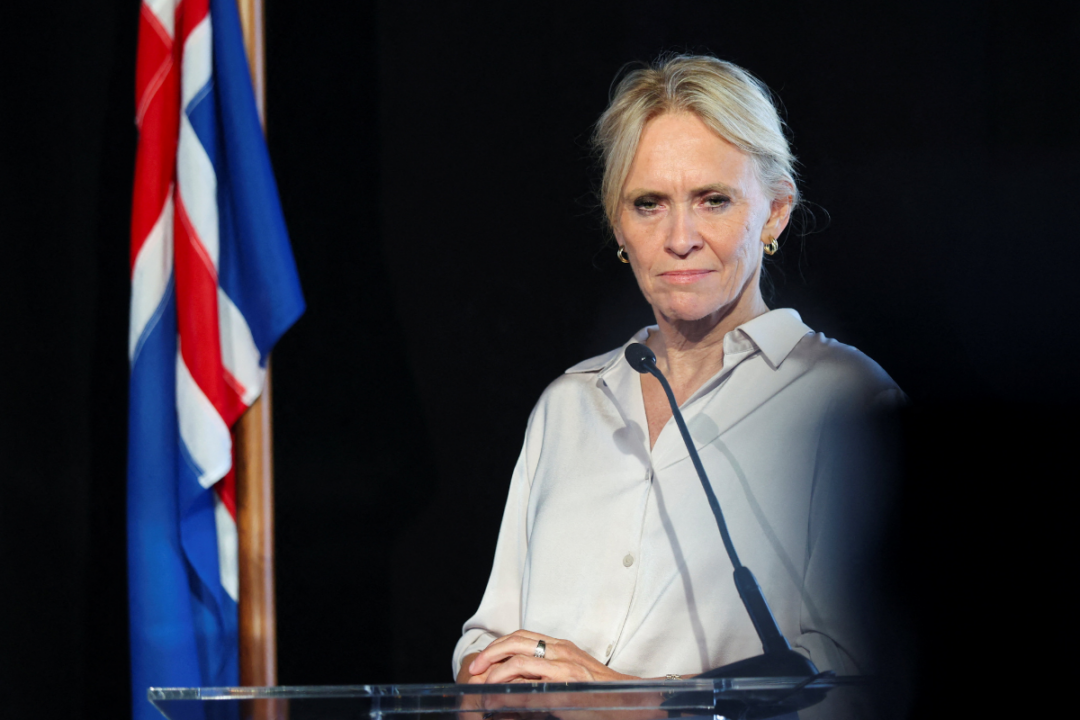
Iceland Focuses on Security Partnerships After Voters Reject Opening EU Membership Talks
Icelandic Minister for Foreign Affairs Thorgerdur Katrin Gunnarsdottir attends a press conference...
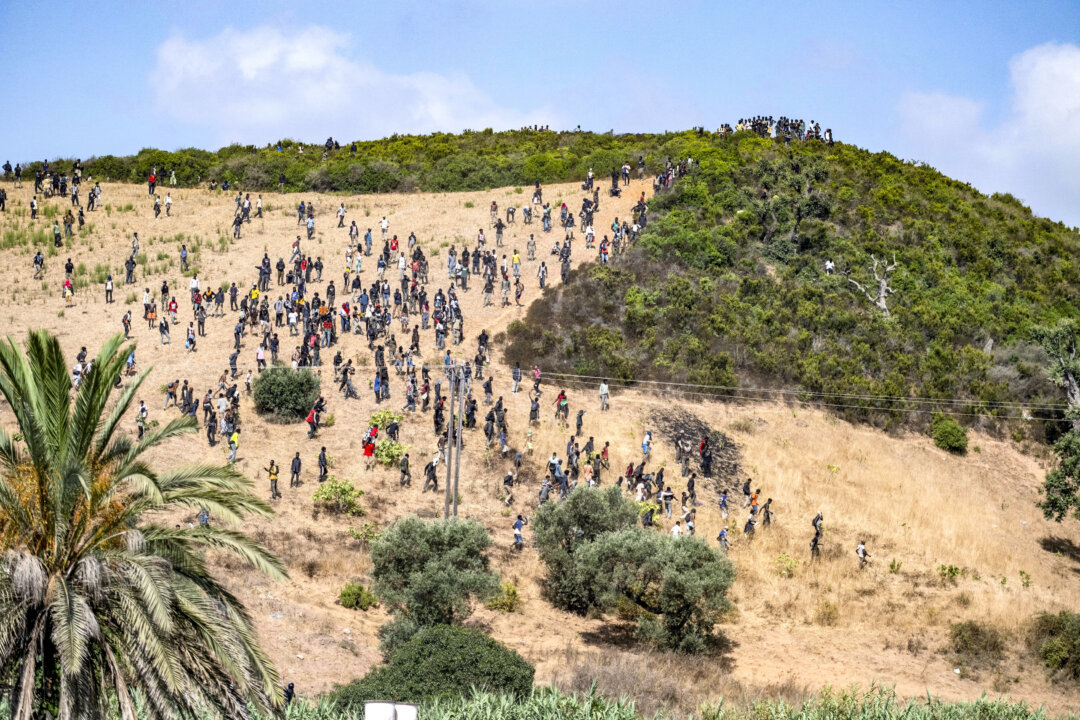


Italy, Spain Extend Tit-for-Tat Border Curbs After Ceuta Illegal Immigrant Crisis
Immigrants gather on a hill as they attempt crossing from the border...
