A China-linked internet company built a large network of fake news websites and automated Threads accounts that primarily targeted users in Taiwan and Japan, using entertainment content to build audiences before introducing political messaging, according to a report released in April by Taiwan-based nonprofit organization Doublethink Lab.The report identified the company as Borderless Group, a Chinese internet firm. Researchers at Doublethink Lab said the company operated a coordinated ecosystem of fake accounts, AI-assisted content, and imitation news websites that could be used for Chinese Communist Party (CCP) influence operations targeting Taiwan, particularly during election periods.The findings highlight what researchers describe as an evolution in Beijing’s online influence tactics. Rather than relying solely on overt political propaganda, the network primarily distributed celebrity gossip, lifestyle content, and viral posts to build audiences before occasionally inserting politically related material.Automated Network Built Around Fake News SitesAccording to the report, researchers identified 1,217 domain names associated with fake news websites operated by Borderless Group, of which 475 remained active.Most of the sites published content in traditional Chinese, which is the standard script used in Taiwan, though researchers also found versions in Japanese, Portuguese, and smaller amounts of English, German, Finnish, and Czech.The report also identified 549 fake Threads accounts linked to the company. Created between July 2023 and February 2026, the accounts collectively published at least 467,547 posts and replies, with 83 percent of those posts directing users to websites controlled by the group.Researchers said the accounts primarily targeted users in Taiwan and Japan.The network displayed hallmarks of coordinated inauthentic behavior, including mass account creation, duplicated content, and automated posting.In August 2024 alone, 176 accounts were created in a concentrated period. Nearly 97.7 percent of the fake accounts posted content that was identical to at least one other account, while summaries accompanying some posts appeared to have been generated using AI.Most of the accounts posted entertainment news, celebrity gossip, and highly shareable online content, with some material copied directly from Taiwanese and Chinese media outlets.The accounts repeatedly reposted one another’s content, artificially boosted engagement through coordinated interactions, and ultimately directed users to advertising-filled websites operated by the group. Doublethink Lab classified the activity as “coordinated inauthentic behavior.”The report found that the posts received an average of 65 likes. More than 4,300 posts surpassed 1,000 likes, while the most successful post recorded 1.2 million views and 90,000 likes.Researchers also identified approximately 566 authentic Threads users who had shared links to the group’s websites, indicating that the operation had succeeded in reaching genuine users’ feeds.Building Audiences With Entertainment Content Two analysts spoke to The Epoch Times on condition of anonymity out of fear of reprisal and privacy concerns.A Taiwan-based internet information researcher surnamed Zhao told the publication that the accounts initially avoided politics.“They first cultivate the accounts by posting entertainment news, life hacks, and sensational content to attract clicks,” Zhao said.“They also use coordinated accounts to like one another’s posts and create the appearance of engagement.“Once they accumulate enough followers, they begin mixing in political content. Some accounts use videos of attractive women dancing, while others feature elderly people dancing to appeal to different age groups. They also play songs praising the CCP, so Taiwanese users become familiar with the music, in an apparent effort to cultivate more favorable attitudes toward Beijing.”A Chinese network engineer told The Epoch Times that online propaganda has become one of Beijing’s most important tools for influencing Taiwan.“Much of the content on RedNote, Douyin, and WeChat is specifically designed for Taiwanese audiences,” he said. “Using AI, they can produce large numbers of videos in Mandarin or Taiwanese to build a sense of cultural affinity with people in Taiwan.”The engineer said a friend recently quit such work because he no longer wanted to participate in what he described as deceptive propaganda.A man holding a phone walks past a sign for Chinese company ByteDance’s app, TikTok, known locally as Douyin, at the International Artificial Products Expo in Hangzhou, Zhejiang Province, China, on Oct. 18, 2019. STR/Files/ReutersLimited, Flexible, and Mixed Political Messaging Although the network generated nearly half a million posts, only 1,779 involved political topics—less than 0.4 percent of the total.Researchers said the political messaging did not consistently favor a single viewpoint. Some posts criticized Taiwan’s ruling Democratic Progressive Party (DPP), while others criticized the CCP, in contrast to earlier influence campaigns that typically focused on promoting a single political narrative.Doublethink Lab noted that Borderless Group had previously increased political content during election periods and warned that the network could do so again ahead of Taiwan’s upcoming local elections.The report concluded that the company’s existing infrastructure—including its accounts, websites, and automated posting systems—poses a risk of being deployed for political influence operations because of the group’s documented historical ties to the CCP.Among the connections cited, the report said CCP officials had previously visited the company to discuss overseas media outreach.The report also echoed a commonly discussed tactic among Chinese online commentators known as “small criticism, big assistance”—a strategy in which accounts appear to criticize the CCP or Chinese leader Xi Jinping on limited or officially tolerated issues while avoiding challenges to the legitimacy of the regime itself.Such selective criticism can help accounts build credibility, obscure their affiliations, and make coordinated influence operations more difficult to detect.Rather than maintaining a consistent political position, researchers said, some accounts may openly support the CCP, others may criticize it, while still others present themselves simply as ordinary Taiwanese users.The diversity of viewpoints makes it more difficult for both users and social media platforms to identify coordinated operations based on individual posts and allows the network to shift direction when political objectives change.The engineer said the approach reflects Beijing’s broader cognitive warfare strategy against Taiwan.“Just because an account criticizes the CCP doesn’t mean it isn’t part of the CCP’s online influence network,” the engineer said.“They may criticize a few officials, government policies, or social issues, and may even deliberately use harsh language against Xi Jinping to attract anti-CCP users.“But they generally avoid discussing the legitimacy of the regime, how power operates, human rights abuses, or the CCP’s external expansion. They first use limited criticism to blend into anti-CCP communities and gain trust.”The engineer suggested the accounts could later amplify selected stories or emotional narratives to steer public opinion in a desired direction.Zhou Yu contributed to this report.


Report Identifies China-Linked Network Using Threads to Build Influence in Taiwan









Related Articles
China Business & EconomyChina NewsChina Technology
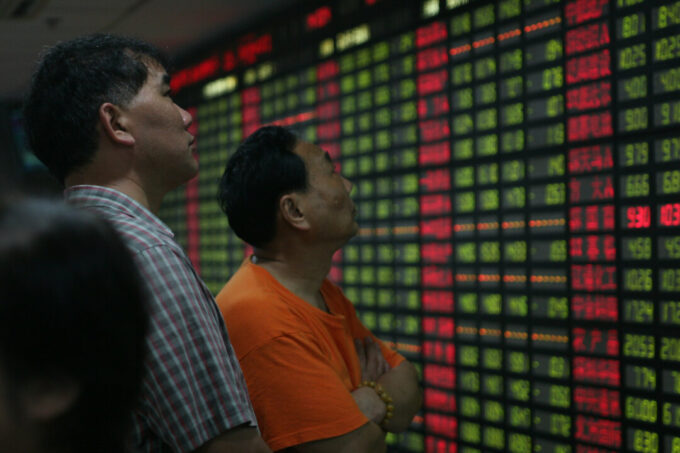
China Tech Index Plunges More Than 40 Percent From July Peak
China’s technology-heavy STAR 50 index has fallen by more than 40 percent...
China Military NewsChina NewsChinese RegimeInside CCP OfficialdomSpecial TopicsZhang Youxia
Xi Opens CCP Plenum Amid Sweeping Purges, Record-Low Attendance Forecast
Chinese Communist Party leader Xi Jinping opened a four-day meeting of senior...

China Business & EconomyChina NewsChinese RegimeFinance & Business TiesInside CCP OfficialdomSpecial Topics
Chinas Economic Woes Deepen as CCP Plenum Focuses on Political Control
The Chinese Communist Party (CCP) opened a four-day leadership meeting in Beijing...



China NewsEuropeGlobalUK NewsWorld News
UK Must Be Ready for War in 1,000 Days, Says British Defense Secretary
British Defense Secretary Wes Streeting has said the country must be ready...
