Record flooding has inundated parts of southern China’s Guangxi Province, leaving residents stranded inside homes and factories and, in some areas, without running water, electricity, or adequate food for days.Three hydrological stations in Ningming and Longzhou counties recorded their highest measured flood levels on Aug. 25, according to state media China News Service.The flooding followed days of torrential rain associated with Typhoon Zitan and heavy inflows from upstream areas. In Ningming County, the town of Zhilang recorded 618.2 millimeters of rain between Aug. 21 and Aug. 24.State media China National Radio reported that the flooding has affected 61,000 people across Guangxi and prompted the relocation of 54,000. More than 8,000 people were moved to emergency shelters. In hard-hit Longzhou County, 21,559 people were affected, and 5,816 homes had been flooded as of Aug. 24.Residents interviewed by The Epoch Times described continuing shortages and limited access to assistance even as floodwaters began to recede. They spoke on condition of anonymity out of fear of reprisal.Residents Trapped by Rising Floodwaters In Ningming County, a woman told The Epoch Times she and her child had been trapped inside their home after floodwaters rose to the second floor.The family had been without water and electricity for two or three days, and her phone was nearly out of power. She said the water rose so quickly that there was little opportunity to evacuate.“We have already signed up in the group chat [requesting rescuers], and everyone is waiting,” she said.Civilian rescuers later delivered bread and drinking water, while drones were used to transport supplies.Another Ningming resident told The Epoch Times that water had reached about 1.5 meters (5 feet) inside his home and had risen to the second floor in some lower-lying houses. His village has nearly 3,000 residents, many of whom remained trapped at home, he said.His family still had rice but no vegetables and was rationing food.Severe flooding was also reported around the Dongya Sugar Factory in Ningming, where a civilian rescuer said more than 100 people were trapped.“I brought gasoline and food in,” the rescuer told The Epoch Times. “The inflatable boat had run out of fuel.”The rescuer arrived on Aug. 24, but water levels rose another meter that night. He said he did not know how many people inside the factory had been rescued.A relative of a factory worker told The Epoch Times that some people inside had gone an entire day without food. Rescuers also struggled to navigate flooded roads, the relative said.Communities Rely on Self-RescueAnother female resident told The Epoch Times that floodwaters reached the second floor, and the area went without water, electricity, and outside assistance for three days.Residents relied on one another until civilian rescuers arrived with bottled water and bread.“We can only save ourselves here. We are used to saving ourselves,” she said.The flooding destroyed or damaged cars, electric scooters, refrigerators, and other household belongings. Crops were also submerged, and livestock were swept away, she said.Some residents were reluctant to evacuate because they did not know where they would be taken, while elderly and disabled people faced additional difficulties leaving their homes.In Nakeng Township, a resident told The Epoch Times that floodwaters rose rapidly overnight, reaching roughly halfway up the second floor by early morning. He and his family were trapped for nearly two days and survived on food stored at home.Although water levels later fell, running water remained intermittent, while electricity and communications were still disrupted. Streets were covered in mud and garbage, and his family lost several appliances and an electric scooter.In nearby Ziwei Village, a resident told The Epoch Times that floodwaters rose more than 3 meters at their peak. The village’s roughly 700 residents received only 20 cases of bottled water and some canned congee, she said.“We are relatively remote here, so supplies basically can’t reach us,” she said.The flooding also affected parts of Jiangzhou District, where a resident told The Epoch Times that more than half the village was submerged. People were largely relying on one another for food, water, and other necessities.As floodwaters recede, residents in the hardest-hit areas now face the aftermath, including damaged homes and belongings, submerged crops and livestock, and ongoing disruptions to basic services.Xu Yiyang and Gu Xiaohua contributed to this report.

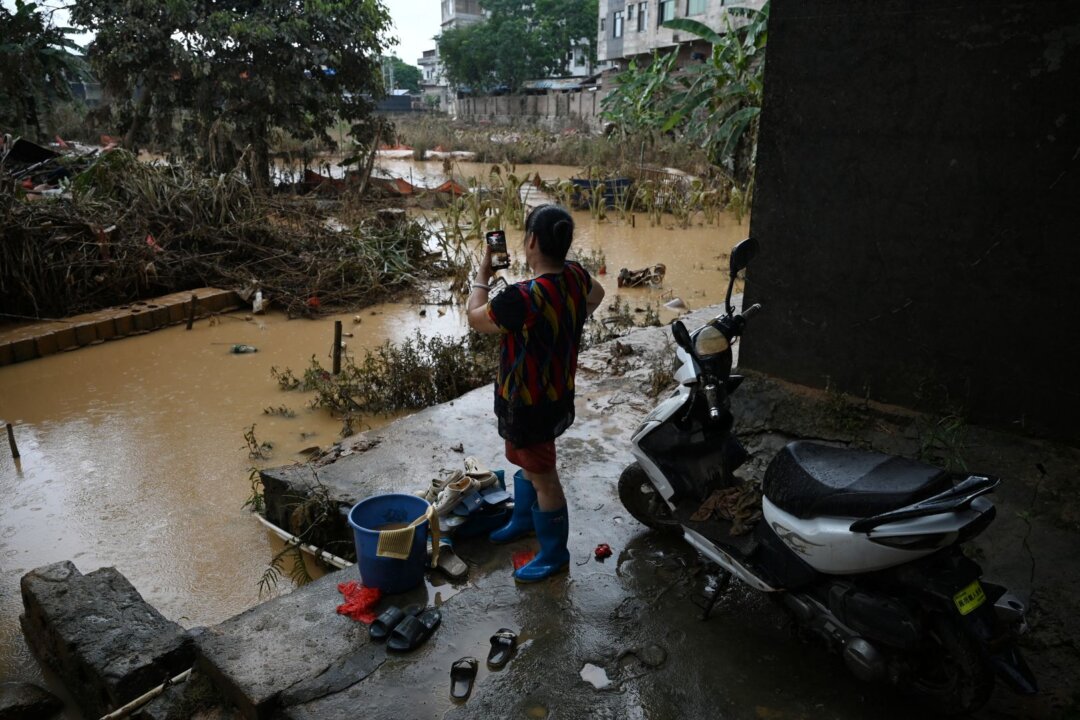
Record Flooding Leaves Guangxi Residents Stranded Without Food, Water, Power








Related Articles

China Business & EconomyChina NewsChina Technology
China Tech Index Plunges More Than 40 Percent From July Peak
China’s technology-heavy STAR 50 index has fallen by more than 40 percent...
China Military NewsChina NewsChinese RegimeInside CCP OfficialdomSpecial TopicsZhang Youxia
Xi Opens CCP Plenum Amid Sweeping Purges, Record-Low Attendance Forecast
Chinese Communist Party leader Xi Jinping opened a four-day meeting of senior...

China Business & EconomyChina NewsChinese RegimeFinance & Business TiesInside CCP OfficialdomSpecial Topics
Chinas Economic Woes Deepen as CCP Plenum Focuses on Political Control
The Chinese Communist Party (CCP) opened a four-day leadership meeting in Beijing...



China NewsEuropeGlobalUK NewsWorld News
UK Must Be Ready for War in 1,000 Days, Says British Defense Secretary
British Defense Secretary Wes Streeting has said the country must be ready...
