Around 2003, Guo Zhijun obtained a copy of Freegate, software developed by Falun Gong practitioners to bypass the Chinese Communist Party’s internet censorship.Operated by U.S.-based Dynamic Internet Technology, the program gave him access to accounts of the Great Famine, the Cultural Revolution, and the 1989 Tiananmen Square massacre—subjects he said had been concealed or distorted in mainland China.“I began learning many historical truths that I had known nothing about in China,” Guo told the Chinese edition of The Epoch Times.The discovery prompted him to reassess the Chinese Communist Party’s (CCP) account of China’s past. It also began changing his view of Falun Gong, a spiritual practice that the Chinese regime has sought to eradicate since July 1999.Before meeting adherents of the practitice himself, Guo said his understanding of Falun Gong had been shaped by the CCP’s sustained campaign of demonizing propaganda across state controlled television, newspapers, schools, and the internet.Access to information outside the party’s control dismantled that portrayal, while meeting practitioners in China contradicted it directly.“I later came to know some Falun Gong practitioners and found that they were completely different from the image in the CCP’s propaganda,” he said.Guo described them as ordinary people with families, jobs, and daily responsibilities who sought to live by Falun Gong’s principles of truthfulness, compassion, and tolerance.“They gave me the impression of being very sincere and kind,” he said.After moving to the United States, Guo said the freer environment gave him more opportunities to meet practitioners and learn about their experiences.Guo is now the San Francisco activities director for the China Democracy Party, an unregistered political organization advocating for multi-party democracy, constitutional government, and human rights in China. He is also one of the initiators of the One Person, One Post campaign, an overseas volunteer movement that publicizes cases involving political prisoners and prisoners of conscience held by the Chinese regime.Breaking Through the FirewallFreegate routes users around internet controls and allows them to reach websites blocked inside China.The program spread largely through personal networks because people could copy the small file and send it directly to others.The Epoch Times has reported how Freegate and other circumvention programs moved from person to person inside China. Dynamic Internet Technology President Bill Xia said in 2010 that users could reach blocked websites with little more than a double-click.A 2015 report on Freegate described activists using the program to access overseas news and communicate with other rights advocates. Xia said at the time that Freegate was serving hundreds of thousands of users each day.Chinese rights activist Chen Guangcheng told the publication that he began using Freegate in 2003 and often discovered that others in his personal network were using it as well.“If you have one person in a group of friends who uses it, then soon everyone has it,” Chen said.A 2024 profile of former CCP loyalist Gong Kai recounted how he and seven college roommates used Freegate and UltraSurf to reach overseas broadcasts and information unavailable through China’s censored internet. Gong later credited the software with helping dispell beliefs formed through communist political education.For Guo, gaining access to suppressed history began a reassessment that deepened through further research and personal encounters.“At that moment, I understood that we had been living in an environment woven together by lies,” he said.Guo said the scale of censorship convinced him that the CCP regarded access to independent information as a threat to its political control.Countering the PropagandaFalun Gong, also known as Falun Dafa, combines meditative exercises with moral teachings based on three principles: truthfulness, compassion, and tolerance.The practice spread rapidly in China during the 1990s before the CCP launched a nationwide campaign to eradicate the practice on July 20, 1999, over fears that its popularity threatened the regime’s power—there were more than 70 million people practicing, according to official estimates—and its independence from CCP control.Assistant Secretary of State for Democracy, Human Rights, and Labor Riley Barnes said on July 17 that July 20 would mark 27 years since the ongoing campaign began. Barnes said practitioners continue to face imprisonment and other abuses for their faith and called for accountability for religious-persecution crimes.The U.S. Commission on International Religious Freedom said in its 2026 annual report that Chinese authorities were still imprisoning Falun Gong practitioners in 2025 and that reports of practitioners dying in custody continued to come in.The commission again recommended that the State Department designate China a “country of particular concern … for engaging in systematic, ongoing, and egregious violations of religious freedom.”Guo said personal contact made the difference between learning that the CCP controlled information and recognizing the human consequences of that control.Falun Gong practitioners have also circulated firewall circumvention software and other information materials inside China as part of a decentralized effort to counter the CCP’s propaganda.Larry Liu, deputy director of the Falun Dafa Information Center, told EpochTV in 2024 that practitioners inside China have consistently been distributing software, pamphlets, DVDs, and other information at the risk of lengthy prison sentences and even their lives. Many outside China have been doing the same.Liu described the effort as an “information freedom movement.”A Broader Pattern of RepressionGuo said his change in understanding did not end with a different view of Falun Gong. It altered how he understood the CCP’s treatment of groups capable of maintaining beliefs, organizations, or loyalties outside the CCP’s control.“The experience of Falun Gong is a microcosm of the deterioration of human rights and the destruction of the rule of law in China,” he said.Guo said methods used during the campaign against Falun Gong—including arbitrary detention, coercive ideological pressure, public stigmatization, and attacks on independent organization—later appeared in campaigns against other groups.He pointed to the treatment of rights lawyers, dissidents, unregistered religious believers, Tibetans, Uyghurs, and Hong Kong democracy advocates.“In a one-party dictatorship, as long as a group is not completely controlled, or has independent thought and the ability to organize independently, it may be viewed as a threat,” he said.The repression has also extended beyond China’s borders.In November 2024, a federal judge sentenced John Chen to 20 months in prison after he pleaded guilty to acting as an unregistered agent of the Chinese regime and bribing a who he thought was an Internal Revenue Service official in a plot targeting U.S.-based Falun Gong practitioners.The Justice Department said Chen and co-defendant Lin Feng worked at the direction of a Chinese regime official to further Beijing’s campaign to repress and harass Falun Gong practitioners overseas.Democracy and Rule of LawGuo said the persecution could not be separated from China’s one-party political system.Without independent courts, constitutional limits on state power, and protections for religious and civil organizations, he said, any group can become vulnerable when the CCP decides that group is politically inconvenient.“The real solution is for China to move toward democracy, constitutional government, and the rule of law,” he said.Guo said the damage extends far beyond those directly targeted. In his view, requiring citizens to accept official falsehoods and participate in the stigmatization of peaceful believers weakens public trust and respect for the law.“If the law cannot protect the people and only serves power, then the whole society will be harmed,” he said.His work with One Person, One Post focuses on individual cases involving people imprisoned for political, religious, or human-rights activity. The campaign encourages volunteers to repeatedly publish information about selected detainees so their cases do not disappear from public view.Organ Harvesting and Calls for ActionGuo urged democratic governments to confront the Chinese regime’s forced organ harvesting from prisoners of conscience, particularly Falun Gong practitioners, through investigations, legislation, visa restrictions, asset freezes, and other targeted sanctions.“If a regime can treat the lives and bodies of persecuted people as tools, that is no longer only political persecution—it is a challenge to the moral bottom line of humanity,” he said.Canadian human-rights lawyer David Matas and former Canadian Secretary of State David Kilgour concluded in a 2006 investigation that Chinese state institutions had killed Falun Gong prisoners and removed their organs.Their inquiry cited recorded calls to Chinese hospitals, transplant data, witness testimony, medical testing of detainees, extremely short wait times for organ recipients, and other evidence.The China Tribunal, an independent people’s tribunal chaired by British barrister Geoffrey Nice, later concluded beyond reasonable doubt that forced organ harvesting had occurred in China for years on a significant scale. Its 2020 judgment said Falun Gong practitioners had likely been the main source of organs and that the tribunal had found no evidence that the atrocity had stopped.The tribunal said Chinese authorities had provided no satisfactory explanation for the transplant volumes, short wait times, and the sources of organs identified in the evidence it reviewed.Congress is also considering measures address the practice.The House passed the Falun Gong Protection Act by voice vote on May 5, 2025. The bill would require visa and property-blocking sanctions against foreign individuals found to have knowingly and directly engaged in or facilitated involuntary organ harvesting in China. It remains before the Senate Foreign Relations Committee.Sens. Ted Cruz (R-Texas) and Jeff Merkley (D-Ore.) introduced the bipartisan Falun Gong and Victims of Forced Organ Harvesting Protection Act, or S.4009, on March 5.Sens. Adam Schiff (D-Calif.), Todd Young (R-Ind.), Ron Johnson (R-Wis.), Ron Wyden (D-Ore.), and Mike Rounds (R-S.D.) have joined as cosponsors.The measure would impose sanctions on people responsible for forced organ harvesting in China and direct the secretary of state to report to Congress on the CCP’s organ harvesting policies and China’s transplant system.The Senate Foreign Relations Committee advanced S.4009 on June 17, moving it toward possible consideration by the full Senate.Cruz urged senators to act quickly.“The United States should hold accountable those who have committed these atrocities,” Cruz said, urging his colleagues to “expeditiously advance” the measure. Merkley said reports of forced organ harvesting from vulnerable groups require the United States to stand with victims and hold the Chinese regime accountable.Guo said expressions of concern alone would not impose consequences on those responsible.“Human rights are not the internal affair of any one country,” he said. “They are a common concern of all humanity.”He urged people inside China to seek information beyond official channels and judge the CCP’s claims for themselves.Guo then directed his final appeal beyond China.“Faced with human-rights abuses, the world cannot remain silent,” he said.Lin Ruoshui contributed to the report.

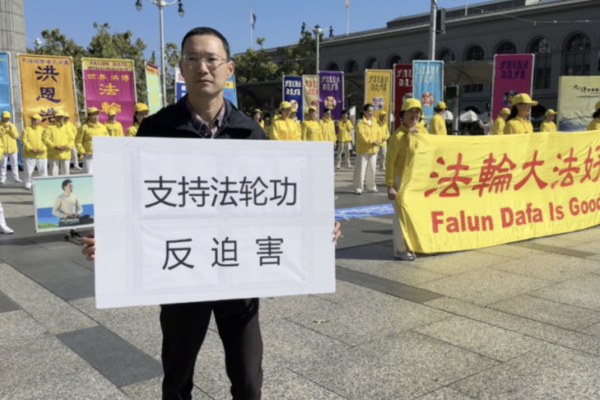
How Breaking Through Chinas Firewall Changed One Activists View of Falun Gong









Related Articles

China Business & EconomyChina NewsChina Technology
China Tech Index Plunges More Than 40 Percent From July Peak
China’s technology-heavy STAR 50 index has fallen by more than 40 percent...
China Military NewsChina NewsChinese RegimeInside CCP OfficialdomSpecial TopicsZhang Youxia
Xi Opens CCP Plenum Amid Sweeping Purges, Record-Low Attendance Forecast
Chinese Communist Party leader Xi Jinping opened a four-day meeting of senior...

China Business & EconomyChina NewsChinese RegimeFinance & Business TiesInside CCP OfficialdomSpecial Topics
Chinas Economic Woes Deepen as CCP Plenum Focuses on Political Control
The Chinese Communist Party (CCP) opened a four-day leadership meeting in Beijing...



China NewsEuropeGlobalUK NewsWorld News
UK Must Be Ready for War in 1,000 Days, Says British Defense Secretary
British Defense Secretary Wes Streeting has said the country must be ready...
