A European Union law banning large companies from destroying unsold clothing, footwear, and clothing accessories came into effect on July 19.“Under the new rules, businesses must prioritise keeping products in use by selling them (including through discounts or alternative markets), donating them to charities or social enterprises, or preparing them for reuse (repairing, refurbishing or remanufacturing),” the European Commission said in a July 17 statement. For medium-sized companies, the rules come into effect from 2030.The commission highlighted that when new goods are discarded, the raw materials, labor, and resources invested in their manufacture are lost, with their disposal generating “avoidable greenhouse gas emissions.” The new rules seek to transition the EU into a more “circular and competitive” economy.According to a May 2024 briefing from the European Environment Agency, an estimated one in five garments sold online on the continent is returned. A third of all returned clothing purchased online ends up getting destroyed. Roughly a fifth of the 21 percent of unsold stocks, including returned clothes, are destroyed.In total, an estimated 4 percent to 9 percent of textile products put for sale in Europe, amounting to 264,000 to 594,000 tons, are destroyed.The destruction of unsold and returned clothing has “significant negative effects on the environment and climate change,” the agency said.In its statement, the EU said the ban on the destruction of unsold clothing and shoes will not be applicable in certain circumstances, such as when the items are damaged, unsafe, or rejected by charities. Such destruction “must be carried out in accordance with the waste treatment hierarchy, giving priority to recycling,” it said.In order to prevent misuse of this exemption, businesses must provide proof, such as test results, that justifies the destruction of unsold goods.The rule would impose new compliance burdens for EU businesses in the textile and footwear sectors.For instance, companies are required to keep records regarding their stocks for up to five years to allow for inspections. National authorities will assess whether a business is in compliance with the rule and may impose fines in cases of violations.According to the commission, the rule was introduced under the Ecodesign for Sustainable Products Regulation (ESPR), which seeks to avoid wasting valuable products.ESPR, which came into force in 2024, is key to achieving the EU’s transition into a circular and sustainable economy.An April 2025 report from the Institute for European Environmental Policy had raised concerns about the ESPR causing international trade conflicts.“Despite the Commission’s claim wanting to avoid disproportionate costs and barriers brought on by new Ecodesign requirements, the ESPR could face issues at the WTO from members claiming the Regulation discriminates against foreign ‘like’ products,” the report said, referring to the World Trade Organization (WTO).If a foreign product is barred from the EU while the sale of a domestic product with the same appearance, function, and tariff classification is allowed, and both products are interchangeable, the WTO will consider them “like products.”“Treating them differently in this context would likely constitute discrimination,” the report said. ESPR may end up introducing trade barriers that “disproportionately affect countries with lower institutional capacities,” it said.The EU’s textile and clothing industry saw a decline in production, exports, turnover, and employment in the first quarter of 2026, the European Apparel and Textile Confederation (EURATEX) said in an update.Intense competition from low-cost textile and clothing imports, weak domestic demand in the EU region, and a subdued global trade environment were the “dominant headwinds” facing the sectors, EURATEX said. At the start of the year, no signs of market stabilization emerged.In June, EU Business confidence in the textile industry picked up due to “more optimistic views on order books, stocks and production expectations,” EURATEX said. However, confidence in the clothing sector declined slightly, “mainly driven by weaker assessment on stocks and order-book levels,” it said.

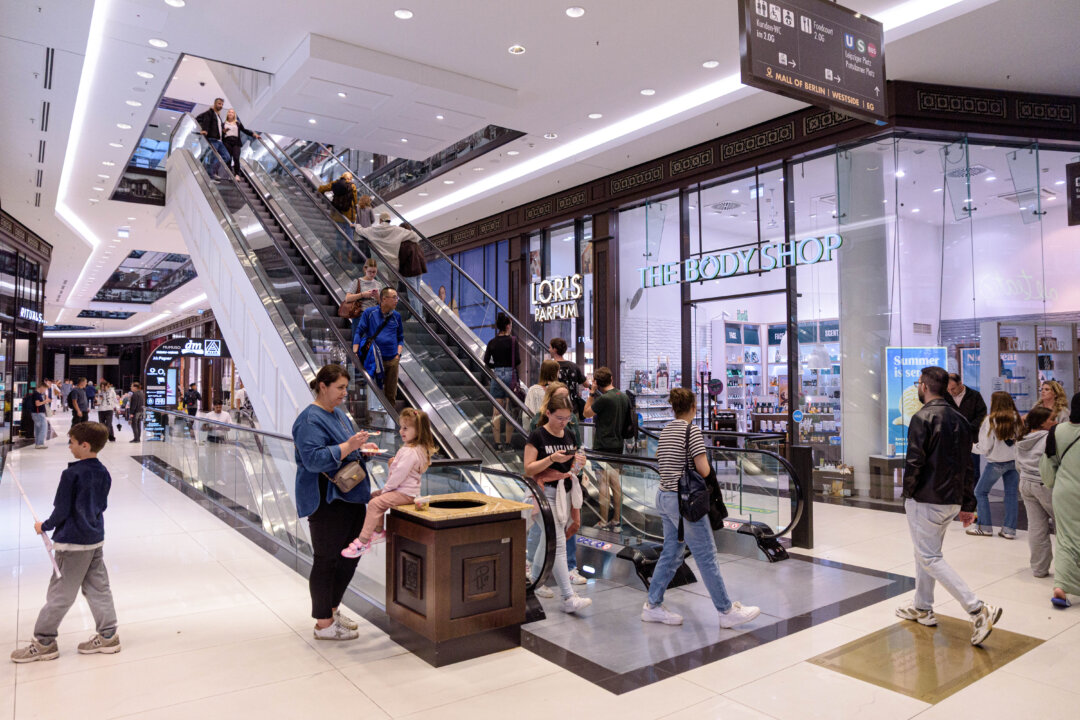
EU Bans Companies From Destroying Unsold Clothes, Footwear








Related Articles

EuropeThe Final wakeup call
Lula wins a miracle election in Brazil. Now comes the hard part: putting the country back on the right track
Three weeks ago, Brazilian President Luiz Inácio Lula da Silva’s political obituaries...
EuropeThe Final wakeup call
US midterms: what a new Congress could and could not change for Europe
US midterm elections traditionally attract fewer voters than presidential contests. But this...
EuropeThe Final wakeup call
Political power without balance leads to the erosion of democracy, what Montesquieu can teach modern-day France
KEY TAKEAWAYS Democratic erosion does not start by doing away with elections;...



China NewsEuropeGlobalUK NewsWorld News
UK Must Be Ready for War in 1,000 Days, Says British Defense Secretary
British Defense Secretary Wes Streeting has said the country must be ready...
