The European Central Bank (ECB) held interest rates at their current level on July 23, but left the prospect of an increase in September open.Last month, the ECB raised interest rates for the first time since September 2023, moving to contain an energy-driven inflation shock triggered by the war in the Middle East, even as the eurozone economy shows signs of weakening.It lifted its three key rates by 25 basis points, taking the benchmark deposit rate to 2.25 percent from 2 percent, according to a June 11 policy statement citing inflation pressures driven by an energy price shock stemming from the Iran war.However, on this occasion, the ECB opted not to make a similar move, with ECB President Christine Lagarde telling a press conference that while the outlook for energy prices looks “highly volatile,” it is currently “close to the baseline of the June Eurosystem staff projections and well above the levels recorded prior to the conflict in the Middle East.”“Uncertainty remains high, and the full inflationary impact of the energy shock has yet to play out,” Lagarde added, saying the bank is “closely monitoring the intensity and duration of the shock, as well as its indirect and second-round effects.”She further stated that oil prices shooting back up to $100 per barrel—as the war in Iran disrupts shipping—prompted talk of tightening among the ECB’s governors at this month’s policy meeting, but that the eventual decision to keep rates unchanged was unanimous.The ECB had indicated it would hold rates steady in the weeks leading up to Thursday’s meeting on the premise that energy prices were falling quickly and moving closer to the mildest of three scenarios it set out in March.Those three scenarios were a baseline scenario where energy prices peak moderately at around $90 per barrel for oil and $57 per megawatt-hour (MWh) for gas in the second quarter of 2026, before declining relatively rapidly in line with futures markets, producing a temporary rise in inflation that then moderates toward the 2 percent target.An adverse scenario, seeing a sharper and more persistent rise in energy prices, with oil near $120 and gas approaching $102 per MWh, combined with higher uncertainty and stronger indirect effects, leads to notably higher inflation and weaker gross domestic product (GDP) growth than in the baseline scenario.The ECB laid out a severe scenario, involving an even stronger and longer-lasting energy supply shock (oil peaking near $145 and gas near $125 per MWh) with amplified uncertainty and second-round effects on wages and prices, resulting in significantly elevated and more persistent inflation alongside a more pronounced slowdown in growth.However, the recent reversal, alongside the surge in European natural gas prices to more than three-year highs, has changed energy price expectations.“As we stand now today, [the milder scenario] looks quite unlikely, let’s face it,” Lagarde told a press conference.“The full effects of the energy shock have yet to play out.”The move has some economists believing a rate hike is likely in September.Global head of macroeconomics at Dutch multinational banking firm ING, Carsten Brzeski, said in a July 23 note that, going forward, “the decision of whether to keep interest rates unchanged is not so straightforward.”“In fact, the latest increase in energy prices has actually pushed the ECB closer to its more severe macro scenarios, calling for another rate hike—at least when following the ECB’s own logic and reaction function, presented at the June meeting,” he said.“Unless oil prices start dropping significantly over the next weeks, the ECB’s own macro projections in September will call for another rate hike, loud and clear.”Jan von Gerich, chief analyst at Nordea, the largest financial services group in the Nordic region, also said he foresaw future rate hikes.“The ECB left the deposit rate unchanged at 2.25 percent today, as expected, but the tone of the press release and the press conference both leave the door wide open for another 25bp (0.25 percent) rate hike at the next meeting in September, which is also our expectation,” he said in a note on July 23.Von Gerich said Nordea now predicts o.25 percent rate hike in “September, December and March 2027, bringing the deposit rate to 3 percent.”“A quick peace in the Middle East could still reduce the pressure on the ECB to hike rates, while a more notable escalation and longer-lasting war could lead to faster and even more hikes,” he added.The next ECB rate announcement is set for Sept. 10.Reuters contributed to this report.

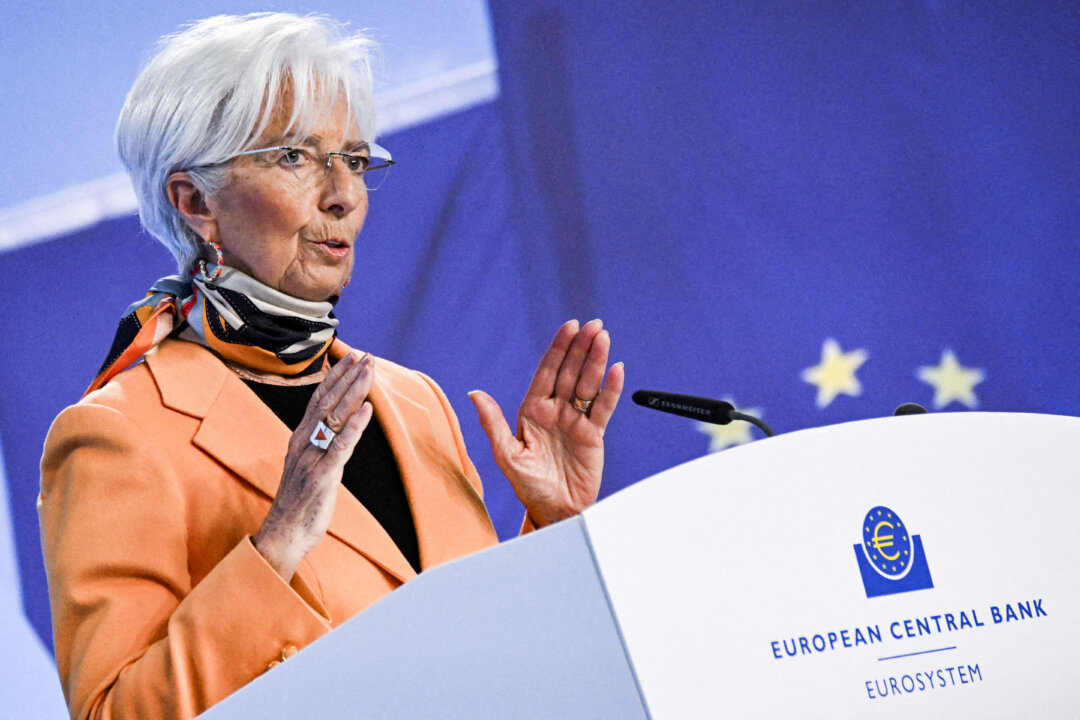
ECB Holds Interest Rates Steady, Economists Predict September Hike








Related Articles

EuropeThe Final wakeup call
Lula wins a miracle election in Brazil. Now comes the hard part: putting the country back on the right track
Three weeks ago, Brazilian President Luiz Inácio Lula da Silva’s political obituaries...

EuropeThe Final wakeup call
US midterms: what a new Congress could and could not change for Europe
US midterm elections traditionally attract fewer voters than presidential contests. But this...
EuropeThe Final wakeup call
Political power without balance leads to the erosion of democracy, what Montesquieu can teach modern-day France
KEY TAKEAWAYS Democratic erosion does not start by doing away with elections;...



China NewsEuropeGlobalUK NewsWorld News
UK Must Be Ready for War in 1,000 Days, Says British Defense Secretary
British Defense Secretary Wes Streeting has said the country must be ready...
