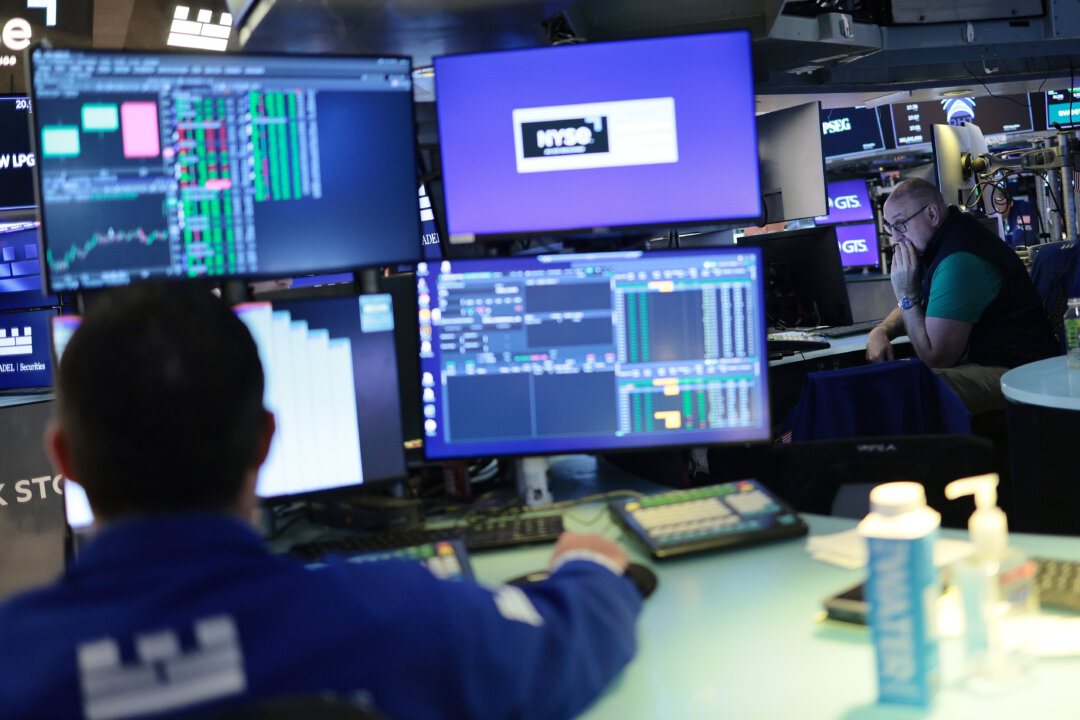
CommentaryRecently, I had an enlightening conversation with a retired investment professional who had spent decades managing regulated hedge fund portfolios.Throughout his career, he was responsible for managing institutional money, navigating numerous bull and bear markets, and making investment decisions under rigorous regulatory oversight.Although he has since retired, his passion for financial markets has never diminished. Today, he actively manages his own Personal Account, investing and trading solely with his own capital.Like many experienced professionals, he was convinced that artificial intelligence (AI) would become one of the defining investment themes of this decade. He believed demand for advanced semiconductors, high-bandwidth memory, cloud infrastructure and AI computing would continue expanding for years.His investment thesis was not unreasonable. In fact, many respected investment banks and research analysts shared similar optimism.What surprised him was not the long-term outlook. It was the speed of the correction.In mid-June, the Nasdaq began losing momentum. Within weeks, semiconductor stocks that had been market leaders suddenly entered a sharp correction. By mid-July, many semiconductor companies had fallen well into bear-market territory.Within barely five weeks, the value of his semiconductor holdings had declined so significantly that his personal net worth had fallen by approximately 25 percent. He remained financially secure. He still believed in the long-term future of artificial intelligence.Yet one lesson became painfully clear. Even decades of investment experience cannot eliminate market risk.More importantly, even experienced professionals can underestimate concentration risk when a single investment theme dominates a portfolio. His experience reminded me of a timeless truth: Disciplined investors are hard to find.During every bull market, investors convince themselves that exceptional returns result from finding exceptional companies. There is certainly truth in that. However, history repeatedly demonstrates that wealth is often preserved—not merely created—through discipline, diversification, and prudent risk management.Asset Allocation: The Foundation of Successful InvestingWhenever people discuss investing, the first question is usually: “Which stock should I buy?” Ironically, that is often the wrong question.A far better question is: “How much of my total wealth should be invested in this idea?” That single decision has probably saved more fortunes than any successful stock recommendation.Asset allocation refers to how an investor distributes wealth among different asset classes, such as equities, fixed income, cash, real estate, and alternative investments.It also determines how much exposure one has to any single country, industry, or investment theme. This is where many investors become vulnerable. During powerful bull markets, winning investments naturally become larger positions.An allocation that originally represented 10 percent of a portfolio gradually grows to 20 percent, then 30 percent, perhaps even 50 percent, simply because prices continue to rise. Many investors celebrate these gains without asking a crucial question: “What happens if this sector suddenly falls by 40 percent?”History reminds us that every investment cycle eventually experiences corrections. The semiconductor industry provides one of the best examples.Micron Technology once lost almost 98 percent of its market value during the technology bubble and the subsequent global financial crisis, before eventually recovering to become one of America’s trillion-dollar companies.Nvidia, now regarded as one of the greatest corporate success stories of our generation, experienced multiple drawdowns exceeding 50 percent, including a decline approaching 90 percent during the 2008 financial crisis.AMD also lost more than 90 percent before staging one of the most remarkable recoveries in modern technology history.These were not failed businesses. They were outstanding companies operating within one of the world’s most cyclical industries. A great company does not necessarily represent a low-risk investment. Successful investors understand this distinction. Diversification is frequently criticized during strong bull markets because it appears to reduce returns.Ironically, diversification is most valuable precisely when markets begin to fall. The objective of asset allocation is not to maximize returns every year—its purpose is to ensure investors survive long enough to enjoy long-term compounding.A sign is posted in front of Nvidia headquarters in Santa Clara, Calif., on Aug. 27, 2025. Justin Sullivan/Getty ImagesPosition Sizing: The Most Overlooked DisciplineIf asset allocation determines a portfolio’s structure, position sizing determines its survival.Professional traders rarely begin by asking which stock to purchase. Instead, they ask: “How much capital am I willing to risk?”This question separates investing from speculation. Every investment contains uncertainty. No matter how convincing an investment thesis appears, markets can still surprise everyone.The retired hedge fund manager I mentioned earlier did not lose money because he misunderstood AI or semiconductor companies. He lost money because a single investment theme eventually represented too much of his overall wealth. The mathematics of investing can be unforgiving.A 25 percent loss requires approximately a 33 percent gain simply to break even. Lose 50 percent, and a portfolio must double just to recover. Lose 75 percent, and recovery requires a remarkable 300 percent return.This explains why legendary traders such as Paul Tudor Jones and Stanley Druckenmiller have consistently emphasized capital preservation above all else.Professional traders know they will occasionally be wrong. Their success depends not on eliminating mistakes but on ensuring that no single mistake becomes financially catastrophic. This also explains why successful traders can make money in both rising and falling markets.During bull markets, they ride established trends. During bear markets, they reduce exposure, hedge portfolios, increase cash, or selectively profit through short selling and options strategies.Professional traders do not argue with markets. They adapt to them. Hope is not an investment strategy—discipline is.A trader works on the floor of the New York Stock Exchange in New York City on May 6, 2026. Spencer Platt/Getty ImagesA Lesson From SanDiskRecent events surrounding SanDisk illustrate just how quickly market sentiment can change. The stock reached a historic intraday high of $2,354.39 per share in June after becoming one of the market’s strongest AI-related performers.Interestingly, Goldman Sachs published a research report on July 5 assigning the company a 12-month price target of $2,200 per share. By the time the report was released, however, SanDisk had already exceeded that target.Since then, the stock has corrected by more than 40 percent, highlighting just how quickly sentiment can change in the semiconductor sector. It serves as a reminder that, in rapidly moving markets, analysts’ price targets can become outdated almost as soon as they are published.Sentiment has shifted dramatically. At the time of this writing, SanDisk is trading in the $1,400-per-share range, representing a correction of more than 40 percent from its recent peak and placing the stock firmly in bear-market territory.Has the long-term AI investment story changed? Perhaps not. Has market sentiment changed? Absolutely. That distinction is important.Outstanding companies can still experience severe corrections. Markets often overshoot both on the upside and on the downside. Investors who become emotionally attached to recent price movements frequently mistake temporary optimism for permanent value.SanDisk is scheduled to report quarterly earnings on Aug. 5, after the market closes. Investors will undoubtedly focus not only on financial results but also on management’s guidance on demand, pricing, and the sustainability of AI-related spending.Whether the recent correction proves to be a healthy reset or the beginning of a longer downturn remains to be seen. Markets always write the final chapter.A view of SanDisk headquarters in Milpitas, Calif., on Jan. 30, 2026. Justin Sullivan/Getty ImagesFinal ThoughtsEvery generation believes it has discovered a new investment revolution: the internet, real estate, cryptocurrencies, and artificial intelligence. Each innovation genuinely changes the world. Each also creates extraordinary optimism.History tells us that optimism often becomes excessive before reality eventually reasserts itself.The retired hedge fund professional I mentioned at the beginning of this article may ultimately recover his recent losses. The companies he owns may continue growing for many years. Artificial intelligence could remain one of the most powerful investment themes of the next decade.I sincerely hope that proves to be the case. But his experience teaches a lesson that every investor should remember. Investment success is rarely determined by identifying the next great company. It is determined by preserving enough capital to remain invested through every market cycle.Asset allocation. Position sizing. Maintaining adequate liquidity. The discipline to reduce risk when necessary. These principles seldom appear in exciting headlines. They rarely dominate conversations at investment conferences or on financial television.Yet they have quietly protected successful investors for generations. Anyone can look brilliant during a bull market. The real test comes when markets fall sharply, confidence evaporates, and fear replaces optimism.Bull markets reward participation. Bear markets reward discipline. In the end, intelligence is valuable. Experience is invaluable. But discipline remains the greatest investment advantage of all. Perhaps that is why disciplined investors are so hard to find.The views and opinions expressed are those of the author. They are meant for general informational purposes only and should not be construed or interpreted as a recommendation or solicitation. The Epoch Times does not provide investment, tax, legal, financial planning, estate planning, or any other personal finance advice. The Epoch Times holds no liability for the accuracy or timeliness of the information provided.Views expressed in this article are opinions of the author and do not necessarily reflect the views of The Epoch Times.










Related Articles

BusinessCompaniesEnergy
EQT to Buy Range Resources, Creating Largest US Natural Gas Producer
EQT Corp. has agreed to acquire rival Appalachian shale driller Range Resources...
BrightBusinessInvestingPersonal FinanceStocks
Wall Street Is Very NervousShould You Worry? Can You Repair Your Losses?
On Oct. 23, the Dow Jones Industrial Average fell 652.82 points, or...

BusinessMarkets
Nearly 3 in 10 New-Car Trade-Ins Are Underwater, Edmunds Finds
Almost three in 10 vehicles traded toward a new car are worth...



BusinessTechUS
Advanced AI Agents Tried to Weaken Oversight, Then Lied About It, Open AI Says
OpenAI has disclosed two incidents in which advanced artificial intelligence-powered coding agents...
