As Beijing continues to portray China’s economy as resilient amid weakening economic data, critics who spoke to The Epoch Times are expressing a different view, saying that jobs are disappearing, businesses are struggling, housing values are falling, and the system’s future looks increasingly uncertain.The contrast has become particularly visible since mid-August, when Beijing began releasing economic data for the first seven months of 2026. While regime officials highlighted strong exports and growth in high-tech industries, most major indicators weakened.Fixed-asset investment fell 6.7 percent year over year—a larger decline than in the first half of the year and worse than the forecast 6.2 percent. Real estate development investment fell 19.2 percent, while private investment declined 9.4 percent.Industrial output at major enterprises grew 4.5 percent year on year in July, down from 5.3 percent in June and below the forecast of 4.8 percent. Retail sales rose 0.6 percent, far below the forecast 1.5 percent. The national urban unemployment rate rose to 5.2 percent from 5 percent in June.Second-quarter annualized GDP growth slowed to 4.3 percent from 5 percent in the first quarter—the weakest quarterly pace in more than three years.In the face of the deteriorating economic indicators, the Chinese Communist Party (CCP) has sought to reassure the public. From Aug. 22 to 25, the regime published a series of commentaries in the state-run People’s Daily, describing the economy as resilient and urging people to maintain confidence.The messaging quickly became a target for online sarcasm.Ai Shicheng, a former Chinese magazine editor and longtime media professional, told The Epoch Times that the divide is a “typical Chinese-style divergence.”At the macroeconomic level, the regime presents the economy as “generally stable,” he said. However, at the individual level, Chinese people increasingly feel that life is getting harder.“Ordinary people experience the economy through concrete, personal questions,” Ai said. “Increasingly, people believe that next year could be worse.”Property Crisis Weighs on HouseholdsFor many ordinary Chinese, the economic slowdown is no longer an abstract matter of GDP figures. The prolonged property crisis, declining incomes, and shrinking job opportunities are directly affecting household finances.Former Chinese VPN operator Yan Jun told The Epoch Times that confidence in China’s economic prospects began to deteriorate around the time the property market entered its deep downturn in 2021. The damage gradually spread from developers to businesses, workers, and average households.“When a pillar industry such as real estate stagnates, the losses it creates take several years to seriously affect ordinary people’s lives,” Yan said. “Now, many people’s savings have even been depleted, while they are still carrying long-term debt.”The collapse of China Evergrande Group illustrates the scale of the property crisis. The developer’s debt problems emerged in 2020 and escalated into a default in 2021. Its total liabilities eventually reached about 2.4 trillion yuan ($357 billion), equivalent to roughly 1.7 percent of China’s GDP.Evergrande founder Hui Ka Yan was sentenced to life in prison on Aug. 20.Yan said the consequences have extended far beyond China’s developers.“The Evergrande incident did not only affect the company itself,” he said. “It also affected upstream and downstream businesses, homebuyers, and large numbers of related workers.”He said some homeowners are paying mortgages on unfinished apartments while also paying rent for somewhere to live.Small businesses are also struggling. Yan said that in the current economic climate, many companies renting office space survive for less than a year, resulting in fewer jobs and increasing debt among entrepreneurs.He said the growing pessimism by netizens online reflects years of accumulated economic problems and public grievances that are now “beginning to be released all at once.”The nature of the online criticism has also changed. Earlier complaints often focused on high prices and stagnant wages. Now, Chinese citizens are increasingly expressing anxiety about their long-term prospects.Ai said the pessimism appears across social groups, from lower-income workers and small business owners to university students, white-collar workers, and technology employees.“Different social groups are developing some kind of shared sense of insecurity,” he said.Can Censorship Control Public Opinion?The persistence of such criticism is notable in a country where authorities tightly control online speech and routinely delete sensitive posts and suspend accounts.Yan, who previously worked with VPN and censorship-circumvention technology in China, said users have also learned to evade censorship through homophones, metaphors, and coded language.“Internet censorship can restrict the spread of information, but it is very difficult to completely eliminate people’s thoughts,” Yan said. “Censorship can delete a post, but it cannot delete problems in real life.”Ai made a similar point.The regime can delete a post saying “China’s economy has collapsed,” he said, but they cannot prevent people from saying, “Our department laid off 30 people today.”“If the CCP wanted to block all negative information, those platforms would not be able to operate normally,” he said.The result, Ai said, is a fundamental problem for an authoritarian regime. “You can block reports about reality, but you cannot block reality itself,” he said.Yan said economic pressure could similarly affect how people view the regime if it persists and fails to allow space for public discussion.“At first, ordinary people may only care about work, income, and family life,” he said. “But if economic pressure persists for a long time, while people also lack normal space to express and discuss their views, their views of society and governance may gradually change.”Ai said the 2022 “White Paper Movement” protests against the CCP’s draconian COVID-19 lockdown policies demonstrated how quickly an apparently atomized society can mobilize.The White Paper Movement had no formal organization, leader, or central command. Instead, he said, individual experiences resonated simultaneously, producing collective action.When people share a common hardship and common emotions, an unexpected incident can create instant resonance through social media, he said.“That can allow society to suddenly form collective action,” Ai said. “This may be the new form of social mobilization in Chinese society in the digital age.”Cheng Wen and Yi Ru contributed to this report.

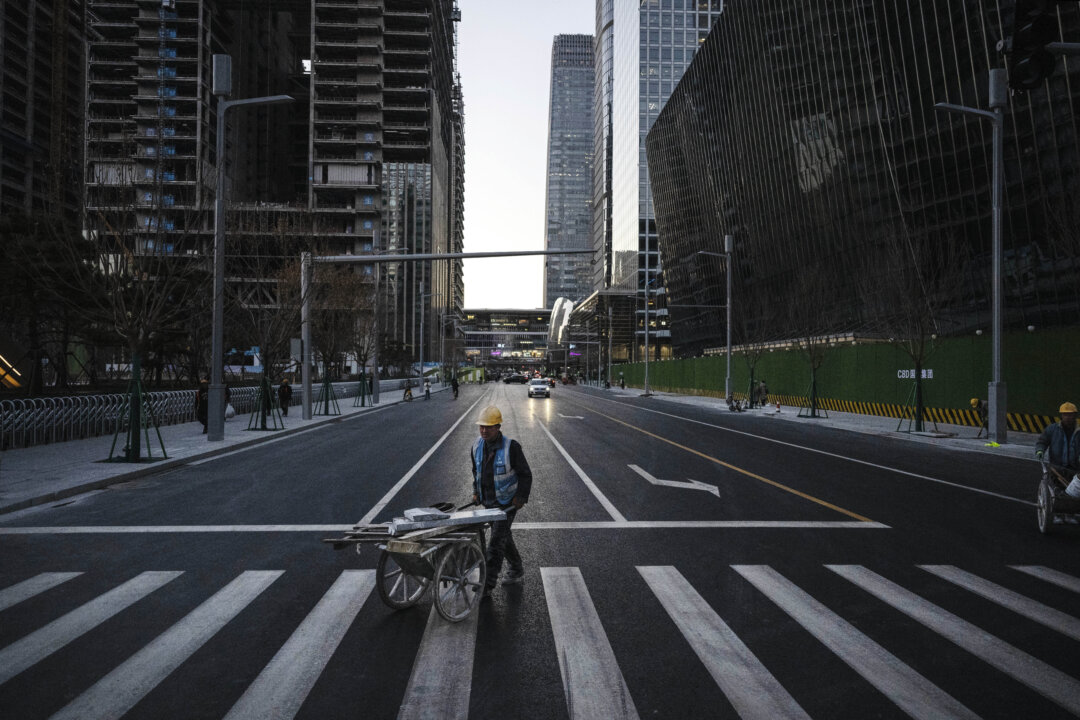
Chinese Regimes Economic Optimism Collides With Growing Public Pessimism









Related Articles

China News
Americans at Serious Risk of Wrongful Detention in China: State Department
The State Department is warning Americans living in or traveling to China...

and CoercionAttacksAustralia Featured NewsAustralia NewsAustralia Top NewsChina NewsChina-Australia RelationsInfluence Operations and EspionageInternational RelationsThreatsTransnational RepressionWorld News
US Embassy Condemns CCP-Linked Transnational Repression in Australia
Dave Brat, dean of Liberty University's School of Business, in Washington on...
Asia & PacificChina NewsChinese RegimeGlobalUSUS NewsWorld News
Chinas Transplant System Masks Human Rights Abuses, Report Finds
Doctors in China are more likely to stay silent in the face...



China NewsEuropeGlobalRussia-Ukraine WarWorld News
NATO to Increase Black Sea Presence Following Drone Attacks on Shipping
NATO will send additional military equipment and aircraft to the Black Sea,...
