NATO will send additional military equipment and aircraft to the Black Sea, following a series of drone attacks on shipping vessels in the key waterway.Allison Hart, NATO’s principal spokeswoman, said in an Oct. 20 post on X that the assets will support surveillance, reconnaissance, and forensic activities.The decision came after NATO ambassadors met at the North Atlantic Council, the defense alliance’s main decision-making body, to discuss Black Sea security.“We will continue to stand united and ensure that we are ready and able to address any threat and to keep our one billion people safe,” Hart said.NATO’s military spokesman, U.S. Army Col. Martin L. O’Donnell, said that in addition to sending the radar systems, drones, and patrol aircraft, allies will send or have sent intelligence agents and teams to conduct forensic examinations of explosives used against shipping vessels.NATO has not attributed the attacks to any country.The added presence comes in response to several Black Sea incidents in which drones struck cargo vessels.Earlier this month, a number of cargo ships were hit off the Bulgarian coast of the Black Sea in the space of one week.On Oct. 13, the Guinea-Bissau-flagged HS Dignity was sunk, and the Chelsea 3, sailing under a Maltese flag, registered in Odesa, and Ukrainian-owned, was also struck.Drones struck two other cargo ships in the same waters on Oct. 6.Bulgaria said that Russia was likely behind recent incidents off its waters. Russia’s ambassador to Bulgaria, Eleonora Mitrofanova, said at the time that she had no information from the Russian Ministry of Defense about attacks on commercial vessels.Tankers Struck Near Romanian CoastOn Oct. 15, drones struck two chemical tankers near Romania’s Black Sea coast, setting them both ablaze.The vessels were anchored near the Sulina Canal, which links the Danube River to the Black Sea. It is a major export route for Ukraine.Romanian President Nicusor Dan called the situation in the waters “serious.”“Commercial ships are being attacked and sunk. Seafarers killed, injured, and missing, very close to the shores of Romania and Bulgaria,” Dan said. “Lives, global trade, and critical infrastructure are at stake.”Vladislav Maslennikov, director of the European Affairs Department at the Russian Ministry of Foreign Affairs, told Russian newspaper Izvestia on Oct. 20 that against the backdrop of NATO’s increased reconnaissance activities in the Black Sea, “the risk of incidents, including unintentional ones, is indeed increasing.”A view shows a vessel hit by a drone in the Black Sea, in a handout image released by the Bulgarian Interior Ministry on Oct. 13, 2026. Bulgarian Interior Ministry/Handout via ReutersBulgaria, Georgia, Romania, Russia, Turkey, and Ukraine border the Black Sea, and it is a vital shipping route.Russia is the world’s largest wheat exporter, and Ukraine is also among the world’s largest producers of grain and seed products—both use the Black Sea to export their goods. Consequently, the waterway has become a target for both sides in the ongoing war.In recent months, Russian forces struck Ukrainian targets on the Black Sea, including the ports of Chornomorsk and Odesa.Ukraine, for its part, has been targeting Russian grain and farming infrastructure in the waters.Reuters contributed to this report.

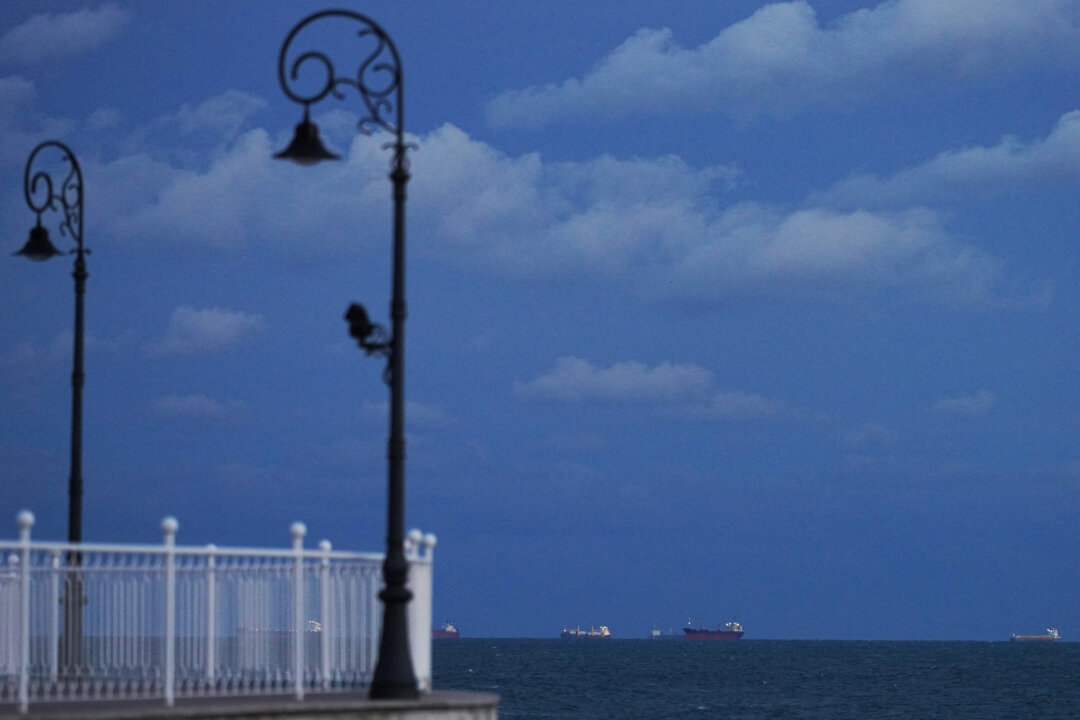
NATO to Increase Black Sea Presence Following Drone Attacks on Shipping









Related Articles

EuropeThe Final wakeup call
French students are showing us what protest looks like in the age of viral spectacle
The recent wave of protests in Europe have left us with two...

EuropeThe Final wakeup call
Frances casseurs: why the term fails to do justice to the extent of looting and spiralling unrest
Following widespread looting sprees and acts of violence occurring on the sidelines...

EuropeThe Final wakeup call
Elderly women are often victims of gender-based violence. Why is it so hard for them to get help?
In 1997, Ana Orantes appeared on an Andalusian television programme to recount...



China News
Americans at Serious Risk of Wrongful Detention in China: State Department
The State Department is warning Americans living in or traveling to China...
