Chinese leader Xi Jinping has promoted AI as an open and collaborative technology on the global stage, but developers inside China say strict internet censorship and political controls continue to block access to many of the global resources needed to build advanced AI systems.Speaking at the 2026 World Artificial Intelligence Conference and High-Level Meeting on Global AI Governance in Shanghai on July 17, Xi called for greater international cooperation, urging countries to “encourage open-source development, openness, cooperation, and shared benefits.”Xi also announced that China would provide 5,000 AI training opportunities for developing countries over the next five years and establish international AI application cooperation centers for organizations including the Association of Southeast Asian Nations, the League of Arab States, the African Union, the Community of Latin American and Caribbean States, the Shanghai Cooperation Organization, and the BRICS group of countries.However, China-based AI developers told The Epoch Times that the rhetoric contrasts sharply with conditions inside China, where access to overseas AI models, datasets, research papers, and developer communities remains heavily restricted. They spoke on condition of anonymity out of fear of reprisal.AI Subject to Political ControlsA Chinese AI developer told The Epoch Times that internet censorship has become a major obstacle to technical work.Related Story“The regime keeps talking about open-source AI, but they block information inside China and prevent ordinary people from accessing overseas resources,” he said. “When we’re developing AI, we can’t reliably access many overseas models, datasets, or technical discussion forums. Downloading models often requires switching to mirror sites, changing ports, or using proxy tools. It’s incredibly troublesome.”The developer said Beijing expects Chinese developers to keep pace with global AI advances while maintaining one of the world’s most restrictive internet censorship systems.“The regime says it wants us to catch up with international technology, yet ordinary internet users are trapped behind the Great Firewall,” he said. “This so-called openness is aimed at attracting countries in Asia, Africa, and Latin America.”The developer said he finds the contradiction striking.“A regime that relies on internet censorship to maintain its rule now claims it is promoting open-source AI. It’s deeply ironic,” he said. “Many internet users see it as an embarrassment.”Despite promoting international AI cooperation, Beijing has imposed strict political requirements on AI services operating inside China.In July 2023, the Cyberspace Administration of China and six other government agencies jointly issued the Interim Measures for the Administration of Generative Artificial Intelligence Services, which took effect the following month.The regulations require AI services available to the Chinese public to uphold what the regime described as “socialist core values” and prohibit content deemed by the Chinese Communist Party (CCP) to undermine state power, endanger national security, damage China’s national image, or threaten social stability.China’s AI models have been known to push CCP propaganda as they are required to comply with the regime’s stringent censorship rules. China’s AI chatbots either refused to answer or closely echoed official CCP narratives when asked about politically sensitive subjects, including the 1989 Tiananmen Square massacre, the 2022 White Paper protests, human rights in Xinjiang, internal CCP political struggles, and Xi himself.A Chinese tech scholar told The Epoch Times that political censorship has become embedded in China’s AI development process.“The AI models we develop automatically avoid politically sensitive topics and criticism,” he said. “The CCP requires models to prioritize political security. Companies remove sensitive content, and developers cannot openly discuss problems.”The scholar argued that Beijing’s calls for open-source AI are primarily intended to absorb overseas technology while maintaining political control at home.“This isn’t really about openness,” he said. “It’s about making AI more controllable domestically. Openness has been replaced by political struggle.”Limiting Access to Global AI CommunityChina’s internet controls also isolate developers from the broader global AI community, according to one Chinese AI engineer.The global AI platform Hugging Face, widely used to share open-source AI models and datasets, has become an essential resource for researchers worldwide. Many Chinese companies also distribute and evaluate their AI models through the platform.However, developers in China frequently encounter connection failures, slow downloads, and unstable access when attempting to use overseas AI platforms. Chinese technology websites routinely publish guides explaining how to access mirror sites, modify download endpoints, or use proxy services to reach blocked resources.The AI engineer, surnamed Lyu, told The Epoch Times that the CCP’s internet restrictions force developers to circumvent regime controls simply to conduct research.“After the Great Firewall blocked large numbers of overseas websites, Chinese tech workers often have to bypass regime-imposed network barriers before they can meet the regime’s own AI innovation goals,” he said.Discussing China’s recent AI advances, Lyu pointed to Moonshot AI, a Chinese startup that has promoted its technology as globally competitive.“Moonshot AI claims its technology is leading the world, but it’s still fundamentally built on American technology, although it has introduced some innovations of its own,” he said. “I believe that before long, people will realize these technologies still lag behind those in the United States.”Lyu argued that China has repeatedly presented technologies as breakthroughs only for foreign observers to later conclude they relied heavily on existing innovations developed elsewhere.“I think this time will be no different,” he said.Innovation Push Meets Ongoing RestrictionsIn recent years, the United States has tightened export controls restricting China’s access to advanced AI chips and semiconductor manufacturing technology.In response, Beijing has accelerated efforts to develop domestic AI chips, software frameworks, and large language models while releasing portions of some model weights to attract overseas developers into Chinese technology ecosystems.However, Lyu said China’s domestic regulatory environment remains a significant obstacle.Current regulations provide no clear or stable legal pathway for ordinary developers to access overseas code repositories, academic papers, or technical forums, according to Lyu. Even when proxy tools are used solely for research or work purposes, developers may still face questioning by authorities or administrative penalties.“They encourage AI innovation,” he said, “but they haven’t removed the legal risks for engineers trying to obtain global technical information.”Lyu added that some engineers have become reluctant to travel overseas, while others have been barred from leaving China.Zhou Yu contributed to this report.

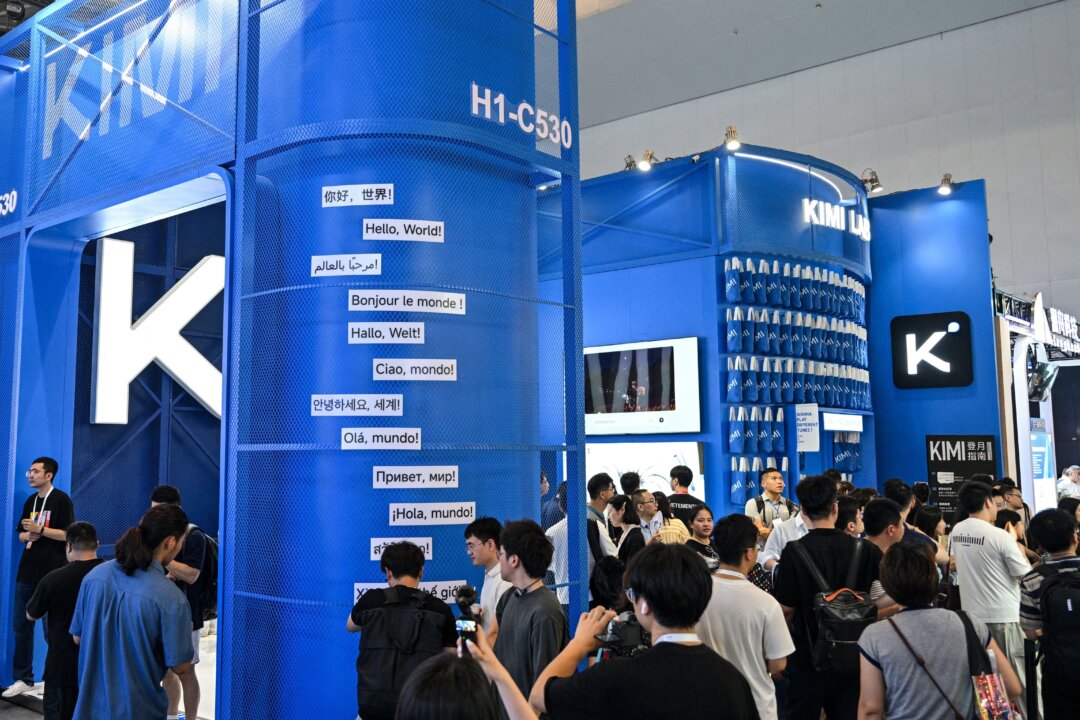
China Touts Open-Source AI Abroad While Developers Face Censorship at Home








Related Articles
China Business & EconomyChina NewsChina Technology
China Tech Index Plunges More Than 40 Percent From July Peak
China’s technology-heavy STAR 50 index has fallen by more than 40 percent...

China Military NewsChina NewsChinese RegimeInside CCP OfficialdomSpecial TopicsZhang Youxia
Xi Opens CCP Plenum Amid Sweeping Purges, Record-Low Attendance Forecast
Chinese Communist Party leader Xi Jinping opened a four-day meeting of senior...

China Business & EconomyChina NewsChinese RegimeFinance & Business TiesInside CCP OfficialdomSpecial Topics
Chinas Economic Woes Deepen as CCP Plenum Focuses on Political Control
The Chinese Communist Party (CCP) opened a four-day leadership meeting in Beijing...



China NewsEuropeGlobalUK NewsWorld News
UK Must Be Ready for War in 1,000 Days, Says British Defense Secretary
British Defense Secretary Wes Streeting has said the country must be ready...
