As the 37th anniversary of the 1989 Tiananmen Square Massacre approaches, the Chinese regime has stepped up security measures against dissidents and activists across the country, according to interviews with individuals who say they have been placed under surveillance, confined to their homes, or warned against speaking publicly about the anniversary.In the massacre, which occurred on June 4, 1989, Chinese troops violently suppressed a student-led pro-democracy movement, resulting in thousands of deaths and injuries. Today, the regime remains deeply sensitive to any public remembrance of the tragedy.The restrictions, reported across China, reflect a long-established pattern in which the Chinese Communist Party (CCP) intensifies political security operations each year ahead of June 4.At the same time, the New York-based advocacy group Human Rights in China released an annual commemorative statement from the Tiananmen Mothers, a group representing relatives of those killed during the massacre.The group reiterated its long-standing demands that the CCP disclose the full truth about the events, provide compensation to victims’ families, and hold those responsible accountable.The Victims of Communism Memorial in Washington on April 23, 2026. The memorial, a replica of the Goddess of Democracy statue erected by Tiananmen Square protesters in 1989, honors the more than 100 million people killed under communist regimes since the 1917 Bolshevik Revolution. The Epoch TimesSurveillance and Restrictions Intensify Several dissidents in China told The Epoch Times that state security officers, police, and local neighborhood officials began contacting them in late May, warning them not to travel, attend gatherings, or speak with overseas media in the run-up to the anniversary. They spoke on the condition that only their surnames would be published, out of fear of reprisal.A Beijing-based dissident with the surname Liu said that police surveillance had already intensified around his home.“Police have already been assigned to monitor me,” Liu said. “There’s an unmarked van parked outside, and wherever I go, they follow.”According to Liu, state security officers instructed him not to participate in gatherings related to June 4 and not to post information on overseas websites. He said this year’s controls appear to rely more heavily on direct surveillance than on the practice known among Chinese activists as “forced travel.”Under that approach, the regime typically removes dissidents, rights advocates, or former participants in the 1989 movement from their home cities under the guise of tourism, rest trips, or informal meetings, keeping them away until after the anniversary has passed.“People who were directly involved in June 4 and are more well-known may still be taken away,” Liu said. “Most others are simply monitored at home.”Among Chinese activists, the practice of assigning personnel to watch individuals around the clock is commonly referred to as “being on post.” The monitoring can involve police officers, state security personnel, neighborhood committees, security guards, or other local officials stationed near a person’s residence.Another Beijing-based dissident and activist, with the surname Chen, told The Epoch Times that guards began monitoring him several days before the anniversary.“Two security guards are sitting in the hallway outside my apartment in shifts,” he said. “Even when I go out to buy something, they follow me.”The CCP is particularly concerned about people discussing the Tiananmen massacre or gathering with others to commemorate it, Chen said.Rights advocates in other parts of China reported receiving similar warnings.A rights activist in Hunan Province with the surname Huang told The Epoch Times that state security officers had repeatedly contacted him and instructed him not to leave the area or meet friends in other cities.According to Huang, activists in Guangxi, Chengdu, and Chongqing have received comparable warnings and were told they may be summoned for questioning on June 4.“In previous years, they might take people away for several days,” Huang said. “Now they are more likely to keep people under watch locally.”Liu said he believes the shift reflects cost-saving measures rather than a relaxation of controls.Former members of the banned China Democracy Party in Zhejiang Province also remain under close scrutiny, according to a dissident in the province who requested full anonymity.The dissident said several prominent activists, including former student movement leader Xu Guang, who was recently released from prison, and veteran dissident Chen Shuqing, who completed a prison sentence last year, have faced movement restrictions in recent days.The dissident added that state security officers warned activists not to use virtual private networks (VPNs) to bypass China’s internet censorship system and not to post comments in online discussion groups.The CCP has not publicly announced any special security measures surrounding this year’s anniversary.However, activists in Shanghai and Chengdu told The Epoch Times that restrictions on their movements began this week. Some said local neighborhood officials informed them that normal travel would not resume until after June 5.Fang Zheng, a pro-democracy activist whose legs were crushed by a Chinese military tank during the Tiananmen Square Massacre, attends the candlelight vigil in Portsmouth Square in San Francisco on June 3, 2025. Nathan Su/The Epoch TimesTiananmen Mothers Renew Call for Accountability Meanwhile, the Tiananmen Mothers used their annual commemorative statement to renew calls for official acknowledgment of the massacre.In a statement authorized by the group and released by Human Rights in China on X on May 28, the organization described the events of June 3–4, 1989, as a tragedy in which military forces were deployed against students and civilians participating in peaceful demonstrations.The group urged the CCP to address the legacy of the massacre through legal and peaceful means and to provide justice for victims’ families.“For 37 years, we have endured suffering while seeking truth and accountability,” the statement said, reiterating the group’s three core demands—disclosure of the facts, compensation for victims, and accountability for those responsible.Zhou Yu contributed to this report.

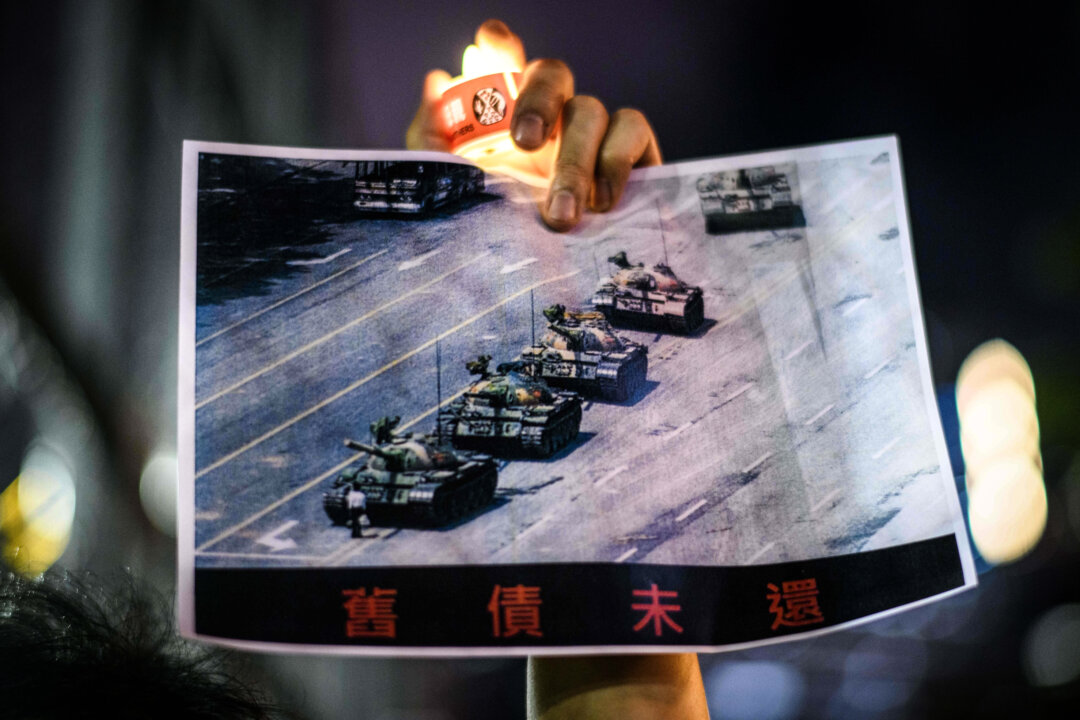
China Tightens Surveillance, Adds Travel Bans Ahead of Tiananmen Anniversary, Dissidents Say









Related Articles
China Business & EconomyChina NewsChina Technology
China Tech Index Plunges More Than 40 Percent From July Peak
China’s technology-heavy STAR 50 index has fallen by more than 40 percent...
China Military NewsChina NewsChinese RegimeInside CCP OfficialdomSpecial TopicsZhang Youxia
Xi Opens CCP Plenum Amid Sweeping Purges, Record-Low Attendance Forecast
Chinese Communist Party leader Xi Jinping opened a four-day meeting of senior...
China Business & EconomyChina NewsChinese RegimeFinance & Business TiesInside CCP OfficialdomSpecial Topics
Chinas Economic Woes Deepen as CCP Plenum Focuses on Political Control
The Chinese Communist Party (CCP) opened a four-day leadership meeting in Beijing...



China NewsEuropeGlobalUK NewsWorld News
UK Must Be Ready for War in 1,000 Days, Says British Defense Secretary
British Defense Secretary Wes Streeting has said the country must be ready...
