
Tokyo’s latest defense report signals Beijing is reshaping the Indo-Pacific order, and the shift will push Washington and Tokyo to forcefully counter the Chinese regime’s growing assertiveness, according to experts.China’s external posture, military activities, and other activities present “an unprecedented and the greatest strategic challenge” to Japan, the 2026 defense white paper released on Aug. 4 states.It notes that the regime has sustained “high-level growth of its defense budget without transparency.”Beijing has been intensifying operations in the region around Japan, including the East China Sea and along the First Island Chain—a strategic defense line stretching from Japan to Taiwan and the Philippines.China has also been expanding its military activities in the South China Sea and Taiwan, and the overall military balance between China and Taiwan is “rapidly tilting in China’s favor,” the white paper stated.Taiwan is a self-governed democracy that the Chinese Communist Party (CCP) has never controlled but has vowed to annex by force.“Japan should respond with its comprehensive national power and in cooperation and collaboration with its ally, like-minded countries, and others,” the white paper stated.The defense white paper is an annual policy review by Japan’s Ministry of Defense that outlines key security challenges and is submitted to the Cabinet.It echoes the 2025 edition, which flagged China as “the greatest strategic challenge” to Japan since World War II.The report comes amid a months-long escalation between the two neighbors, sparked in November when Japanese Prime Minister Sanae Takaichi suggested Japan would be justified in activating its Self-Defense Forces if Taiwan were to come under attack.‘Greatest Future Threat’ Li Shih-hui, a professor at the College of International Affairs at Taiwan’s National Chengchi University, said Japan’s defense white paper released in recent years demonstrates Tokyo now views the Chinese threat as irreversible and enduring.“‘Unprecedented’ indicates Tokyo now formally recognizes Beijing’s strategic challenge as its greatest future threat,” Li told The Epoch Times.“This signals Japan and China will remain locked in a competitive and adversarial relationship going forward, particularly in the security sector.”Stephen Nagy, a professor of politics and international studies at Tokyo’s International Christian University, said the report signals Japan aggressively operationalizing its 2022 National Security Strategy rather than a sudden pivot.Under the strategy introduced by then-Prime Minister Fumio Kishida, Tokyo fundamentally shifted its defense posture to address growing threats in the Indo-Pacific, committing to double its military budget to 2 percent of GDP.Members of the Japanese Maritime Self-Defense Force stand at attention aboard the JS Natori (FFM-9), a Mogami-class stealth frigate, during a handover ceremony and Self-Defense Ship Flag Presentation Ceremony for the Japan Maritime Self-Defense Force (JMSDF) at Mitsubishi Heavy Industries (MHI) Shipyard Machinery Works in Nagasaki on May 21, 2026. Paul Miller/AFP via Getty Images“Labeling Beijing as the ‘greatest security challenge’ is no longer just diplomatic signaling, “ Nagy told The Epoch Times.“It is the foundational doctrine driving Japan’s historic defense budget expansion and counterstrike capability procurement.”The defense white paper also shows that Japanese defense planners believe Beijing is shortening its timeline for a potential invasion of Taiwan, according to Nagy.“The sheer volume of Chinese naval and air assets actively eroding the status quo has normalized a highly dangerous operational tempo,” he said.“Japan’s policy is now rooted in raw deterrence. They understand perfectly well that weakness invites adventurism.”Reshaping the Indo-PacificThe Chinese regime’s propaganda mouthpieces, such as Xinhua and People’s Daily Online, responded to the defense white paper with familiar rhetoric of accusing Japan of “new militarism.”Yet just days earlier, on July 31, Japan’s Foreign Ministry lodged a strong protest after confirming that China had installed a new structure on the western side of the Japan-China median line in the East China Sea.A Chinese coast guard vessel sails near the disputed East China Sea islands on Aug. 6, 2016. 11th Regional Coast Guard Headquarters via APTokyo and Beijing have long been at odds over territory in the East China Sea, particularly the Japan-administered Senkaku Islands, which are known as the Diaoyu Islands in China.Nagy said the installation is a textbook case of “salami-slicing”—a strategy of incremental steps designed to achieve results without triggering immediate resistance.“By erecting a physical structure near the equidistance line, China is deliberately changing facts on the water,” Nagy said.“It falls intentionally short of an armed attack. Yet, it forces a reaction.”He said Beijing aims to exhaust Japanese maritime forces through relentless, low-intensity friction, driving an unacceptable erosion of Tokyo’s sovereignty.However, Nagy said for Taiwan and the broader Indo-Pacific, the message is “chillingly clear.”“China intends to reshape the regional order incrementally, concrete pylon by concrete pylon, entirely outside the bounds of international maritime law,” Nagy said.Echoing Nagy’s assessment, Li said the recent Chinese maneuvers in the East and South China Seas reveal Beijing’s efforts to forcefully bring the disputed waters under its control, severely compromising Taipei’s security.“Beijing is extending its maritime footprint into the Pacific, and both the East and South China Seas are critical chokepoints for Taiwan’s defense,” he said.“These calculated operations have not only provoked fierce protests from Japan but also placed Taiwan on high alert.”Blocking Beijing’s ExpansionLi said Washington remains particularly vigilant about Beijing’s efforts to unilaterally alter the status quo in the Indo-Pacific and is likely to ramp up joint defense initiatives to counter the Chinese regime in the near term.“Following the upcoming U.S.–China summit, Washington will begin rolling out definitive policies to deter Beijing,” he said.“That includes strengthening the U.S.-Japan alliance, under which China is the paramount threat in the Indo-Pacific.”U.S. President Donald Trump is expected to meet Chinese President Xi Jinping on Sept. 24, a few months after the two leaders sat down in Beijing on May 14-15.Under the U.S.–Japan Security Treaty of 1960, Washington is obligated to defend Japan.In recent months, U.S. and Japanese forces have conducted several joint military exercises, including the Rim of the Pacific, Valiant Shield, and Resolute Dragon.Flight deck crew members watch jets take off from the USS Carl Vinson aircraft carrier during the Rim of the Pacific (RIMPAC) military exercises about 100 miles south of Oahu, Hawaii, on July 19, 2024. Marco Garcia/File Photo/ReutersNagy said that blunting the CCP’s escalating assertiveness means that Washington and Tokyo must fundamentally rewire their joint military operations.“We are seeing the necessary push to modernize the U.S. Forces Japan command structure so it can seamlessly interface with Japan’s new joint operations command,” he said.Nagy said that expanding small-scale multilateral networks is also crucial to deterring the regime’s increasingly aggressive behavior.“Fusing U.S.-Japan capabilities with partners like the Philippines or Australia for joint maritime domain awareness creates a dense, overlapping web of resistance,” he said.“They can expose and diplomatically counter these incremental moves before Beijing fully cements its physical footprint.”










Ohio State Agrees to $2.1 Million Federal Settlement Over Undisclosed China Research Ties
Ohio State University has agreed to pay $2.1 million to resolve federal...
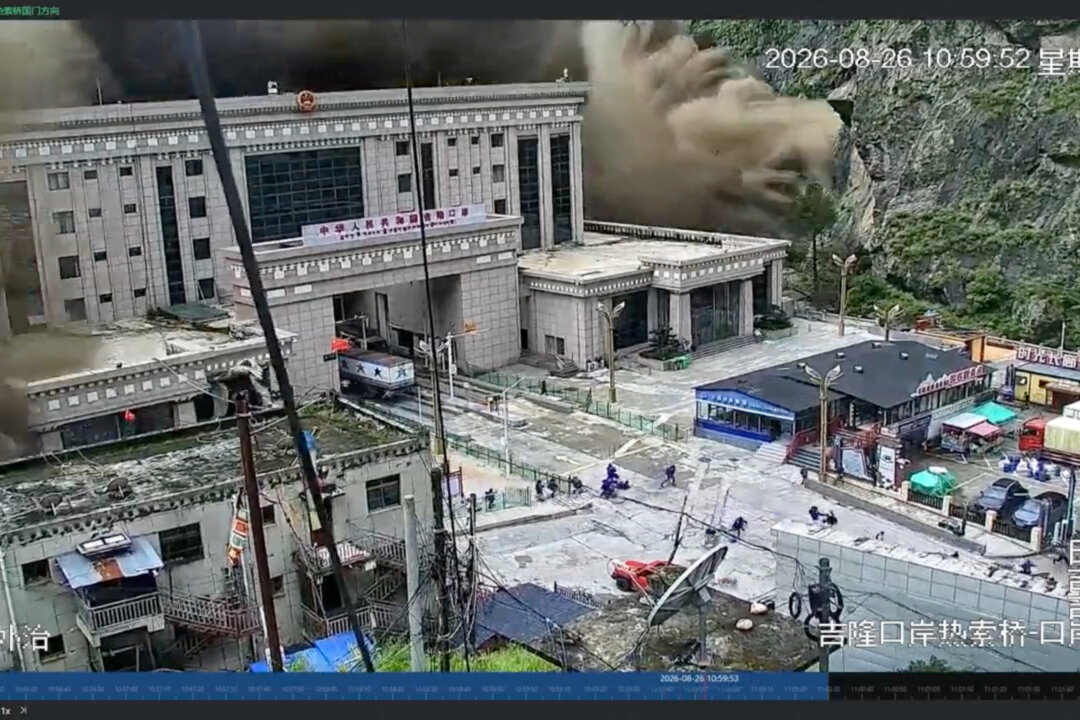
Chinese Scientists Flagged Glacial Flood Danger One Year Before Nepal Catastrophe
More than a year before the catastrophic flash flood devastated the China–Nepal...

Chinas Humanoid Robot Companies Face Reality Check
China is showcasing humanoid robots as symbols of its technological ambitions. However,...
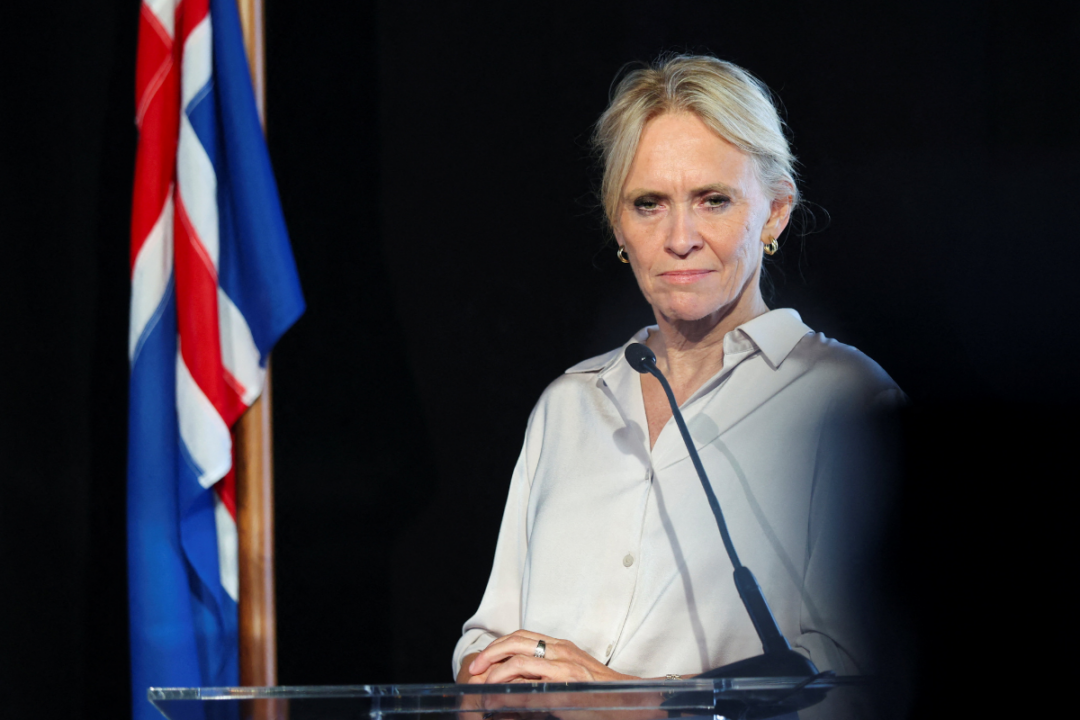


Iceland Focuses on Security Partnerships After Voters Reject Opening EU Membership Talks
Icelandic Minister for Foreign Affairs Thorgerdur Katrin Gunnarsdottir attends a press conference...
