A Chinese traveler returning from Hong Kong was stopped by customs at the Shenzhen Luohu border crossing after carrying seven books into mainland China, underscoring the scrutiny travelers can face when bringing printed material from Hong Kong.The traveler said in a social media post that she went to Hong Kong on Aug. 15 and was inspected by customs officers when she returned through the Luohu checkpoint with seven books. She said she had previously brought six books into China without being stopped.She did not identify the books or say whether customs ultimately allowed her to take all seven of them into China.Under current Chinese customs rules, individuals may bring in up to 10 books, newspapers, or periodicals per trip for personal use and have them released without duty.The rules, however, also prohibit or restrict publications based on their content. The restrictions include material that the regime says threatens national security, damages China’s national honor or interests, attacks the Chinese Communist Party (CCP) or defames the Chinese government, disrupts social order or undermines social stability, or is otherwise determined by regime authorities to be prohibited from entering the country.Several China-based individuals spoke to The Epoch Times about the issue on condition of anonymity out of fear of reprisal.A retired Shenzhen customs official, surnamed Li, said that scrutiny of printed material brought from Hong Kong became particularly stringent after the 2019 Hong Kong protests, when regime authorities were concerned that travelers might bring protest-related publications and images into mainland China.“Since then, they have strictly inspected passengers carrying Hong Kong newspapers and photos of demonstrations,” Li said.He said customs officers had an internal list of publications that could not be brought into mainland China.The recent case has prompted discussion among Chinese netizens about how customs enforcement can extend beyond the number of books a traveler carries.A Chinese literature enthusiast who frequently travels to Hong Kong to buy books, told The Epoch Times that most of the books he purchases are nonpolitical, but sometimes Shenzhen customs officers still inspect their content.“All personal belongings have to go through an X-ray machine,” he said. “Customs officers will ask you to open the books and show them. For non-sensitive content, the rule is 10 books at a time. They take a quick look at the titles and let you go.”The enthusiast said that on one occasion, customs officers confiscated a book related to China’s Cultural Revolution and fined him 500 yuan ($74).Textbooks, History Books Also ScrutinizedReports from Hong Kong also indicate that customs scrutiny can extend to textbooks and historical material, not only publications commonly regarded as political books.In 2024, the Chinese University of Hong Kong’s publication U-Beat Magazine interviewed a mainland Chinese student, identified as Natalie, who was studying in Hong Kong. When she returned to China at the end of a semester carrying business textbooks and historical storybooks, Chinese customs officers stopped and inspected her luggage.The inspection lasted about 20 minutes. Natalie ultimately handed over her ID information and signed a form surrendering two books. Two other people interviewed by the publication said they had also encountered scrutiny when either carrying or mailing books across the border.The cases suggest that the scrutiny is not limited to publications that are explicitly political or banned. Educational and historical materials can also come under inspection.A scholar at China’s top Peking University, told The Epoch Times that the regime’s underlying concern is the information contained in publications.“In the past, people in mainland China obtained information about domestic politics and the economy through Hong Kong books and periodicals,” the scholar said. “Decades ago, when there was no internet, Hong Kong had already become an important window for Chinese people to obtain information about China and overseas. Customs tried every possible means to block it.”He advised Chinese travelers against bringing potentially sensitive books back from Hong Kong.“It is better to finish reading them in Hong Kong before returning, so as to avoid being registered by customs with your name and address, which could become a pretext for investigation later,” the scholar said.Zhou Yu contributed to this report.

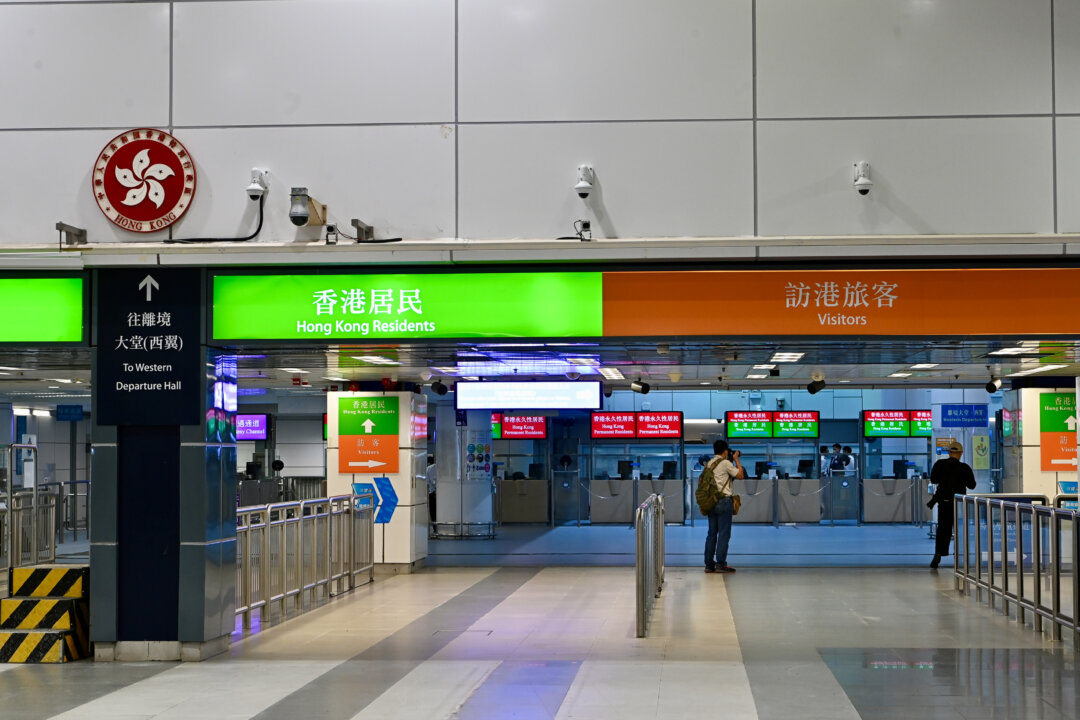
China Customs Scrutinize Hong Kong Books Despite 10-Book Allowance







Related Articles
China Business & EconomyChina NewsChina Technology
China Tech Index Plunges More Than 40 Percent From July Peak
China’s technology-heavy STAR 50 index has fallen by more than 40 percent...
China Military NewsChina NewsChinese RegimeInside CCP OfficialdomSpecial TopicsZhang Youxia
Xi Opens CCP Plenum Amid Sweeping Purges, Record-Low Attendance Forecast
Chinese Communist Party leader Xi Jinping opened a four-day meeting of senior...
China Business & EconomyChina NewsChinese RegimeFinance & Business TiesInside CCP OfficialdomSpecial Topics
Chinas Economic Woes Deepen as CCP Plenum Focuses on Political Control
The Chinese Communist Party (CCP) opened a four-day leadership meeting in Beijing...



China NewsEuropeGlobalUK NewsWorld News
UK Must Be Ready for War in 1,000 Days, Says British Defense Secretary
British Defense Secretary Wes Streeting has said the country must be ready...
