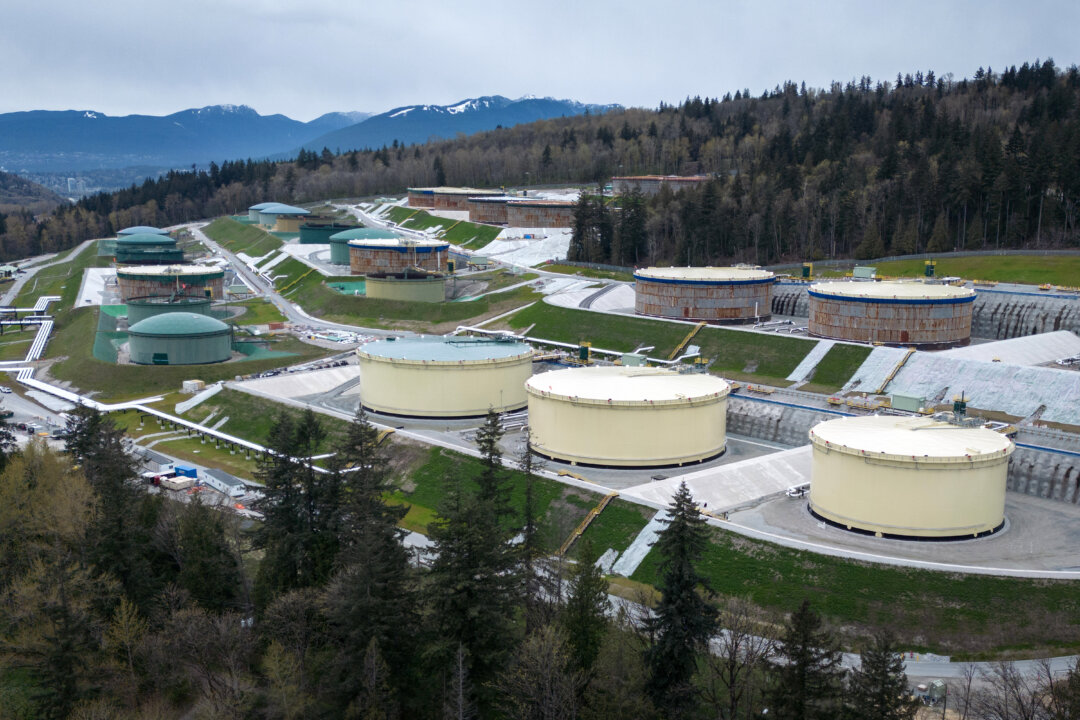
CommentaryEnergy corridors are suddenly back in fashion after a decade of activist obstruction and political hesitation around pipelines and transmission lines.The idea of a multi-use corridor—one that carries hydrocarbons, electricity, and transportation links—offers something Canada has not seen since the great public works of the 1950s and 1960s: a single permit, a single regulatory review, and a single right-of-way capable of supporting multiple forms of economic activity.It is the kind of thinking that built the TransCanada Pipeline, the HVDC backbone in Manitoba, and the national rail system.Since the federal government acquired and commissioned the Trans Mountain expansion (TMX) pipeline, Canadians have been forced to once again confront the reality of public ownership in hydrocarbon infrastructure.But if governments finance the next generation of Western Canadian energy corridors, ownership becomes as important as construction.While TMX may have been purchased to calm political tensions in Alberta, its existence has reopened a national conversation: should Canada continue to rely on the United States for most of its crude imports into Central and Atlantic Canada? Should we diversify our export markets to Asia and Europe? And if so, should Canadians themselves not have the ability to invest directly in the infrastructure that makes this possible?For many Canadians, the memory of the National Energy Program and the missteps of the legacy Petro-Canada era still linger. Those programs were built on the promise of national control, but they delivered taxpayer exposure, political division, and poor commercial performance.As Ottawa once again contemplates federal ownership of large-scale hydrocarbon delivery systems, many Canadians are understandably wary.Others accept the argument that TMX was a necessary intervention to salvage a project that had become politically radioactive. But even those Canadians are now asking a fair question: if the federal government is preparing to take on tens of billions in new debt to build Western Canadian energy corridors, why should foreign sovereign wealth funds be given preferential access to equity ownership while Canadians are left financing the project?To its credit, Ottawa has now taken an important step.The newly announced Canada Strong Fund explicitly includes provisions for Canadians to invest in major nation-building projects.This is a welcome development, but it should be viewed as a beginning rather than the solution. The critical question is whether Canadians will be given priority access, meaningful equity stakes, and full transparency, or whether foreign investors will continue to dominate ownership of Canada’s strategic assets.The Mark Carney Liberals are preparing to host an international consortium of global investors in September. The guest list reportedly includes BlackRock, Brookfield, CPP Investments, GIC (Singapore), ADIA (Abu Dhabi), and other sovereign funds with trillions under management. These organizations are being courted to invest in future nation-building projects.The federal government has not committed to giving Canadians priority over foreign capital, despite asking them to finance infrastructure foreign investors are being invited to own.Historically, Canadians invested their RRSP and TFSA savings in great Canadian companies like Enbridge, TC Energy, and Pembina Pipeline Corp. These firms offered high-dividend, low-risk returns that formed the backbone of middle-class retirement planning.So why should the next generation of Canadian energy infrastructure be any different?If Canada is serious about building Western Canadian energy corridors, then Canadians must be given the ability to invest directly. Not just through Crown debt, but through equity.A sophisticated investment vehicle could easily be created: a publicly listed fund allowing Canadians to buy dividend-paying shares, convertible debentures, or bonds tied directly to corridor revenues.And indigenous nations, through groups like the First Nations Major Projects Coalition, could also take equity stakes alongside everyday Canadians, creating shared prosperity.Western Canadian energy corridors are more than infrastructure. They are generational wealth engines.The Canada Strong Fund is a promising start, but promises are not enough. If Canadians finance the next generation of energy infrastructure, they should have the first opportunity to own it.Dr. Joseph Fournier is a senior fellow at the Frontier Centre for Public Policy. An expert in economic analysis and structural policy, his research focuses on productivity, regional migration, and sustainable economic renewal in Canada.Views expressed in this article are opinions of the author and do not necessarily reflect the views of The Epoch Times.










Related Articles

and CoercionAttacksAustralia Featured NewsAustralia NewsAustralia Top NewsChina NewsChina-Australia RelationsInfluence Operations and EspionageInternational RelationsThreatsTransnational RepressionWorld News
US Embassy Condemns CCP-Linked Transnational Repression in Australia
Dave Brat, dean of Liberty University's School of Business, in Washington on...
Asia & PacificChina NewsChinese RegimeGlobalUSUS NewsWorld News
Chinas Transplant System Masks Human Rights Abuses, Report Finds
Doctors in China are more likely to stay silent in the face...

China NewsEuropeGlobalRussia-Ukraine WarWorld News
NATO to Increase Black Sea Presence Following Drone Attacks on Shipping
NATO will send additional military equipment and aircraft to the Black Sea,...



China NewsEuropeGlobalRussia-Ukraine WarUSWorld News
Witkoff, Putin Meet for Talks on Ukraine in St. Petersburg
U.S. special envoy Steve Witkoff met with Russian President Vladimir Putin in...
