Chinese authorities identified the pilot who crashed a light aircraft into Beijing’s tallest skyscraper as a 66-year-old local man surnamed Liu, saying he had written repeatedly about “ending life.”In a July 2 notice, the Beijing Chaoyang district government said Liu, a freelancer who lived alone, had long struggled with insomnia and anxiety. Authorities classified the June 26 crash as a “public-safety case caused by personal reasons.”The single-engine Aurora SA60L struck CITIC Tower, headquarters of the state-owned CITIC Group, in Beijing’s central business district at 5:55 p.m. The tower is about 6.8 kilometers, or 4.2 miles, from Zhongnanhai, the leadership compound where China’s top officials work and live.Liu, the only person aboard the aircraft, was killed. Thirteen people on the ground were injured, none with life-threatening injuries, and one had been discharged by July 2, authorities said.The notice released details about Liu’s background and the aircraft but left his full name, the aircraft operator, and the specific Pinggu district airport unidentified. A shorter June 27 notice had confirmed the crash and casualties without naming the pilot, aircraft, building, operator, or cause.Pilot Profile and Flight PathThe Chaoyang notice identified the aircraft as an Aurora SA60L single-engine, two-seat propeller light aircraft with registration number B-12PP.Authorities described Liu as a Beijing resident who obtained a sport pilot license in 2021 and a private pilot license in 2024.On the afternoon of June 26, Liu took off from a general aviation airport in suburban Pinggu district, the notice said. He first completed an accompanied flight, then flew alone.During the solo flight, he deviated from the approved area and lost contact with the airport before striking the tower, authorities said.China’s general aviation flight-control rules require approval from flight-control authorities before units or individuals use airport flight areas, air routes, or flight routes. The regulations were issued by the State Council and the Central Military Commission.Identity Speculation and CITIC ResponseBecause authorities initially disclosed little information, online users and overseas Chinese-language media speculated about the pilot’s identity.Unconfirmed claims circulated the name Liu Junhua and suggested links to a CITIC-affiliated financial executive. Other reporting said a vehicle registered to a person with that name had drawn attention near the Pinggu airport area.Those claims have not been confirmed.On June 27, Shanghai Securities News published an interview with Liu Junhua, general manager of dedicated-account investment at CITIC Wealth Management, discussing culture, risk control, and business development.CITIC Wealth Management later released a video featuring Liu Junhua discussing fixed-income-plus investment strategy, according to a Sina Finance republication. Photos and video accompanying the appearances identified Liu Junhua as a woman.The interview and video appeared to rebut claims that the CITIC-affiliated Liu Junhua was the deceased pilot. The July 2 notice still identified the pilot only by surname.Skepticism Over Official ExplanationThe official emphasis on Liu’s personal background drew skepticism from overseas Chinese commentators who questioned whether the notice provided enough evidence or addressed the airspace breach.David Tsai, also known as Cai Shenkun, an independent Chinese writer and current-affairs commentator, wrote on X that major public incidents should be based on a full chain of evidence and a transparent investigation, not a short official conclusion.Tsai said mental health details could not substitute for answers about the aircraft’s route, the security response, or the investigation’s reasoning.Before the July 2 notice, Tsai had questioned how a light sport aircraft could enter central Beijing and strike the capital’s tallest building despite Beijing’s heavy security and strict airspace controls.Another X user, Xia Guanting, wrote that authorities should disclose the identity of the deceased if the crash was an accident, or disclose the person’s identity and motive if it was an intentional act. Facts still under investigation could remain unresolved, Xia wrote, but the person’s identity did not need to be hidden.Airspace and Political-Security QuestionsThe crash also renewed questions raised by Yuan Hongbing, a Chinese legal scholar living in exile in Australia, in earlier Epoch Times reporting.Yuan tied the incident to CITIC Group’s political history, the aircraft’s reported operating institution, and the question of why the aircraft was not intercepted. CITIC was founded in 1979 with approval from former Chinese Communist Party leader Deng Xiaoping and has long been considered one of China’s most influential state-owned financial institutions.Yuan alleged that the aviation school and its operations were linked to China’s political and military elite, saying such an institution could not operate in Beijing without deep party and military backing. He further alleged, citing sources inside the regime, that the institution had ties to families connected to Peng Liyuan, the wife of Chinese leader Xi Jinping, and senior CCP official Cai Qi. The Epoch Times could not independently verify those claims.Yuan also alleged that the aircraft was continuously tracked by radar systems and that no interception occurred because of internal procedural constraints. Unauthorized aircraft in Beijing, he said, could be shot down without higher approval only if they entered a five-kilometer radius around Zhongnanhai, the Great Hall of the People, or the Western Hills Central Military Commission command center.He described the episode as a sign of bureaucratic paralysis, saying officials under Xi are increasingly risk-averse and unwilling to take responsibility for emergency decisions.Chinese authorities have not publicly addressed Yuan’s allegations.Reuters reported that Beijing Capital Helicopter said the company had suspended services nationwide because of the Beijing security incident, while Qingdao Hengyi General Aviation also reported its own suspension, citing control measures. The suspensions came as Chinese agencies were expanding aviation infrastructure and oversight for the low-altitude economy. In a May 2026 Chinese government release, the Civil Aviation Administration of China projected the sector would exceed 3.5 trillion yuan (about $511 billion) by 2035.As of July 2, the Chaoyang notice had released no radar tracks, communications logs, or interception timeline, and did not say whether civil aviation, public-security, or military air-defense units were notified before the aircraft struck CITIC Tower.

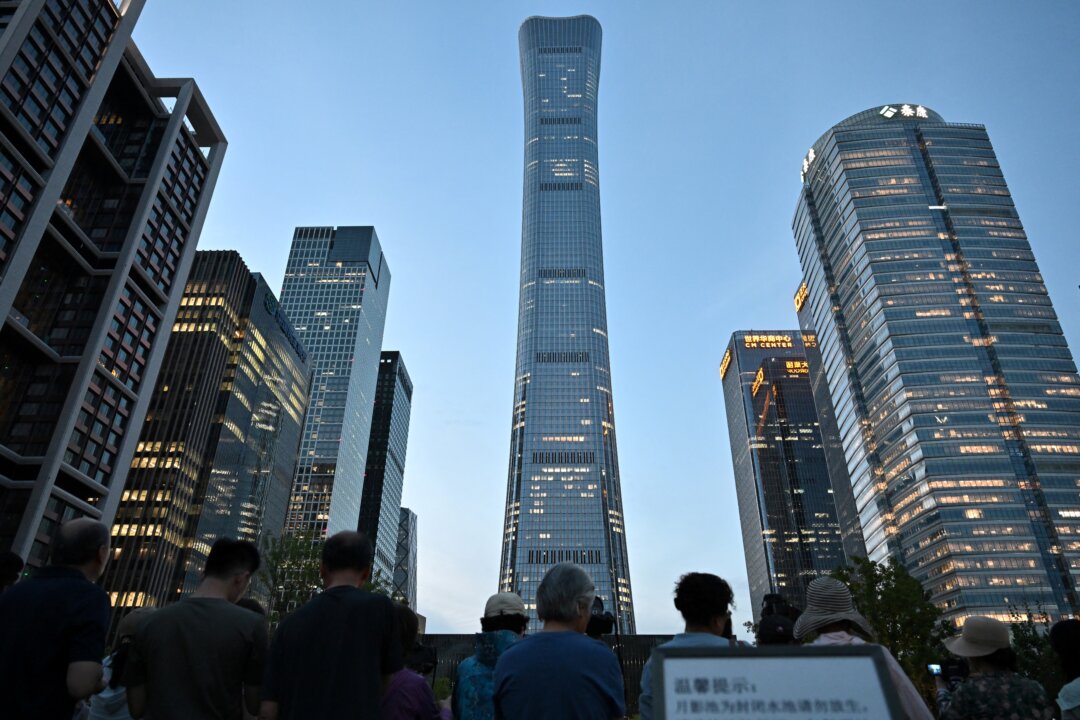
Beijing Identifies Pilot in Skyscraper Crash as Airspace Questions Linger









Related Articles
China Business & EconomyChina NewsChina Technology
China Tech Index Plunges More Than 40 Percent From July Peak
China’s technology-heavy STAR 50 index has fallen by more than 40 percent...
China Military NewsChina NewsChinese RegimeInside CCP OfficialdomSpecial TopicsZhang Youxia
Xi Opens CCP Plenum Amid Sweeping Purges, Record-Low Attendance Forecast
Chinese Communist Party leader Xi Jinping opened a four-day meeting of senior...
China Business & EconomyChina NewsChinese RegimeFinance & Business TiesInside CCP OfficialdomSpecial Topics
Chinas Economic Woes Deepen as CCP Plenum Focuses on Political Control
The Chinese Communist Party (CCP) opened a four-day leadership meeting in Beijing...



China NewsEuropeGlobalUK NewsWorld News
UK Must Be Ready for War in 1,000 Days, Says British Defense Secretary
British Defense Secretary Wes Streeting has said the country must be ready...
