
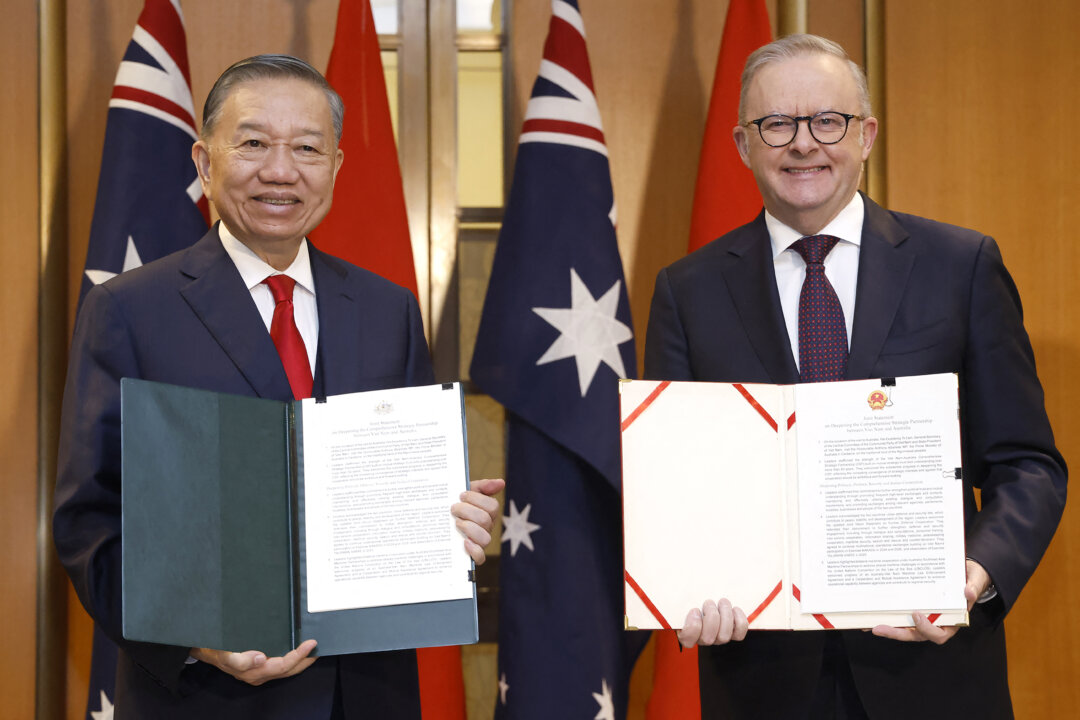
Australian Prime Minister Anthony Albanese has met with Vietnamese leader To Lam to discuss deepening the partnership between the two nations in areas including economic management, climate, energy and defence.Their cooperation comes amid ongoing tensions between the Chinese Communist Party and surrounding countries.Australia and Vietnam’s trade ministers also signed an agreement for increased cooperation in cross-border trade and to “create opportunities” for Australian businesses in digital health and banking.The meeting comes one day after the government announced that Vietnamese budget airline VietJet would operate direct flights between Western Sydney International Airport and Ho Chi Minh City.“Vietnam is one of Australia’s closest partners in our region and our relationship continues to go from strength to strength,” Albanese said in a statement.“Today’s agreements will make it easier to do business, create new opportunities for trade and investment, strengthen education and research links, and bring our countries even closer together.”What the Two Nations Agreed onThe nations’ defence ministers agreed to an updated Joint Vision Statement on Defence Cooperation, which will facilitate greater exchanges on maritime security and disaster relief.Australia and Vietnam also committed to working more closely together on transnational crime, border protection, and economic resilience.“Both sides expressed their concern over policies and practices that disrupt global supply chains or unnecessarily restrict trade,” a joint statement read.“In this regard, the two countries will work together to support transparent, diversified, secure, sustainable, trustworthy, reliable, economically efficient and resilient supply chains in areas such as critical minerals, semiconductors, clean energy, including through our development partnership, joint promotion of investment opportunities and deeper private sector engagement.”The countries also committed to closer cooperation on areas like artificial intelligence, telecommunications, undersea cables and data centres, while reaffirming their support for open, rules-based global trade.Opposition Supports CooperationOpposition Leader Angus Taylor said the Coalition welcomed the “deeper collaboration between Australia and Vietnam.”“I was proud to be part of the former Coalition government that elevated our two nations’ bilateral relationship to a strategic partnership in 2018, and in 2021 finalised an economic strategy to boost trade and investment between Australia and Vietnam,” he said.Taylor also said he believed the Vietnamese leader would have a similar view to Australia on recent developments in the Pacific region.“I’m sure, like Australia, he was deeply concerned about China’s recent test launch of a nuclear-capable ballistic missile in the Pacific, as he correctly acknowledged in his Shangri-La Dialogue, and no country benefits when our region becomes a theatre for coercion, confrontation, or displays of power,” he said.“For countries like ours, enhancing our partnership sends a strong message about the importance we place on sovereignty and collective security.”Human Rights ConcernsIn a statement, Human Rights Watch Asia Director Elaine Pearson cautioned the Albanese government against its dealings with To, calling him “one of the region’s most repressive leaders.”“While minister of Vietnam’s notorious Ministry of Public Security from 2016 to 2024, To Lam oversaw a far-reaching crackdown that decimated the country’s budding civil society,” she wrote.“Authorities imprisoned dozens of prominent independent journalists, bloggers, and activists.“The crackdown also targeted environmentalists and lawyers, many of whom now live in exile for fear of persecution.”Pearson also claimed Vietnam’s human rights record has worsened under To’s leadership.“The authorities have expanded the scope and use of draconian laws that criminalise free speech,” she said.“People now risk up to seven years in prison simply for raising complaints about government policies or local officials.”Pearson also raised concerns around Vietnam’s leadership and “transnational repression,” where journalist and indigenous rights activists in exile had been convicted and sentenced in absentia.“The annual human rights dialogue between Australia and Vietnam should not be the only forum for rights concerns, which should inform all engagements between the two countries,” she said.








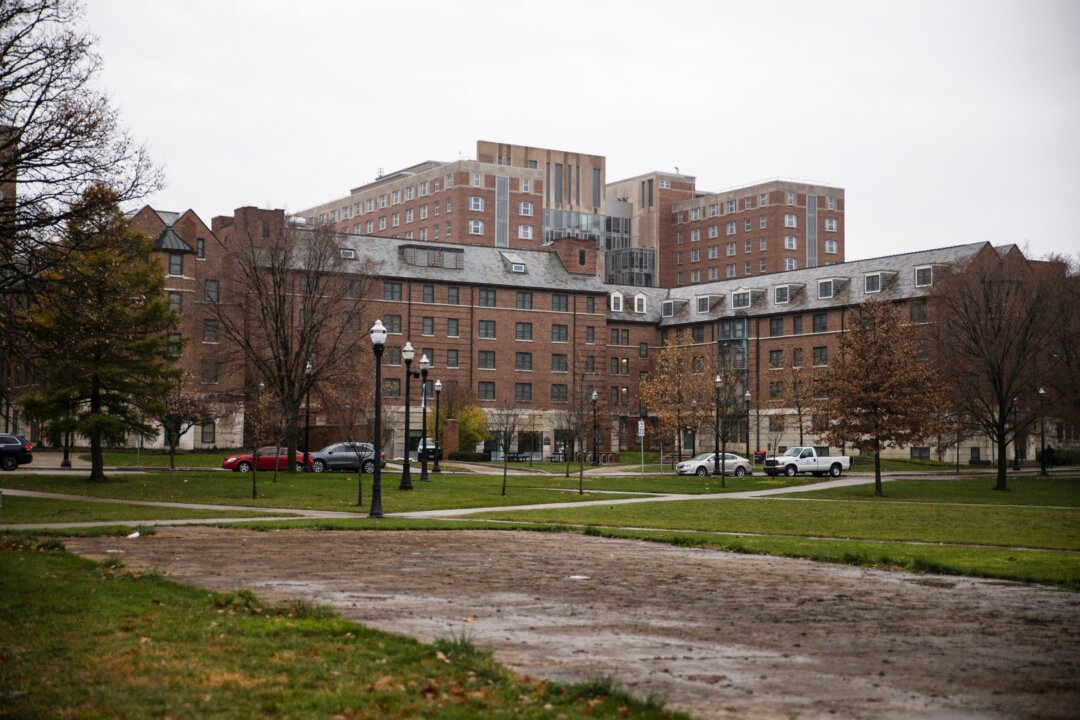
Ohio State Agrees to $2.1 Million Federal Settlement Over Undisclosed China Research Ties
Ohio State University has agreed to pay $2.1 million to resolve federal...
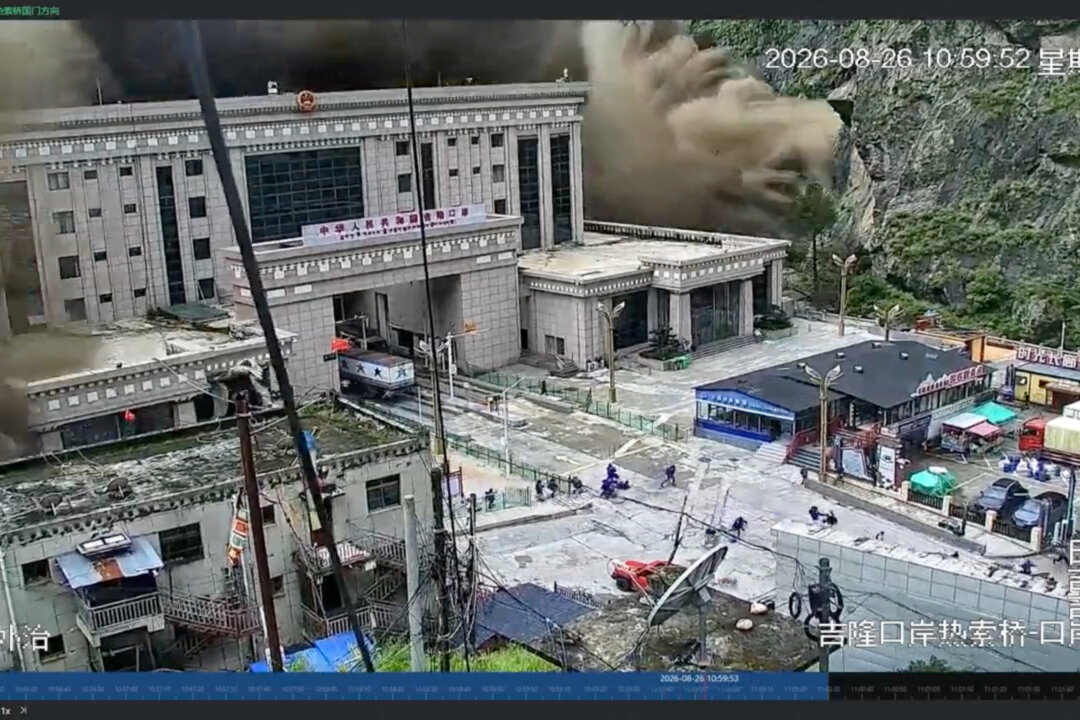
Chinese Scientists Flagged Glacial Flood Danger One Year Before Nepal Catastrophe
More than a year before the catastrophic flash flood devastated the China–Nepal...
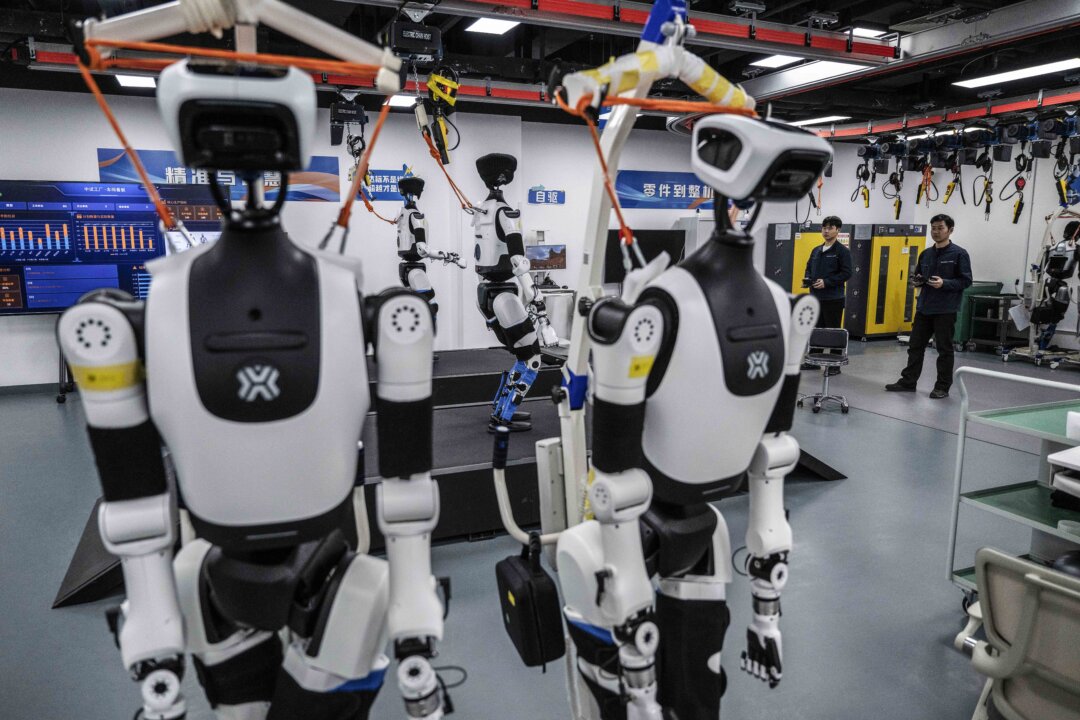
Chinas Humanoid Robot Companies Face Reality Check
China is showcasing humanoid robots as symbols of its technological ambitions. However,...
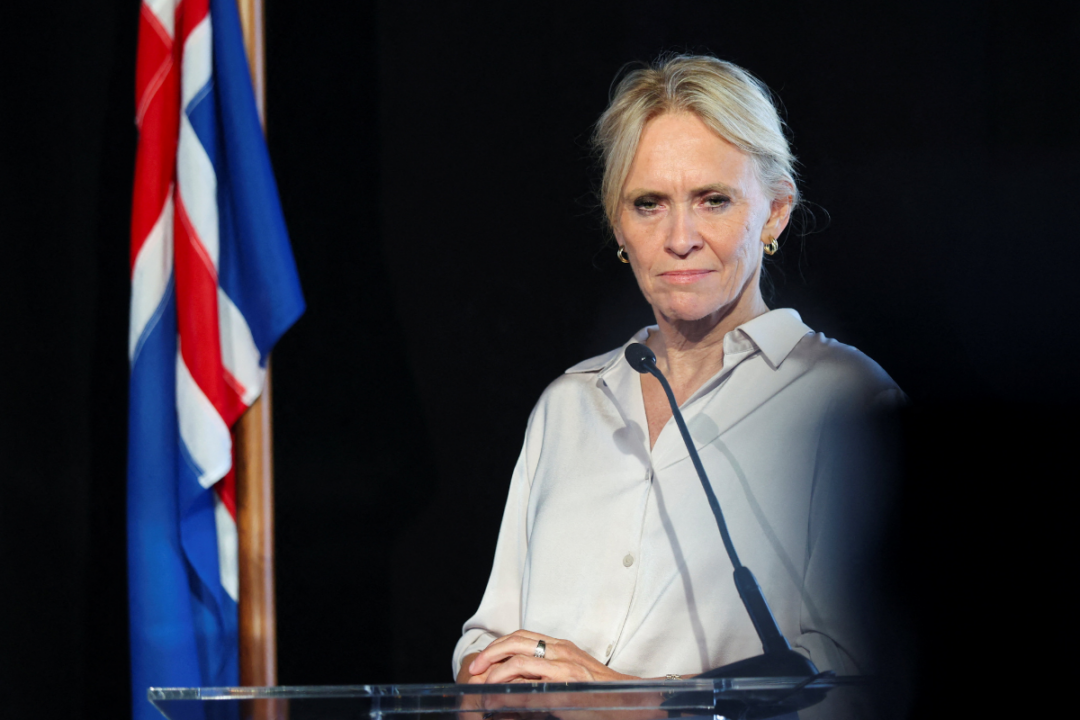


Iceland Focuses on Security Partnerships After Voters Reject Opening EU Membership Talks
Icelandic Minister for Foreign Affairs Thorgerdur Katrin Gunnarsdottir attends a press conference...
