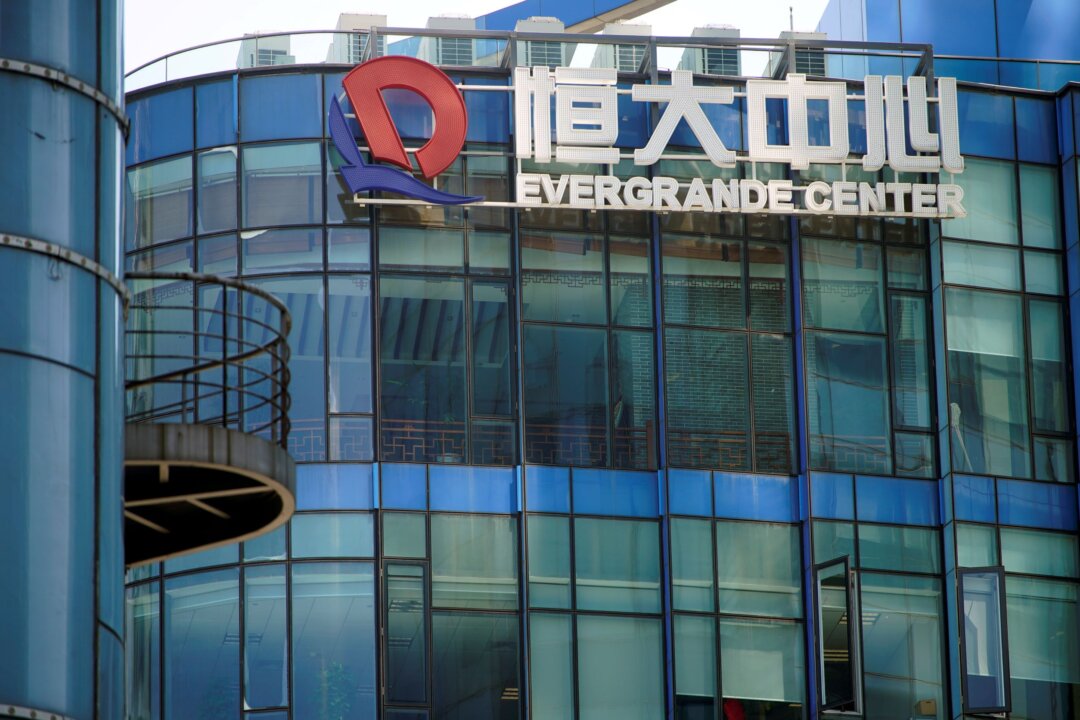
News AnalysisWhen a court in southern China sentenced Evergrande founder Hui Ka Yan to life in prison, confiscated all his personal assets, and fined his business billions of dollars, the authorities presented the ruling as a measure of legal justice.However, political and economic analysts say the rise and fall of the property tycoon is not simply a case of personal crime. Instead, they argue, Hui has become a scapegoat for the Chinese communist regime’s failed real estate policies and its system of rule by individuals rather than the rule of law.On Aug. 20, the Shenzhen Intermediate People’s Court in Guangdong Province delivered its first-instance verdict. The court convicted Evergrande Group and Hui, also known by his Mandarin name, Xu Jiayin, of multiple charges, including illegally absorbing public deposits, fraudulently fundraising, embezzling duties, and bribing a corporate entity.The court sentenced Hui to life imprisonment and deprived him of his political rights for life. The court also ordered the full confiscation of his personal property and the recovery of his illegal gains.Evergrande Group and its core onshore unit, Hengda Real Estate, received combined fines of 15.82 billion yuan ($2.35 billion). Additionally, 56 other defendants were sentenced in the case, including Hui’s two sons, Peter Xu (Xu Tenghe) and Xu Zhijian.Commentator Heng He remarked on his YouTube channel that Hui is acting as a scapegoat for the CCP’s entire real estate policy. He explained that when the party-state needed a named culprit and a way to calm public anger, it convicted Hui for high leverage and fundraising.However, during the era of rapid real estate growth, Heng He noted that the regime actively encouraged and rewarded those very same practices.Once China’s largest property developer, Evergrande grew rapidly through heavy borrowing and expansion into businesses ranging from real estate to finance and electric vehicles.Its 2021 debt default involving more than $300 billion in liabilities became a symbol of China’s prolonged property crisis. The default left behind unfinished housing projects, losses for creditors, and broader economic consequences. In 2024, a Hong Kong court ordered the company’s liquidation, and it was delisted in 2025.Developers Work With the PartyHeng pointed out that, of all the private-sector industries, real estate is the one most closely and deeply tied to the power of the ruling Chinese Communist Party (CCP). Hui is perhaps the most typical example. He did not create China’s real estate policies himself; rather, he simply took maximum advantage of them.In China, local governments generated income by selling land-use rights, state-owned banks provided loans, and the authorities permitted a presale system that allowed developers to collect money from homebuyers before construction was completed.Because of this structure, Heng noted that the authorities closely shaped and controlled every stage of Evergrande’s business model.He described Hui as a “white glove”—a private businessman who appeared to operate independently but, in practice, served as an instrument for an influential CCP official to amass enormous wealth through the business. A “white glove” does the dirty work, enabling CCP officials to maintain an appearance of innocence.Xu Jiayin, also known as Hui Ka Yan, founder of property developer Evergrande, appears for sentencing at the Shenzhen Intermediate People’s Court in Shenzhen, China, on Aug. 20, 2026. Shenzhen Intermediate People’s Court/Xinhua via APIn Heng’s view, Evergrande’s relentless expansion was essentially a Ponzi scheme, dependent on a continuous influx of new buyers and fresh financing. Once the underlying demand for housing was exhausted, the model was bound to unravel, making an eventual systemic collapse inevitable.Changing Political WindsCurrent affairs commentator Chen Pokong agreed that Hui worked as a “white glove.”“Top entrepreneurs like Hui are essentially tools who work for the Party and risk their heads for wealth,” Chen told The Epoch Times. “Once the political direction of the system changes, these figures are sacrificed to protect political stability.”Chen explained that the CCP’s stance on private capital shifts arbitrarily according to the priorities of those in power. For example, he noted that under Deng Xiaoping, the leadership promoted the idea of “letting some people get rich first” and turned a blind eye when companies broke institutional rules to pursue growth. Under Xi Jinping, however, the priority changed to “curbing the disorderly expansion of capital” and tightening political control.Chen referenced a statement from his book “100 Common Sense Points About China,” published 20 years ago, that “China’s rich list is a prisoner list.” He described Hui as a symbol of hundreds of Chinese entrepreneurs who built their fortunes through ties with CCP officials, engaged in charity work, and ultimately ended up in prison with their wealth confiscated.Although collusion between officials and businesses is a serious wrongdoing itself, Chen said this problem stems directly from the system.“This case highlights that China remains a society governed by individuals rather than the rule of law,” Chen said. “In such a society, entrepreneurs have no reliable path to build wealth except through relationships with those in power. In such an environment, a person can be an honored guest one day and a prisoner the next.”He added that in China today, no one has a real sense of personal security—including retired political leaders, members of the Politburo Standing Committee, entrepreneurs, and military generals.In his view, analyzing the specific details of the charges against Hui is of little value because many entrepreneurs operated under the same model. The authorities can choose whom to target whenever there is a political need.Victims Left Without RedressOn whether the 15.82 billion yuan ($2.35 billion) fine will compensate buyers of unfinished homes, Chen was skeptical. He stated that victims are unlikely to receive meaningful compensation because authorities collect fines to fill state and party treasuries, not to help ordinary citizens.He noted that many victims had previously tried to sue Evergrande or Hui, but Chinese courts refused to accept or register their lawsuits.“The authorities view defrauded buyers as potential sources of social instability,” he said. “As always, the CCP’s standard reaction to public discontent is not to resolve the underlying problem but to silence those raising the issue.”The Mou Qizhong PrecedentTo further illustrate his statement that “China’s rich list is a prisoner list,” Chen drew a direct comparison with Mou Qizhong, who was recognized as China’s richest private entrepreneur in 1989.Mou became famous for trading trainloads of consumer goods for Russian passenger aircraft and publicly supported the CCP during the 1989 Tiananmen Square massacre, echoing Beijing’s propaganda that stability was the top priority. A few years later, however, Mou was arrested, convicted of fraud, and sentenced to life imprisonment. Although he was eventually released, Chen noted that he emerged as an old, disabled man who had lost his business.“Entrepreneurs like Mou and Hui were shrewd in business but politically naive about how the system treats private capital,” Chen concluded.Cheng Mulan and Luo Ya contributed to this report.

Analysis: Evergrande Tycoons Life Sentence Serves as Scapegoat for Chinas Real Estate Policy Failures
Analysis: Evergrande Tycoons Life Sentence Serves as Scapegoat for Chinas Real Estate Policy Failures







Related Articles
China Business & EconomyChina NewsChina Technology
China Tech Index Plunges More Than 40 Percent From July Peak
China’s technology-heavy STAR 50 index has fallen by more than 40 percent...
China Military NewsChina NewsChinese RegimeInside CCP OfficialdomSpecial TopicsZhang Youxia
Xi Opens CCP Plenum Amid Sweeping Purges, Record-Low Attendance Forecast
Chinese Communist Party leader Xi Jinping opened a four-day meeting of senior...
China Business & EconomyChina NewsChinese RegimeFinance & Business TiesInside CCP OfficialdomSpecial Topics
Chinas Economic Woes Deepen as CCP Plenum Focuses on Political Control
The Chinese Communist Party (CCP) opened a four-day leadership meeting in Beijing...


China NewsEuropeGlobalUK NewsWorld News
UK Must Be Ready for War in 1,000 Days, Says British Defense Secretary
British Defense Secretary Wes Streeting has said the country must be ready...
