More than 60 lawmakers worldwide have criticized Uganda for what they called “coerced discrimination,” following incidents in which Ugandan immigration officials demanded that several Taiwanese nationals present Chinese passports upon arrival.The Inter-Parliamentary Alliance on China (IPAC), a global group of 66 lawmakers who coordinate their efforts to address challenges posed by the Chinese regime, said it was “deeply troubled” by Uganda’s decision in a joint statement on Aug. 17.“This represents a clear act of coerced discrimination, wherein a sovereign third nation appears to have succumbed to pressure to enforce the political demands of the People’s Republic of China,” the lawmakers stated.“Arbitrarily rejecting valid Taiwanese passports and compelling travelers to claim documentation from a power that does not govern them violates fundamental principles of non-discrimination embedded in international civil aviation standards, including [International Civil Aviation Organization] guidelines.”The lawmakers represent 23 parliaments from democratic nations—including the United States, the UK, the European Union, Japan, Australia, and Canada—with U.S. Sen. Jeff Merkley (D-Ore.), an IPAC co-chair, among the signatories.The lawmakers said Uganda’s action “compromises national sovereignty and degrades the integrity of [the] immigration authority.”“IPAC calls on Uganda and all democratic nations to resist external coercion, uphold the independence of their own borders, and ensure Taiwanese travelers are treated with dignity, fairness, and respect,” they stated.IncidentsTaiwan’s Ministry of Foreign Affairs on Aug. 13 disclosed two recent incidents involving entry hurdles faced by Taiwanese citizens in Uganda.In one case, a Taiwanese business traveler and two accompanying family members arrived at Entebbe International Airport near Uganda’s capital, Kampala, on Aug. 12, only to have their passports seized by immigration officials who demanded Chinese passports, citing the country’s “one-China policy.”The trio’s Taiwanese passports were eventually returned, and they were allowed to enter Uganda.The incident followed a similar case involving two Taiwanese citizens whose passports were confiscated; one was later deported.China’s communist regime claims Taiwan, officially the Republic of China, as its territory under its “one-China principle.” However, many countries—including the United States—maintain a “one-China policy” under which they recognize only one sovereign state as “China.”Taiwan’s Ministry of Foreign Affairs said it was “seriously concerned” about the entry restrictions and urged Taiwanese nationals to “carefully consider the necessity and potential risks” of traveling to Uganda. It also called on the nearly 70 Taiwanese nationals currently in Uganda to “remain vigilant.”The Ugandan government should “face the internationally recognized reality” that Taiwan is a sovereign and independent nation and “refrain from imposing inappropriate and politically motivated border controls that interrupt normal bilateral exchanges and harm mutual interests,” the ministry said in a press release.Taiwan does not have diplomatic ties with Uganda, and its only diplomatic ally in Africa is Eswatini.ChinaChina was Uganda’s largest source of foreign direct investment, with Chinese loan commitments in the country totaling more than $4.2 billion, according to a 2025 report from the U.S. Congressional Research Service.According to the report, Chinese loans helped finance the $200 million expansion of Entebbe International Airport and the $1.7 billion construction of the Karuma Hydropower Station.Kampala formally joined Beijing’s Belt and Road Initiative in 2018.Washington has criticized China for luring countries into the Belt and Road to expand its global influence through its so-called debt-trap diplomacy.The Chinese regime has also exported its surveillance tools to Uganda through its tech company Huawei.“China’s Huawei has provided surveillance equipment for Kampala, including cameras with facial-recognition technology, and has been named in Ugandan efforts to intercept the communications of government critics,” the report reads.The United States has blacklisted Huawei over security concerns and banned it from doing business with American suppliers, selling new network or consumer hardware in the country, or providing its equipment to U.S. telecom networks.China and Uganda have maintained close ties. Ugandan President Yoweri Museveni told China’s state-run People’s Daily in 2018 that the two countries had an “unshakable political mutual trust.”In January, Museveni was reelected to a seventh term. According to China’s state-run Xinhua news agency, Chinese leader Xi Jinping sent a special envoy to attend Museveni’s inauguration in May, where the two sides pledged to support each other on issues concerning their “core interests and major concerns.”TaiwanThe incidents in Uganda follow other recent disputes over Taiwanese people’s travel access in Africa.In July, Taiwan’s Ministry of Foreign Affairs announced the suspension of visa applications from Moroccan nationals, in response to a similar move by Morocco against Taiwanese travelers.In June, Taiwan withdrew from the Our Ocean Conference in Mombasa, Kenya, after Taiwan’s Ministry of Foreign Affairs criticized the Kenyan government for engaging in “heavy-handed actions” after Taiwanese delegates were detained by immigration officials for more than 20 hours.“This incident once again exposes China’s unreasonable and hegemonic diplomatic behavior and its maneuvering to prioritize politics over expertise on oceanic sustainability,” the ministry stated at the time about the Kenya incident.In March, Taiwan pulled out of a World Trade Organization ministerial conference in Cameroon after the host country designated the island as a “Province of China” on visa documents for members of Taiwan’s delegation.

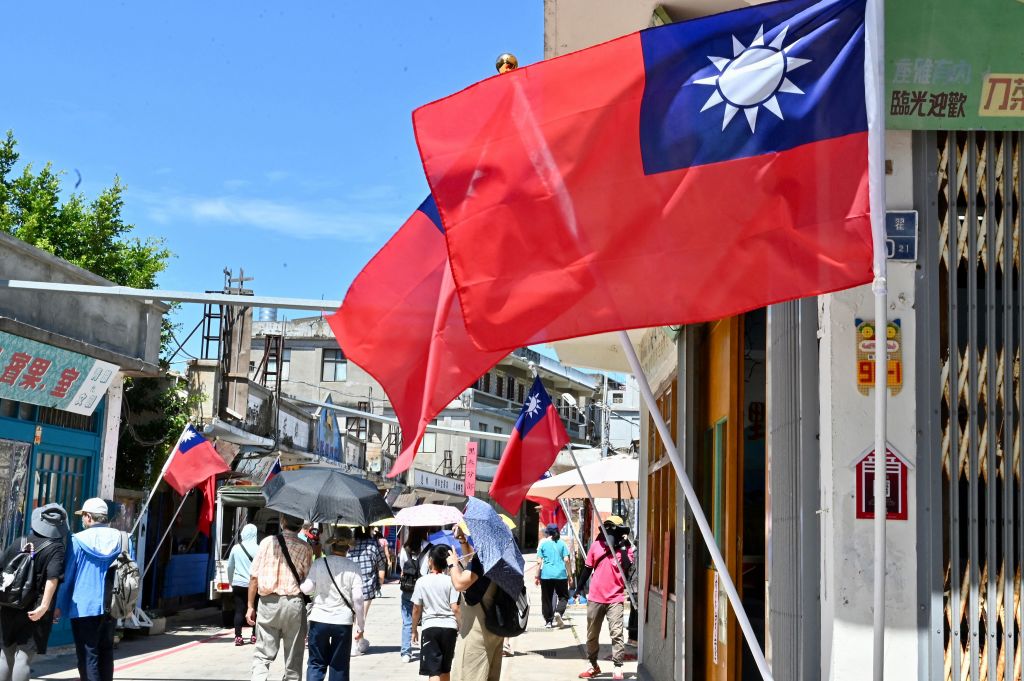
Global Lawmakers Criticize Uganda for Demanding Chinese Passports From Taiwanese Travelers









Related Articles
China Business & EconomyChina NewsChina Technology
China Tech Index Plunges More Than 40 Percent From July Peak
China’s technology-heavy STAR 50 index has fallen by more than 40 percent...
China Military NewsChina NewsChinese RegimeInside CCP OfficialdomSpecial TopicsZhang Youxia
Xi Opens CCP Plenum Amid Sweeping Purges, Record-Low Attendance Forecast
Chinese Communist Party leader Xi Jinping opened a four-day meeting of senior...
China Business & EconomyChina NewsChinese RegimeFinance & Business TiesInside CCP OfficialdomSpecial Topics
Chinas Economic Woes Deepen as CCP Plenum Focuses on Political Control
The Chinese Communist Party (CCP) opened a four-day leadership meeting in Beijing...



China NewsEuropeGlobalUK NewsWorld News
UK Must Be Ready for War in 1,000 Days, Says British Defense Secretary
British Defense Secretary Wes Streeting has said the country must be ready...
