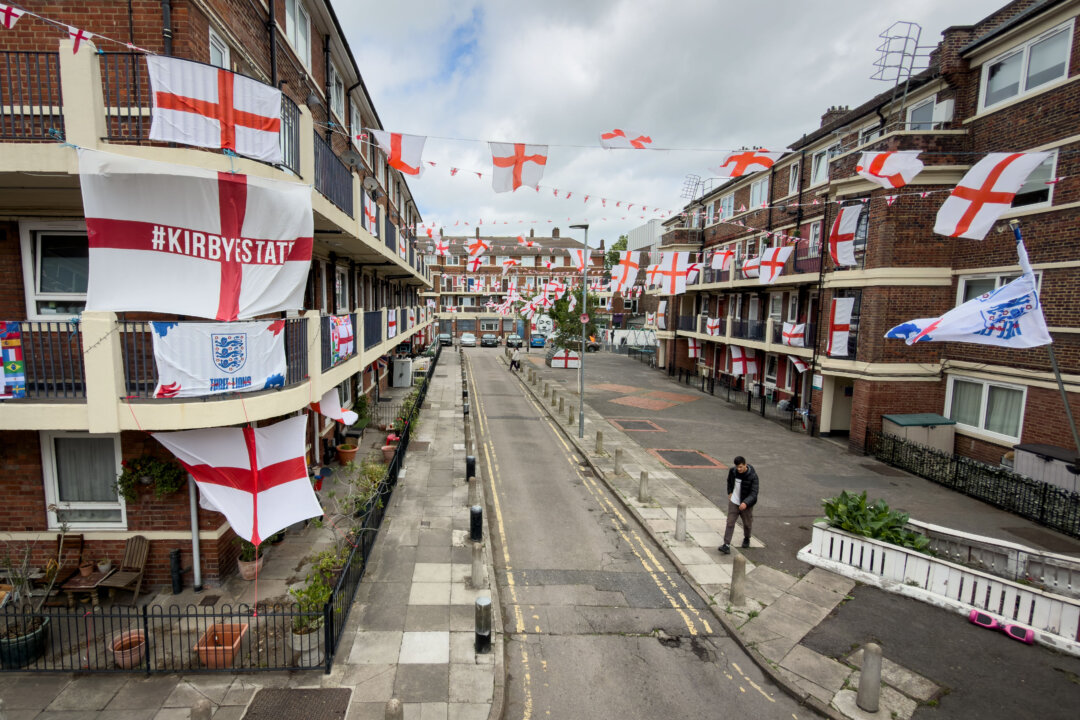
The British economy expanded by 0.3 percent in June, official figures showed on Aug. 13, with the FIFA World Cup and warm weather spurring growth in sectors such as alcoholic drinks, food, and amusement and recreation.The boost brought some relief to the world’s fifth-largest economy, which has been hit by spiking energy prices caused by the Iran war.The Office for National Statistics (ONS) said a smaller number of British companies made reference to the conflict than in previous months, in its monthly Gross Domestic Product (GDP) estimate.Notable growth areas included alcoholic beverage makers and companies in the food sector, as Britons indulged while watching two soccer teams from the country, England and Scotland, compete in the FIFA World Cup.Television producers and advertising companies likewise pointed to the soccer tournament as a revenue booster, with more eyeballs on the TV screens proving an obvious help to those industries.Other sectors highlighted the scorching weather, which has broiled Britain this summer. The British Met Office recorded its second-warmest June ever for the UK, according to provisional data.Manufacturers, retail outlets, and the hotel and short-term rental industry likewise pointed to the unusually hot summer as a reason for seeing their industries thrive during the month, as did organizations involved in recreation and entertainment.However, the heat did not prove a boon for all areas of the economy, with the construction industry and education sectors both saying they had taken a weather-related hit.The ONS reported that school closures forced by the high temperatures contributed to a 1 percent fall in non-market education.Overall economic growth in June was driven by a 0.4 percent rise in services, but that rise was partially offset by tumbles of 0.2 percent in industrial production and 0.1 percent in construction.Through the three months to the end of June, also known as the second quarter of the year, the economy expanded by 0.4 percent, slowing from a rise of 0.6 percent in the first three months, but still demonstrating a more muscular-than-normal pace of growth.The Bank of England, which has kept interest rates steady despite rising energy prices, had forecast 0.3 percent economic growth in the second quarter but predicted it would slow to zero in the July–September period, in a report published on July 30.The month of July was a politically tumultuous time, which culminated in the ousting of Keir Starmer from Number 10 Downing Street.His successor, current British Prime Minister Andy Burnham, took over the reins of power on July 20.Following his ascension, Burnham vowed to make efforts to assuage costs for business and the general rise in the cost of living against the backdrop of what he called a “difficult financial outlook” in comments to the BBC’s “Wake Up to Money” podcast on Aug. 12.Alongside the rising energy prices, which have dramatically affected British industries, some people have expressed uncertainty about the first budget that will be presented on Oct. 28 by Burnham’s new finance minister, Chancellor of the Exchequer John Healey.Ben Jones, senior lead economist for the Confederation of British Industry (CBI), a lobbying nonprofit representing thousands of businesses across the UK, said that the figures “suggest the UK economy has so far proved more resilient to the economic fallout from the Iran war than was widely expected a few months ago.” However, he cautioned that “the challenge now is maintaining that momentum.”“Businesses have become somewhat less pessimistic recently, but uncertainty around the new government and the Autumn Budget could encourage firms to keep plans on ice,” he said.Jones added that “tackling the cost of doing business—from high industrial electricity and employment costs to business rates reform” will be critical to building on Britain’s economic resilience and delivering sustainable growth.“This would help put the economy on a stronger footing to deliver rising real wages and higher living standards across the country,” he said.Following the release of the figures, Healey said, “the UK was the fastest-growing economy in the G7 in the first half of the year,” in an Aug. 13 post on X.“We know families and businesses are concerned about conflict in the Middle East—and this government is giving people a little breathing space, strengthening resilience and bringing hope back,” he added.UK-based living standards think tank the Resolution Foundation warned that though the growth figures were good, the economic fallout from the Iran war “may cancel out that good news.”Stephen Hunsaker, an economist at the Resolution Foundation, said, “Britain’s economy has slowed after a strong start to the year, but growth of 0.4 per cent in the second quarter still leaves the UK leading the pack ahead of its G7 peers.”However, he said the “biggest challenge lies ahead” and that the “fallout from the Iran war” has raised the possibility that Healey’s options could be very constrained in his first budget this autumn.Reuters contributed to this report.

Sunshine, Soccer Give UK Economy Summertime Spur









Related Articles

EuropeThe Final wakeup call
Lula wins a miracle election in Brazil. Now comes the hard part: putting the country back on the right track
Three weeks ago, Brazilian President Luiz Inácio Lula da Silva’s political obituaries...
EuropeThe Final wakeup call
US midterms: what a new Congress could and could not change for Europe
US midterm elections traditionally attract fewer voters than presidential contests. But this...
EuropeThe Final wakeup call
Political power without balance leads to the erosion of democracy, what Montesquieu can teach modern-day France
KEY TAKEAWAYS Democratic erosion does not start by doing away with elections;...


China NewsEuropeGlobalUK NewsWorld News
UK Must Be Ready for War in 1,000 Days, Says British Defense Secretary
British Defense Secretary Wes Streeting has said the country must be ready...
