
Student Loan Payments Are Spiking: What Changed on July 1 and What Borrowers Over 50 Should Do

If you carry federal student loans, July 1, 2026, redrew your map. With last year’s tax law changes taking effect on that date, the Saving on a Valuable Education (SAVE) plan was dismantled, and servicers began notifying millions of borrowers to pick a new repayment plan or have one picked for them.For borrowers over 50, and especially Parent Loans for Undergraduate Students (Parent PLUS) holders, the wrong move, or no move, can push payments up sharply at exactly the stage of life when income stops growing.Here is what changed and what to do about it.Quick Answer: The SAVE Plan Is Ending. What Should You Do?Starting July 1, servicers began sending SAVE borrowers notices giving them 90 days to choose a different repayment plan. For most older borrowers, the realistic choices are Income-Based Repayment (IBR), which is staying available for loans taken before July 2026, or the new Repayment Assistance Plan (RAP). If you do nothing inside your 90-day window, you will be placed automatically into a standard plan, which usually carries the highest monthly payment. Find your notice, date your deadline, and run your numbers at StudentAid.gov before the clock runs out.The Details: What Changed on July 1The new rules split borrowers into two tracks.If all your loans predate July 1, 2026, you keep most of your current options and gain access to RAP.If you take out any new loan or consolidate after that date, your entire balance is limited to just two plans: RAP or the new Tiered Standard Plan.One point worth knowing: Borrowers who enroll in automatic debit can now receive a temporary 1 percent interest rate reduction.Choosing Between IBR and RAP After Age 50For a borrower near retirement, the comparison is monthly relief versus the finish line.RAP can produce lower payments for some borrowers, includes an interest subsidy so on-time payers see their principal fall, and never exceeds 10 percent of adjusted gross income.But its forgiveness horizon is 30 years; time in RAP does not count toward IBR forgiveness if you later switch, and its brackets are not indexed for inflation, so modest income bumps can raise payments.IBR keeps the shorter 20-to-25-year forgiveness path, which matters if you already have a decade of qualifying payments banked. Run both through the Loan Simulator before deciding.What Default Actually Costs After 50The reason to act is visible in the data.The Federal Reserve Bank of New York reports that roughly 1 million borrowers defaulted in the last quarter of 2025, and another 2.6 million did so in the first quarter of 2026. The average newly defaulted borrower is nearly 40 years old and was not behind on these loans before the pandemic.Credit scores for defaulted borrowers dropped 91 points on average, from 567 to 476.For a younger worker, default is a setback. After 50, it is a direct threat to retirement income, because the federal government collects in ways no private lender can:Wage garnishment of up to 15 percent of your disposable pay, without a court judgment.Tax refund seizure through the Treasury Offset Program.Social Security offset of up to 15 percent of your benefit. The law’s protected floor of $750 per month has not been adjusted for inflation in decades, so it protects far less than it once did.One nuance: Collections on defaulted loans are currently suspended, with no announced restart date, but defaults are still being reported to credit bureaus during the pause. Consider this a window to fix your situation.If you are already in default, the two exits are rehabilitation, which requires nine on-time payments, and consolidation. Consider starting either now, while collections remain paused.The Parent PLUS ProblemParent PLUS borrowers face the hardest news. Under the new rules, the loans are largely shut out of income‑driven repayment and Public Service Loan Forgiveness unless the parent’s loans were consolidated into a Direct Consolidation Loan that disbursed on or before June 30, 2026. That window has closed.If you consolidated in time, protect what you secured: Stay enrolled, recertify on schedule, and know that ICR sunsets in 2028, so a transition is coming.If you did not, your realistic path is a standard, graduated, or extended plan, which means building the payment into your retirement budget rather than hoping it shrinks. Either way, call your servicer, confirm which plans your loans qualify for, and ask about hardship options before missing a payment.Your Next Five MovesLog in to StudentAid.gov and confirm your servicer and contact information, since notices arrive by email or portal message.Find your transition notice and write down your 90-day deadline.Run your loans through the Loan Simulator and compare IBR and RAP side by side.Apply for your chosen plan well before the deadline, and keep confirmation of your application.If you are delinquent or in default, contact your servicer this week. The nine-month line between delinquency and default is the one that triggers everything above.FAQs About Student Loan Changes July 2026What Happens if I Ignore the Notice From My Servicer?You will be placed automatically into a standard repayment plan once your 90-day window closes. Standard plans carry fixed payments that are typically the highest monthly amount charged, with no connection to your income and no path to forgiveness. For a borrower on a fixed retirement income, that payment shock is exactly what the notice period exists to prevent. Choosing a plan yourself, even imperfectly, almost always beats the default placement.Can Social Security Really Be Garnished for Student Loans?Yes. Federal law allows an offset of up to 15 percent of Social Security benefits for defaulted federal student loans, and the protected monthly floor of $750 was set decades ago and never adjusted for inflation. Offsets, along with other collections on defaulted loans, are currently suspended without an announced restart date. That pause is an opportunity to cure a default through rehabilitation or consolidation before collections resume, not a reason to wait.Is RAP or IBR Better for Someone Near Retirement?It depends on your history. If you have years of qualifying payments already banked, IBR’s 20-to-25-year forgiveness timeline may be within reach, and switching to RAP would restart a 30-year clock that most borrowers over 50 will never, or barely, finish. If your payments under IBR would be unaffordable, RAP’s income-based formula and interest subsidy may offer relief. Run both scenarios in the Loan Simulator and compare the monthly payment against the forgiveness date.I Already Defaulted. Is It Too Late?No. With collections suspended, this is the best window you will get. Loan rehabilitation requires nine on-time, income-based payments and removes the default from your credit report. Consolidation out of default can work faster but leaves the default notation in place. Contact the Education Department’s Default Resolution Group to start either one, and act before collections restart, because garnishment and benefit offsets become possible once they do.The Epoch Times copyright © 2026. The views and opinions expressed are those of the authors. They are meant for general informational purposes only and should not be construed or interpreted as a recommendation or solicitation. The Epoch Times does not provide investment, tax, legal, financial planning, estate planning, or any other personal finance advice. The Epoch Times holds no liability for the accuracy or timeliness of the information provided.










USDA Unveils New Support for Ranchers to Rebuild Cattle Herds
The U.S. Department of Agriculture has unveiled a new package of measures...

How Major US Stock Indexes Fared Aug. 31
Oil prices rose and U.S. stocks fell after American forces struck Iranian...

Trump Unveils New Drug Pricing Deals With 9 Pharmaceutical Companies
President Donald Trump on Aug. 31 announced agreements with nine midsize pharmaceutical...
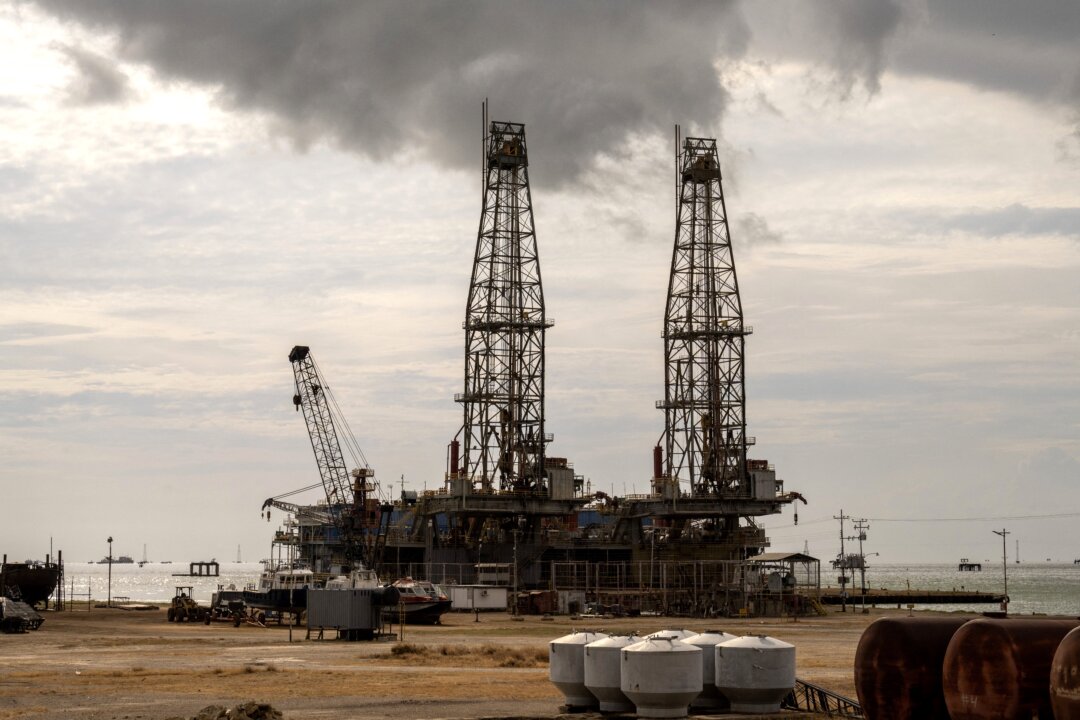


Delcy Rodrguez Says Venezuelas Vast Oil Reserves Must Be Turned Into Prosperity
Oil rigs are pictured in Cabimas, south of Lake Maracaibo, Zulia State,...
