
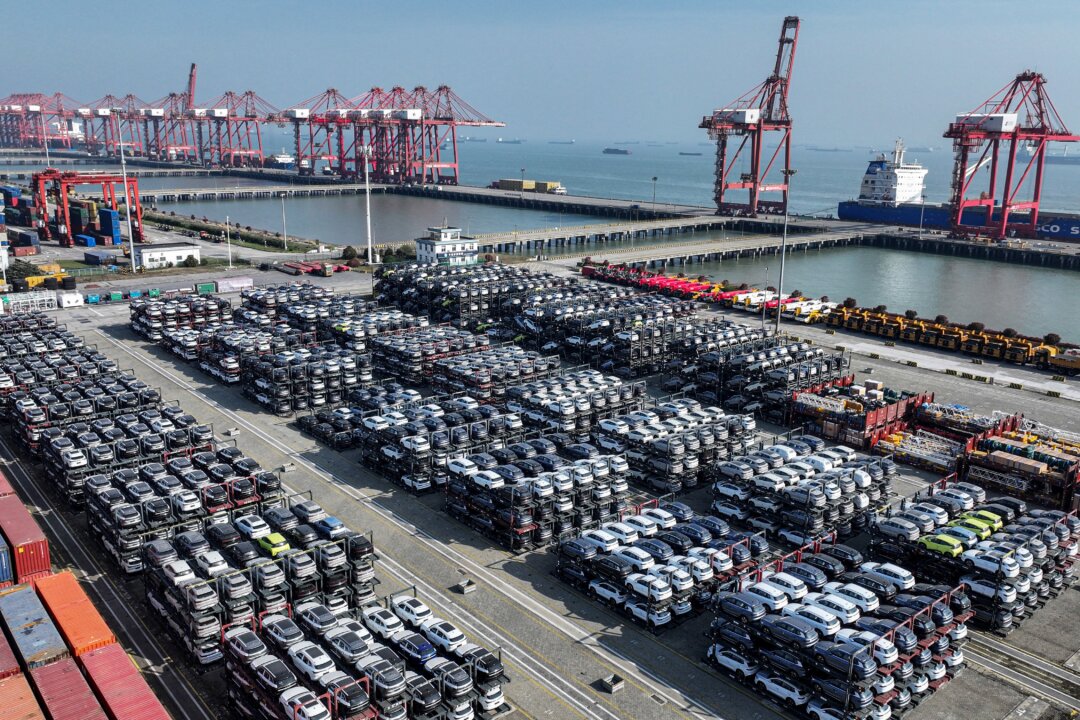
China’s economic weakness cannot be adequately measured by its monthly factory surveys, according to American Enterprise Institute economist Derek Scissors, who said Beijing’s decades-long preference for production over consumption has created excess manufacturing supply and increased reliance on foreign markets.“The official PMIs [Purchasing Managers’ Indexes] don’t mean much of anything,” Scissors told The Epoch Times.Instead, he pointed to fixed-asset investment, which even China’s National Bureau of Statistics (NBS) reports is declining. A direct comparison of the agency’s published totals indicates a substantially steeper fall than its headline rate, he said.Scissors said that investment decline is occurring within an economy that has favored manufacturing over services and production over household consumption for more than two decades.China released two differing assessments of factory activity in July. The government manufacturing purchasing managers’ index fell to 49.2 from 50.3 in June, indicating a month-over-month contraction.The RatingDog China General Manufacturing PMI fell to 50.9 from 51.7. RatingDog is a Shenzhen-based financial technology and credit research company. The index was compiled under S&P Global’s PMI methodology from questionnaires completed by purchasing managers.The surveys use separate company panels. The NBS said its manufacturing survey covers 3,200 enterprises selected through probability-proportional-to-size sampling. The RatingDog survey draws on approximately 650 manufacturers stratified by industry and company employment size.Both headline readings declined from June.Published Totals Point to Steeper FallThe NBS reported that fixed-asset investment, excluding rural households, fell 5.7 percent in the first half of 2026 on what it called a comparable basis.The agency placed first-half investment at 22.637 trillion yuan (about $3.3 trillion). A year earlier, it had reported a first-half total of 24.8654 trillion yuan (about $3.7 trillion).A direct comparison of the two published totals produces a decline of about 9 percent.The NBS said previous year figures used for its growth rate calculation had been revised because of changes in statistical methods, data enforcement inspections, and other adjustments. It did not publish the revised first-half 2025 total behind its 5.7 percent rate or enough detail for outsiders to reproduce the calculation.The revision reduced the reported decline by more than 3 percentage points.Scissors made the same comparison in a July 16 analysis, stating that fixed investment had fallen faster than Beijing acknowledged and was far below the totals reported during the 2010s.China’s regime economic statistics are not independently auditable. Without the revised denominator, outside researchers cannot reproduce or assess the agency’s lower rate of decline.The NBS also reported that non-governmental investment fell 8.5 percent and spending on construction and installation declined by 8 percent. Investment in equipment and instruments rose 8.1 percent.Scissors said China continues directing resources toward production capacity even as private investment and domestic demand weaken.Production Takes Priority“China has been seeking an unbalanced economy for more than two decades,” Scissors told The Epoch Times. “Consumption remains clearly less important than production and services remain clearly less important than manufacturing.”Derek Scissors speaks at a forum on the Committee on Foreign Investment in the United States at the Hudson Institute in Washington on July 31, 2018. Jennifer Zeng/The Epoch TimesSuccessive Chinese Communist Party administrations have directed bank credit, subsidies, procurement, land, and other resources toward factories, infrastructure, and industries selected as strategically important.Those priorities now include semiconductors, electric vehicles, batteries, artificial intelligence, robotics, and advanced industrial equipment.Rhodium Group said in a May report that Beijing’s industrial policy had expanded across most major sectors and their supply chains. China was encouraging equipment upgrades and higher-technology production even in mature industries where capacity utilization was falling and the number of loss-making companies was rising, the research firm said.China’s government survey reported expansion in high technology and equipment manufacturing in July, while consumer goods manufacturing, construction, and smaller companies contracted.The RatingDog survey found that output and new orders continued to increase, but at slower rates. Manufacturers reduced purchasing for the first time since November 2025, while their stocks of purchased inputs rose for an eighth consecutive month—the longest such run since 2006–07.The RatingDog questionnaires were collected from July 9 through July 23. The survey records whether conditions changed from the previous month rather than measuring manufacturers’ absolute production, sales, or inventory volumes.Excess Supply Moves AbroadScissors said Beijing’s economic priorities have sustained manufacturing capacity beyond what Chinese households and businesses can absorb.“The result is state support for long-term excess supply in manufacturing, including technology manufacturing, that causes domestic deflation and large-scale exports priced on a non-commercial basis,” he said.The World Bank said in July that exports and high-technology investment continued to support China’s economy, while cautious households, the property downturn, and weak profitability restrained consumption and private investment.Xu, a person familiar with the Jiangsu Small and Medium Enterprise Association, told the Chinese edition of The Epoch Times that government resources were increasingly moving toward semiconductors, artificial intelligence, and robotics. She asked to use her last name only for fear of retaliation in China.Many traditional small businesses lacked the money and technical capacity to complete the digital, environmental, and technological upgrades demanded by authorities, Xu said.Scissors also cited Bank for International Settlements credit data, though the quarterly figures are released about five and a half months after the period they cover.For a more current reading, he said, fixed investment is more useful—and even Beijing reports that it is declining.










Ohio State Agrees to $2.1 Million Federal Settlement Over Undisclosed China Research Ties
Ohio State University has agreed to pay $2.1 million to resolve federal...
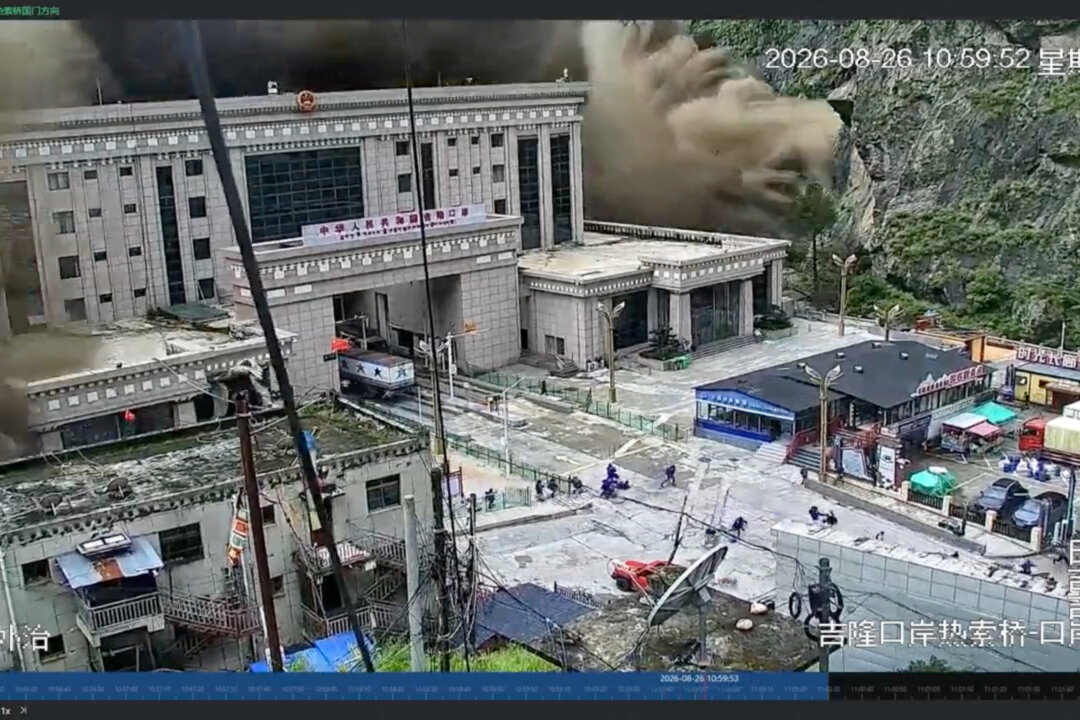
Chinese Scientists Flagged Glacial Flood Danger One Year Before Nepal Catastrophe
More than a year before the catastrophic flash flood devastated the China–Nepal...
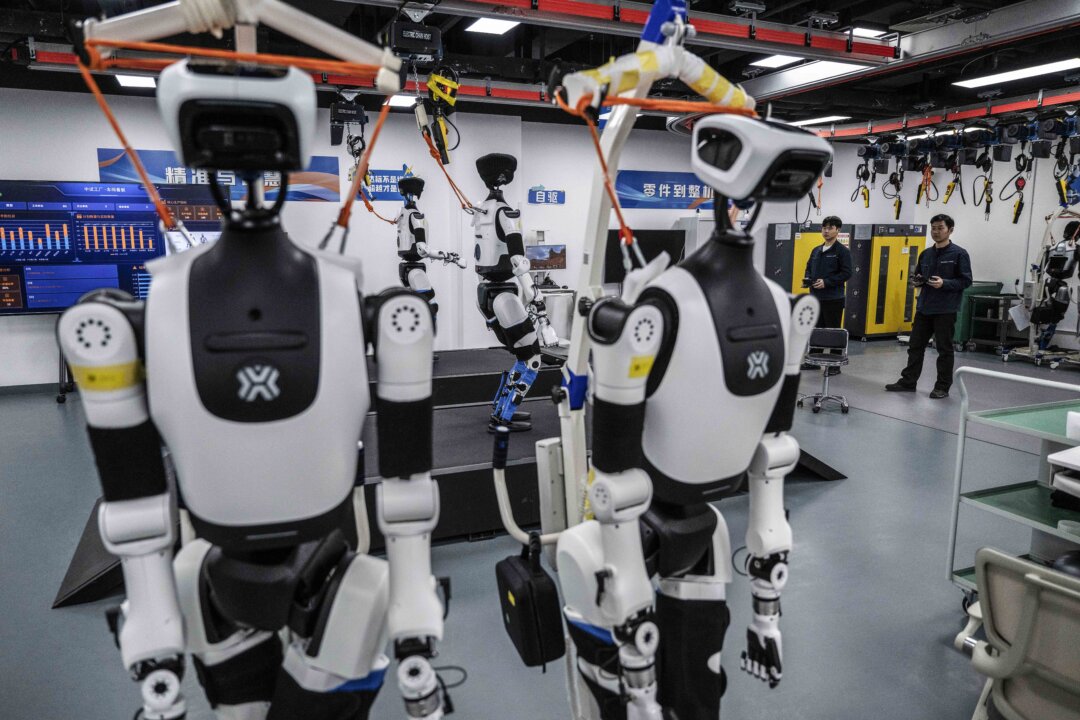
Chinas Humanoid Robot Companies Face Reality Check
China is showcasing humanoid robots as symbols of its technological ambitions. However,...



Iceland Focuses on Security Partnerships After Voters Reject Opening EU Membership Talks
Icelandic Minister for Foreign Affairs Thorgerdur Katrin Gunnarsdottir attends a press conference...
