The organisation representing the 2.7 million small businesses that constitute around 97 percent of all businesses in Australia has told a Senate inquiry that it welcomes the changes introduced in this year’s budget, but has urged the government to change the thresholds at which some provisions are triggered.The Senate Economics Legislation Committee is considering the Treasury Laws Amendment (Tax Reform No. 2) Bill.Skye Cappuccio, chief executive officer of the Council of Small Business Organisations Australia (COSBOA) told the committee that the permanent instant asset write-off, the ability to gain a cash refund for losses made in the previous two years, and the increased threshold for the small business CGT concessions all “move in the right direction.”“But in each case, we believe the design falls short of what’s genuinely needed to lift small business investment, resilience, and productivity,” she said.COSBOA welcomed the fact that Treasurer Jim Chalmers has made the instant asset write-off permanent—as without the change the threshold it would have reverted to $1,000 from July 1 this year—but urged the government to raise the amount from $20,000 to $150,000.The maximum value of $20,000 was out of step with the real cost of assets that could potentially improve small business productivity, Cappuccio said.She said that “$20,000 supports a new laptop, a new coffee machine, perhaps a trailer, but it falls far short of the new vehicle or equipment that enables a tradie to support an additional staff member, or the machinery upgrades that enable a small manufacturer to improve production times whilst reducing energy consumption.”COSBOA has consistently called for a threshold of $150,000, indexed to inflation.“With a threshold set at $20,000, we see small businesses investing in what are probably better categorised as tools, so tools to support their business,” she explained.“That’s useful, but it’s not as useful as something that actually allows you to invest in something that that really will change the speed or the efficiency with which you are able to work, or which really does let your business grow.”The measure applies to an estimated 4.1 million businesses with an annual turnover of less than $10 million.New Loss ProvisionsThe bill also introduces a permanent two-year loss carry-back regime for eligible companies, mirroring previous pandemic-era rules.This permits an eligible company that makes a loss this year to apply that loss against profits (and tax paid) in up to two earlier years, generating a cash refund now instead of waiting to use the loss against future profit.Cappuccio said the principle behind this was sound, but the mechanism applies to companies with a turnover of up to $1 billion, and the compliance barriers reflected this.“A genuinely small business needs a simple pathway with standardised calculations, so the businesses this measure is meant to help aren’t shut out by compliance complexity built for a different scale of enterprise entirely,” she said.It also excluded any small business operating through structures other than a company, such as trusts.Increasing the annual turnover threshold for small businesses to qualify for the 50 percent active asset reduction from $2 million to $10 million, starting July 1 2027, was also a positive COSBOA said.“There are approximately 180,000 small businesses in Australia … who are now clearly eligible for this concession. The $2 million dollar threshold hasn’t been indexed or updated in 19 years, and each year each year becomes more and more out of step with the contemporary reality of small business,” Cappuccio told the committee.The overall package changes—particularly those related to capital gains and negative gearing—have not been as well received by many other groups, but Chalmers has said he believes the anger will subside as people become familiar with the “substance” of the reforms.The Business Council of Australia, for instance, said the government should cut spending before changing the tax regime, while the Institute of Public Accountants (IPA) and CPA Australia said the reforms were poorly drafted and would impose significant compliance costs on businesses.

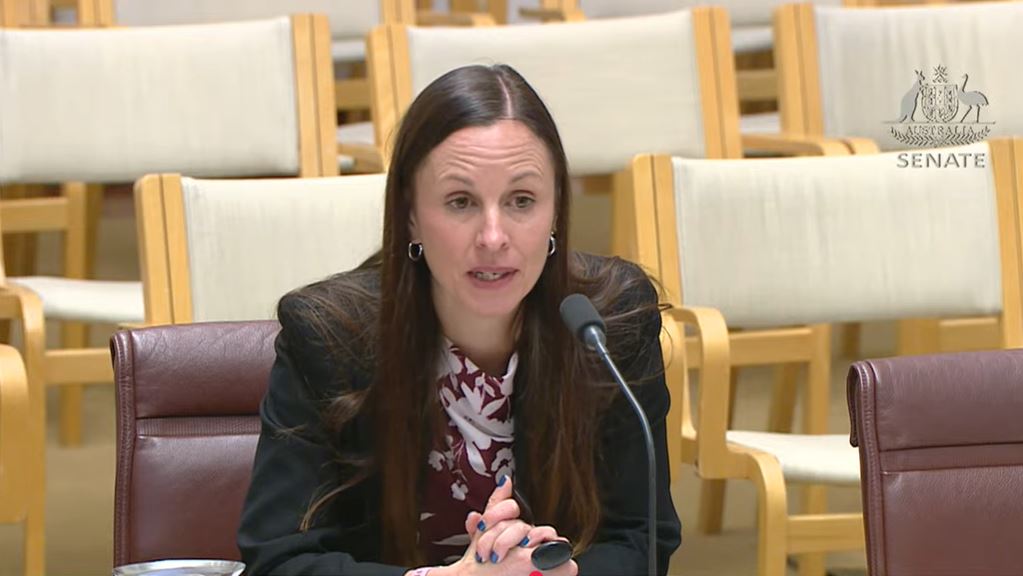
Instant Asset Write-Off Should be Lifted to $150,000, Senate Inquiry Hears








Related Articles

BusinessCompaniesEnergy
EQT to Buy Range Resources, Creating Largest US Natural Gas Producer
EQT Corp. has agreed to acquire rival Appalachian shale driller Range Resources...

BrightBusinessInvestingPersonal FinanceStocks
Wall Street Is Very NervousShould You Worry? Can You Repair Your Losses?
On Oct. 23, the Dow Jones Industrial Average fell 652.82 points, or...

BusinessMarkets
Nearly 3 in 10 New-Car Trade-Ins Are Underwater, Edmunds Finds
Almost three in 10 vehicles traded toward a new car are worth...


China NewsEuropeGlobalUK NewsWorld News
UK Must Be Ready for War in 1,000 Days, Says British Defense Secretary
British Defense Secretary Wes Streeting has said the country must be ready...
