A Chinese state-owned enterprise in eastern Shandong Province has ordered employees to report their use of Anthropic’s AI coding assistant, Claude Code, and replace it with domestic alternatives, reflecting Beijing’s expanding restrictions on foreign AI tools.An internal notice posted to social media instructs departments to investigate whether employees are using Claude Code or other overseas AI programming assistants and submit the results by July 17. Employees found to be using the software are instructed to switch to Chinese-developed AI coding tools.The directive suggests that China’s campaign against foreign AI is extending beyond private technology companies into the country’s vast state-owned enterprise system.According to the notice, the order was issued after guidance from Shandong’s State-owned Assets Supervision and Administration Commission (SASAC) and the state-owned Shandong Hi-Speed Group.The notice alleges that Claude Code, developed by U.S.-based AI company Anthropic, contains a concealed detection mechanism that can identify users in China’s time zone or those accessing Claude Code through proxy servers and transmit those identifiers back to Anthropic’s servers.Claude Code is an AI-powered software development tool that can analyze source code, read project files, execute terminal commands, and modify code directly.Although Anthropic does not officially provide Claude Code services in China, some Chinese developers access the platform through overseas accounts, proxy servers, or third-party interfaces.“These tools were already prohibited, but many companies were still quietly using them,” a Shandong-based journalist surnamed Liu told The Epoch Times. He spoke on condition of anonymity out of fear of reprisal.“Cyber police discovered that some firms had installed Claude Code, so companies are now being required to investigate, remove the software if it’s installed, and report the results,” he said.Liu said that the directive originated with provincial cyberspace and cyber police authorities before being passed to the provincial Shandong’s State-owned Assets Supervision and Administration Commission, Shandong Hi-Speed Group, and ultimately state-owned enterprises.A Beijing-based software developer surnamed Chen said that Claude Code has become widely used among programmers because of its ability to generate code, edit software, and troubleshoot programming problems efficiently.“But once it’s connected to an enterprise project, it may be able to access code repositories, configuration files, and API endpoints,” said Chen, who spoke on condition of anonymity out of fear of reprisal. “State-owned companies are now being ordered to investigate their use. Domestic [Chinese] alternatives may not yet match its capabilities or stability, which could increase labor costs. I think some companies will continue using it anyway.”The directive follows recent reports about a monitoring feature built into certain versions of Claude Code.Taiwanese technology outlet IT Home, citing reverse-engineering analysis by developers, reported that some versions of Claude Code collected information such as users’ configured API endpoints, computer time zones, and proxy domain names. According to the report, connections associated with Chinese AI companies, technology firms, and account-reselling services were assigned hidden identifiers that were transmitted with user requests to Anthropic’s servers.According to Anthropic’s Thariq Shihipar, the feature was introduced experimentally in March to identify unauthorized account reselling and AI model distillation. He said in a post on X that Anthropic plans to remove the hidden identifiers.The Epoch Times reached out to Anthropic for comment but did not receive a reply as of publication.A network engineer in Zhengzhou city, central China, said that collecting such information does not necessarily constitute a software backdoor.“A traditional backdoor bypasses normal permissions, remotely controls devices, or steals data,” the engineer told The Epoch Times on condition of anonymity.“This is closer to concealed tracking and user profiling. However, because Claude Code has broad access to source code, configuration files, and terminal commands, companies may worry that combining those capabilities with identification mechanisms could expose internal code, project data, and development environments.”Beijing Issues WarningOn July 8, a cybersecurity platform operated by China’s Ministry of Industry and Information Technology issued a security advisory warning that certain versions of Claude Code contained what it described as “security backdoor risks,” according to Chinese state media People’s Daily.The advisory alleged that the software included a built-in monitoring mechanism capable of transmitting users’ geographic location and identifying information to remote servers without user consent. It identified versions 2.1.91 through 2.1.196 as affected and urged Chinese companies and users to uninstall those versions or upgrade to newer releases that remove the relevant code.The engineer said Beijing’s treatment of foreign software reflects a broader policy rather than a purely technical security assessment.“The Chinese Communist Party requires domestic software to include government access mechanisms while comprehensively blocking foreign software,” he said. “This goes beyond national security. It reinforces the message that foreign products cannot be trusted and that foreign software is a form of espionage.”Sun Chen contributed to this report.

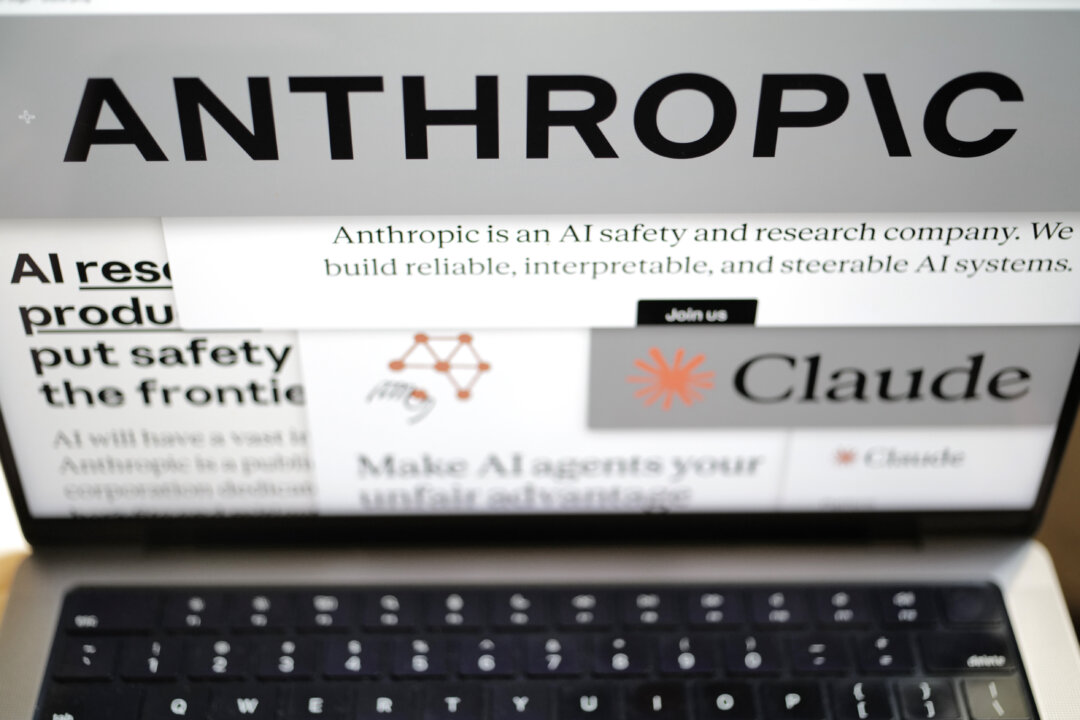
Chinese State-Owned Firms Ordered to Replace Claude Code With Domestic AI Tools









Related Articles

China Business & EconomyChina NewsChina Technology
China Tech Index Plunges More Than 40 Percent From July Peak
China’s technology-heavy STAR 50 index has fallen by more than 40 percent...

China Military NewsChina NewsChinese RegimeInside CCP OfficialdomSpecial TopicsZhang Youxia
Xi Opens CCP Plenum Amid Sweeping Purges, Record-Low Attendance Forecast
Chinese Communist Party leader Xi Jinping opened a four-day meeting of senior...

China Business & EconomyChina NewsChinese RegimeFinance & Business TiesInside CCP OfficialdomSpecial Topics
Chinas Economic Woes Deepen as CCP Plenum Focuses on Political Control
The Chinese Communist Party (CCP) opened a four-day leadership meeting in Beijing...



China NewsEuropeGlobalUK NewsWorld News
UK Must Be Ready for War in 1,000 Days, Says British Defense Secretary
British Defense Secretary Wes Streeting has said the country must be ready...
