Typhoon Bavi struck China’s eastern coast twice late on July 11, bringing winds near 90 mph and torrential rain before its sprawling circulation carried tropical moisture hundreds of miles north.The storm first made landfall at about 11:20 p.m. local time near Yuhuan, on the Zhejiang coast, according to Zhejiang’s meteorological service. It came ashore with sustained winds of about 89 mph and a central pressure of 955 millibars.About 40 minutes later, Bavi made a second landfall near Yueqing, farther south along the same coastline, with winds of about 85 mph, the service reported.Bavi’s center remained far from Beijing and the northern province of Hebei. Its unusually broad circulation, however, continued drawing tropical moisture north, feeding rain systems hundreds of miles from the landfall zone.In Zunhua, a mountainous community in Hebei, a female resident using the pseudonym Wang Hua out of fear of reprisal told the Chinese edition of The Epoch Times that water had covered roads and risen over bridge surfaces, leaving her family uncertain how to follow evacuation instructions.“The notice said to evacuate, but where are we supposed to go?” Wang said. “All the bridge surfaces have been flooded, and we already live in the mountains, so we have nowhere to go.”A ‘Gargantuan’ StormBavi had weakened considerably by the time it reached mainland China, but its enormous size allowed it to affect weather far from its center.The U.S. Joint Typhoon Warning Center described Bavi as a “gargantuan typhoon,” with a wind field ranking among the largest 3 percent of western Pacific typhoons during the past decade, according to the University of Wisconsin–Madison’s Cooperative Institute for Meteorological Satellite Studies.NASA said Bavi had earlier reached Category 5 strength as it crossed the region around Guam and the Northern Mariana Islands, both U.S. territories in the western Pacific. At its peak, the storm carried winds of about 180 mph, and its eye later passed over Rota, an island north of Guam.Bavi was the third tropical cyclone of 2026 to reach Category 5 strength, according to NASA.Along the Zhejiang coast, the storm brought destructive gusts, prolonged rain, and coastal flooding. A weather station recorded a gust of about 121 mph, while one inland location received more than 18 inches of rain from July 10 through the morning of July 12.Zhejiang’s meteorological service called Bavi the strongest July typhoon to make landfall in the province since records began in 1949.Authorities said more than 2.68 million people had been moved from areas considered at risk before landfall.Moisture Reaches Northern ChinaXiang Chunyi, a chief forecaster at China’s National Meteorological Center, said during a July 9 official weather briefing that Bavi’s moisture could interact with cold air and other weather systems, increasing atmospheric instability and rainfall intensity.The resulting rain stretched from eastern China toward Beijing and neighboring Hebei, where residents reported flooded roads, rising rivers, and access problems in low-lying and mountainous areas.Beijing authorities said about 104,000 people had been relocated by the afternoon of July 11. Official notices emphasized reservoir releases, and closures, but provided less detail about conditions facing residents after roads and bridges became impassable.In the Tangshan area of northern Hebei, authorities issued their highest rain warnings as some locations received more than 4 inches of rain. The region includes mountain communities vulnerable to flash flooding and landslides.Wang said roads near her home were already heavily flooded before noon on July 11, forcing vehicles to crawl through standing water.Videos from Yanjiao, a heavily populated Hebei community on Beijing’s eastern edge, appeared to show vehicles standing in water up to their windows. The Epoch Times could not independently verify when the footage was recorded or the precise water depth.Hebei’s Role as Beijing’s ‘Moat’Reservoir releases and flood diversions are politically sensitive in Hebei because the province has long carried part of the burden of protecting Beijing and other priority areas from flooding.During catastrophic floods in 2023, Hebei Communist Party Secretary Ni Yuefeng instructed the province to activate flood-storage areas to relieve pressure on Beijing and “resolutely serve as the capital’s moat.”Authorities activated seven flood-storage areas in Hebei during that disaster, inundating communities and provoking criticism among residents who said they received inadequate warning and compensation.German-based hydrologist Wang Weiluo told the Chinese edition of The Epoch Times at the time that the flood-control system prioritized central Beijing, central Tianjin, and Xiong’an over the lives and property of residents in surrounding areas.Water authorities again lowered reservoir levels and increased releases in parts of Beijing and Hebei before the latest rain.

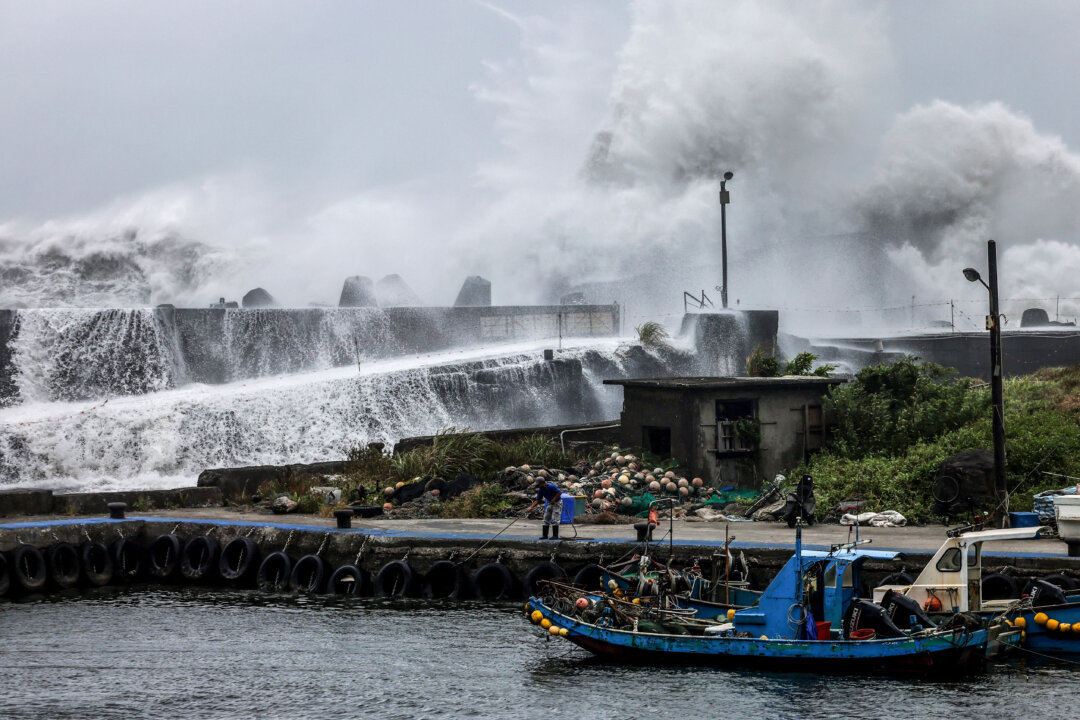
Typhoon Bavi Slams Eastern China, Fuels Flooding Hundreds of Miles North









Related Articles

China Business & EconomyChina NewsChina Technology
China Tech Index Plunges More Than 40 Percent From July Peak
China’s technology-heavy STAR 50 index has fallen by more than 40 percent...
China Military NewsChina NewsChinese RegimeInside CCP OfficialdomSpecial TopicsZhang Youxia
Xi Opens CCP Plenum Amid Sweeping Purges, Record-Low Attendance Forecast
Chinese Communist Party leader Xi Jinping opened a four-day meeting of senior...

China Business & EconomyChina NewsChinese RegimeFinance & Business TiesInside CCP OfficialdomSpecial Topics
Chinas Economic Woes Deepen as CCP Plenum Focuses on Political Control
The Chinese Communist Party (CCP) opened a four-day leadership meeting in Beijing...



China NewsEuropeGlobalUK NewsWorld News
UK Must Be Ready for War in 1,000 Days, Says British Defense Secretary
British Defense Secretary Wes Streeting has said the country must be ready...
