German companies are preparing to reduce staffing at the steepest pace since the pandemic as expectations for growth weaken and businesses brace for continued cost pressure, according to an S&P Global survey released on Thursday.The net balance of German businesses expecting activity to increase over the next 12 months fell to 10 percent in June from 24 percent in February, its lowest level since October 2024.Phil Smith, economics associate director at S&P Global Market Intelligence, said the war in the Middle East has taken a toll on Germany’s near-term growth prospects and “put paid to some of the burgeoning optimism seen at the turn of the year.”“But perhaps the most eye-catching insight from the latest business outlook data is that firms are planning sizeable job cuts in the coming 12 months,” he said.“Excluding the pandemic, German firms are their most bearish about employment since the global financial crisis,” he added.Confidence towards future output was particularly low among Germany’s manufacturers, with optimists (26 percent) barely outnumbering pessimists (23 percent).They said that sentiment was the “gloomiest” since October 2023.Among the 12 countries covered by comparable S&P Global surveys, only France was less optimistic, with a net balance of 6 percent. U.S. companies were the most upbeat, at 37 percent.The report came out as German inflation eased to 2.4 percent in June, the federal statistics office said on Friday, confirming preliminary data.Inflation, or the gain in consumer prices harmonized to compare with other European Union countries, stood at 2.7 percent year-on-year in May.Germany, Europe’s largest economy, known for its skilled labor force and high-end exports, was already facing significant hurdles prior to the Iran conflict.In Germany, a combination of energy crises, political instability, and declining competitiveness has already been threatening the country’s long-standing status as the major industrial force of the European Union.After two years of contraction in 2023 and 2024 and stagnation in 2025, the country has been struggling with the loss of affordable Russian gas, historic Volkswagen plant closures, and fierce competition from cheaper Chinese electric vehicles.Smith said that most of the data was collected in roughly the middle two weeks of June and thereby don’t reflect the further correction in oil prices seen since then.“But interestingly, despite firms revising up their forecasts for non-staff cost inflation quite substantially since the last survey in February, wage expectations actually dropped slightly in line with forecasts of looser labour market conditions, which encouragingly for policymakers at the ECB [European Central Bank] points to second-round inflationary pressures being somewhat contained,” he said.The net balance of firms expecting business activity to rise over the next 12 months fell from 16 percent in February to 6 percent in June. This was the joint lowest reading since October 2023 (matching October 2025) and well below the long-run average of 23 percent.French firms also plan to reduce hiring and investment activities over the coming 12 months.It said that the net balance of companies predicting a rise in capex, money that companies spend on long-term physical assets, in the year ahead fell to negative 2 percent in June, from 1 percent previously, indicating that on balance, French businesses expect investment in physical capital to decline.Joe Hayes, senior principal economist at S&P Global Market Intelligence, said that for the past few years, French businesses have consistently reported “much weaker confidence than their counterparts in the eurozone,” with June no different, with the Gallic country “at the foot of the global rankings for output growth expectations.”He said that France also has a domestic backdrop that is set to see uncertainty build over the next 12 months as we draw closer to the 2027 presidential elections.“This was also cited by businesses as an upcoming challenge and a reason why the nation sits well below its peers across the continent,” he added.Reuters contributed to this report.

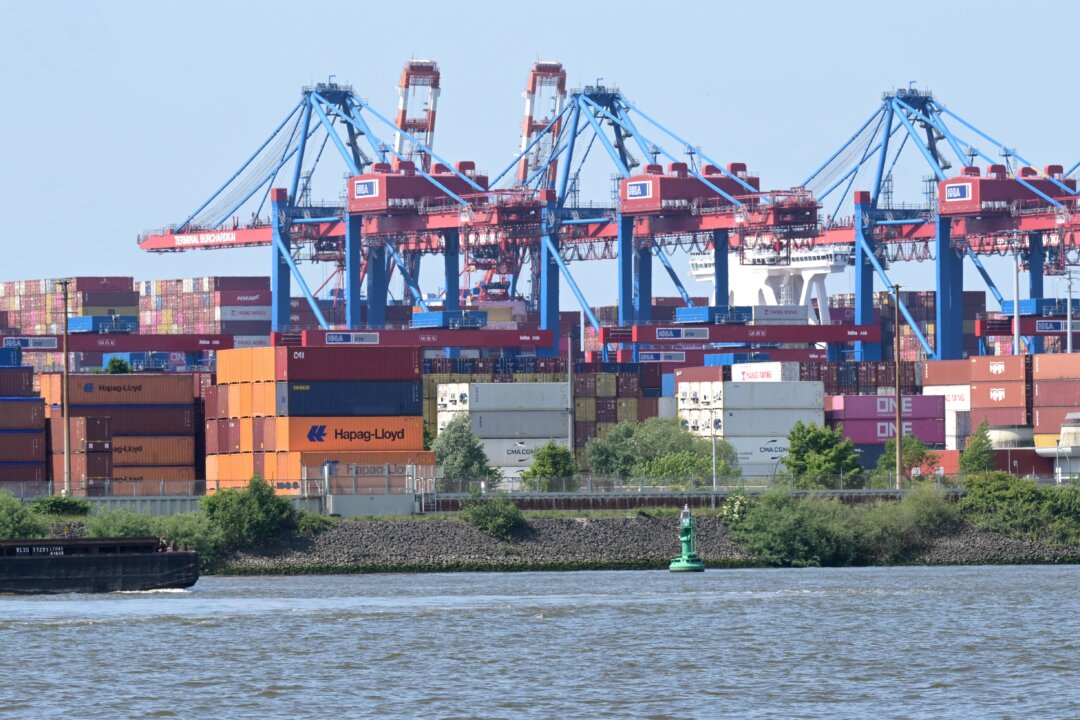
Germany Braces for Steepest Job Cuts Since Pandemic









Related Articles

EuropeThe Final wakeup call
Lula wins a miracle election in Brazil. Now comes the hard part: putting the country back on the right track
Three weeks ago, Brazilian President Luiz Inácio Lula da Silva’s political obituaries...
EuropeThe Final wakeup call
US midterms: what a new Congress could and could not change for Europe
US midterm elections traditionally attract fewer voters than presidential contests. But this...
EuropeThe Final wakeup call
Political power without balance leads to the erosion of democracy, what Montesquieu can teach modern-day France
KEY TAKEAWAYS Democratic erosion does not start by doing away with elections;...


China Business & EconomyChina NewsChina Technology
China Tech Index Plunges More Than 40 Percent From July Peak
China’s technology-heavy STAR 50 index has fallen by more than 40 percent...
