Chinese Communist Party (CCP) leaders are increasingly framing the regime’s anti-corruption campaign as a long-term political struggle rather than a finite effort to root out official misconduct, according to CCP insiders who spoke to The Epoch Times.The shift, they said, reflects a growing emphasis on safeguarding the Party’s rule and reinforcing political loyalty as China faces mounting economic pressures.The insiders spoke on condition of anonymity out of fear of reprisal. They revealed recent internal discussions circulating within the Party describing the anti-corruption campaign as a “protracted war” that will continue regardless of changes in the political landscape.According to the insider with ties to senior CCP officials, the campaign is now viewed as a permanent instrument of governance rather than a temporary crackdown. From Fighting Corruption to Enforcing LoyaltyThis insider told the publication the anti-corruption campaign has gradually shifted away from addressing corruption itself and toward maintaining political control within the Party.“I’ve heard they’re preparing for a prolonged anti-corruption campaign that just keeps going—investigating officials one after another,” the insider said. “Whether those officials are actually corrupt is another question.”He described that corruption has become deeply embedded in the CCP’s political system, where patronage and loyalty often determine career advancement.“Within the CCP’s system, corruption is also a demonstration of loyalty to one’s superiors. If you don’t play along, you won’t rise through the ranks,” the insider said. “What they’re calling anti-corruption increasingly looks like a purge of officials deemed politically unreliable.”As an example, he pointed to the recent bribery case involving Yang Youlin, the former executive deputy director of the Nanjing Economic and Technological Development Zone Administrative Committee, who was accused of accepting 2.2 billion yuan (about $324 million) in bribes.“He can’t accept bribes on that scale without also paying bribes along the way,” the insider said. “That’s the CCP’s economics of promotion.”The regime has continued to intensify its anti-corruption messaging this year.In January, the CCP’s top disciplinary watchdog said the regime must resolutely fight what it described as a “tough, protracted, and overall battle” against corruption. Official figures released during the first half of this year also showed that the number of ministerial-level officials investigated exceeded the record for the same period since the CCP came to power in 1949.Another insider told The Epoch Times that internal speeches referring to a “protracted anti-corruption war” were initially circulated only among ministerial-level officials but have recently reached lower-ranking cadres.“The central [Party] authorities have made it clear they intend to carry the anti-corruption campaign through to the end, using the phrase ‘protracted war,’” he said. “It has become a tool for protecting the Party and enforcing loyalty. There is no endpoint.”Political Loyalty Has Become the PriorityA China affairs scholar told The Epoch Times that the leadership is now less concerned with the amount of money individual officials have taken than with whether they remain politically loyal during a period of economic slowdown, diplomatic pressure, and uncertainty within the military.“On the surface, anti-corruption is about discipline,” the scholar said. “In reality, it’s about loyalty. Whoever controls the political fate of officials controls the entire bureaucracy.”Since Chinese leader Xi Jinping launched his sweeping anti-corruption campaign following the Party’s 18th National Congress in 2012, thousands of officials across local governments, state-owned enterprises, financial institutions, the security apparatus, and the military have been investigated.The CCP has portrayed the campaign as a process of “self-revolution.” However, the two insiders interviewed said the campaign has failed to eliminate entrenched practices of bribery and influence-peddling.Instead, they said, many officials continue operating within the same system while living under constant fear of investigation—a contradiction the Party has been unable to resolve.Military Campaign Expands Beyond Financial MisconductA Chinese scholar with ties to the CCP’s military told The Epoch Times that anti-corruption investigations inside the armed forces have broadened significantly over the past six months.Where investigators once focused primarily on military spending, procurement, and equipment, they are now scrutinizing personal networks, regional affiliations, and longstanding professional relationships, the scholar said.“Financial records alone often appear perfectly clean, making it difficult for disciplinary inspectors to uncover wrongdoing,” he said. “Now investigators are breaking cases through relationship networks—persuading subordinates to testify and tracing connections upward to determine who belongs to the same political circle.”The scholar said the investigations involving senior military figures Zhang Youxia and Liu Zhenli have also relied on examining those networks.Recent personnel changes have reinforced perceptions that Beijing is continuing to strengthen disciplinary oversight within the military. On July 4, Chinese state media People’s Daily reported new personnel changes in the military. Xi promoted Zhang Shuguang and Wang Gang to the rank of general.A Beijing-based scholar, surnamed Yao, told The Epoch Times the military remains the CCP’s ultimate guarantor of political power.“If the leadership begins to question the military’s loyalty, anti-corruption becomes a means of reshuffling control over the armed forces,” he said. “The appointment of senior military officers ultimately rests with Xi. If control over the military weakens, the consequences would be enormous. Anti-corruption is one of the few tools left to maintain control.”Yao said the Party has portrayed the campaign as a process of “self-revolution,” but argued that without an independent judiciary or meaningful public oversight, anti-corruption efforts remain entirely dependent on internal Party disciplinary mechanisms.“In the end,” he said, “so-called self-revolution is little more than a slogan.”Zhou Yu contributed to this report.

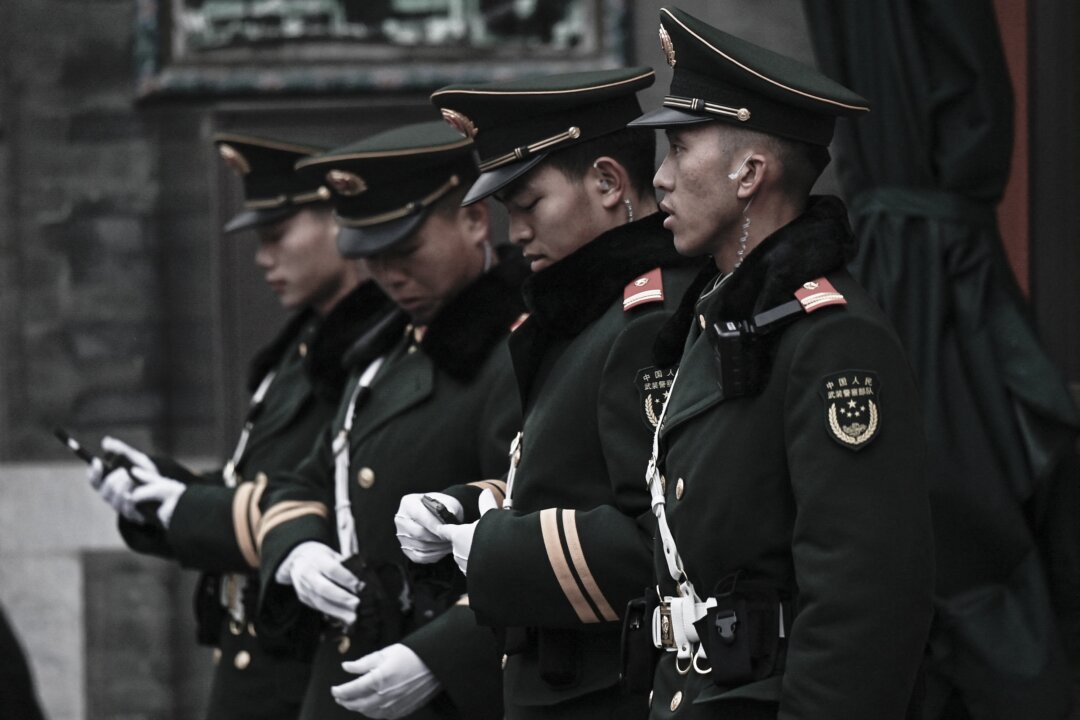
CCP Casts Anti-Corruption Campaign as Permanent Political Struggle, Insiders Say








Related Articles
China Business & EconomyChina NewsChina Technology
China Tech Index Plunges More Than 40 Percent From July Peak
China’s technology-heavy STAR 50 index has fallen by more than 40 percent...
China Military NewsChina NewsChinese RegimeInside CCP OfficialdomSpecial TopicsZhang Youxia
Xi Opens CCP Plenum Amid Sweeping Purges, Record-Low Attendance Forecast
Chinese Communist Party leader Xi Jinping opened a four-day meeting of senior...
China Business & EconomyChina NewsChinese RegimeFinance & Business TiesInside CCP OfficialdomSpecial Topics
Chinas Economic Woes Deepen as CCP Plenum Focuses on Political Control
The Chinese Communist Party (CCP) opened a four-day leadership meeting in Beijing...



China NewsEuropeGlobalUK NewsWorld News
UK Must Be Ready for War in 1,000 Days, Says British Defense Secretary
British Defense Secretary Wes Streeting has said the country must be ready...
