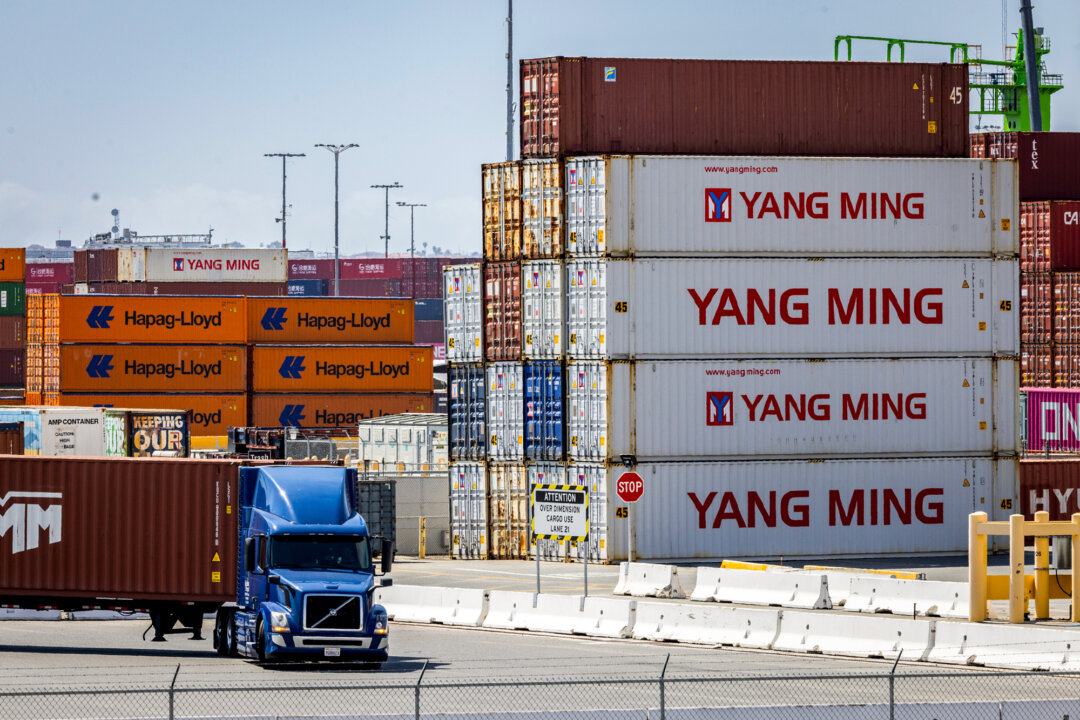
A rebound in imports fueled a spike in America’s trade deficit in May, new government data released on July 7 show.The U.S. international trade deficit in goods and services surged more than 42 percent from the previous month to $77.6 billion, according to the Bureau of Economic Analysis.May’s trade gap was the largest since March 2025 and came in slightly below the consensus forecast of $78.5 billion. Still, compared to the same time a year ago, the three-month average goods and services shortfall is down about $24 billion.Imports climbed more than 3 percent, or $12.5 billion, to $395.3 billion.U.S. firms purchased more consumer goods, industrial supplies, and automotive vehicles from foreign markets in May.Meanwhile, exports declined $10.5 billion, or more than 3 percent, to $317.7 billion.Shipments of U.S. goods have been strong this year, but they have slowed as foreign businesses have bought fewer American industrial, capital, and consumer goods.Narrowing the trade deficit has stalled of late, with the three-month average edging up by $7.5 billion to nearly $63 billion.One factor for the trend has been a strengthening U.S. dollar.The U.S. Dollar Index—a gauge of the greenback against a weighted basket of currencies—has advanced 3 percent this year.A stronger dollar makes U.S. exports more expensive in international markets, but can also make imports cheaper.Tariff UncertaintyPresident Donald Trump is expected to extend his 10 percent blanket tariffs under Section 122 of the Trade Act of 1974, which are set to expire later this month. Trump imposed the universal levy after the Supreme Court struck down his emergency tariffs in February.Results from the administration’s Section 301 investigations in March could also be unveiled soon. The measure will authorize the U.S. Trade Representative to implement tariffs if officials determine a foreign government is discriminating against U.S. goods.Bracing for possibly higher tariffs, companies are front-running their shipments, sending global shipping rates to their highest levels in four years.The Containerized Freight Index, for example, has surged 164 percent since March.While financial markets have moved on, trade policy uncertainty persists, particularly in North America.This past week, the White House announced it is not renewing the $2 trillion U.S.–Mexico–Canada Agreement, also known as the USMCA.“The USMCA did not operate to control the deficit as the president intended,” a senior administration official told reporters on a call. “So that’s really the heart of it, and part of it also extends to market access opportunities in Canada and Mexico.”Moving forward, the United States will conduct annual trade reviews with Canada and Mexico, and provisions of the USMCA deal will remain in effect until 2036.America’s trade deficit with Canada widened modestly by $7 billion in May, bringing the year-to-date total to above $18 billion. The U.S.-Mexico gap surged by about $5 billion, with the five-month total deficit surpassing $81 billion.Weighing Growth ProspectsEarly indicators suggest net exports will negatively impact second-quarter GDP growth.Net exports are calculated by subtracting the total value of imports from the total value of shipments. They reflect domestic production compared with goods originating abroad.Based on recent estimates, net exports are expected to weigh sizably on second‑quarter growth, with the Atlanta Federal Reserve estimating they will subtract 1.6 percentage points from the April–June expansion.The economy is projected to grow 1.2 percent in the period, according to the regional central bank.In the first quarter, net exports trimmed 0.37 percentage point from the final GDP reading.But new numbers suggest June’s trade figures could be an improvement.Last month’s services purchasing managers’ index—the Institute for Supply Management’s monthly measure to gauge the sector’s prevailing economic direction—was little changed from May.Business activity and new orders slowed, employment increased, and prices dipped.“Businesses were most likely done restocking inventories in June, which means we shouldn’t expect this to contribute much to the GDP figures due out at the end of the month,” Jeffrey Roach, chief economist for LPL Financial, said in an emailed note to The Epoch Times.“But we should still see strong contributions from AI-related capex and consumer spending, keeping growth above trend.”

US Trade Deficit Spikes 42 Percent on Rebounding Imports









Related Articles

BusinessCompaniesEnergy
EQT to Buy Range Resources, Creating Largest US Natural Gas Producer
EQT Corp. has agreed to acquire rival Appalachian shale driller Range Resources...

BrightBusinessInvestingPersonal FinanceStocks
Wall Street Is Very NervousShould You Worry? Can You Repair Your Losses?
On Oct. 23, the Dow Jones Industrial Average fell 652.82 points, or...

BusinessMarkets
Nearly 3 in 10 New-Car Trade-Ins Are Underwater, Edmunds Finds
Almost three in 10 vehicles traded toward a new car are worth...



Asia & PacificChina NewsEuropeInternational RelationsNational SecurityPolicies & ImpactsUSUS NewsUS-China RelationsWorld News
Japan Defense Academy Chief Calls for 3 Red Lines in Competition With China
Japan’s former top uniformed military officer has called for establishing three “red...
