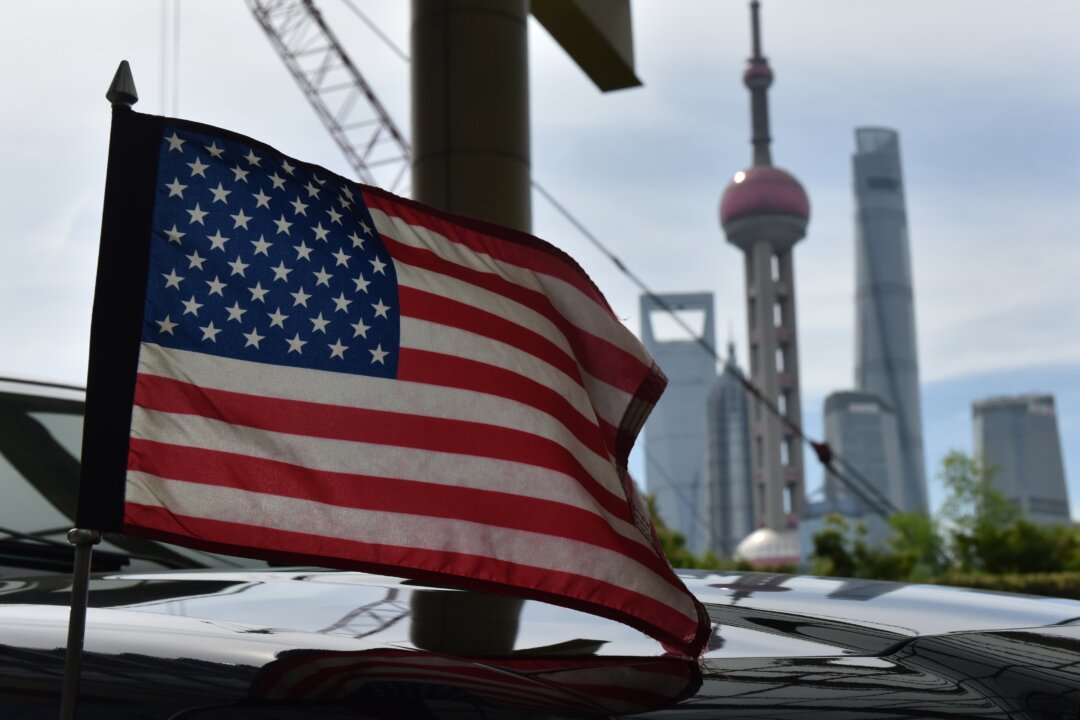
A U.S. flag flies on a U.S. consulate car with the backdrop of buildings in the Lujiazui financial district, in Shanghai, China, on July 31, 2019. Greg Baker/AFP/Getty ImagesAs President Donald Trump prepares for a visit to China this month, a retired Shanghai worker says Chinese postal authorities delayed delivery of a letter he sent to the U.S. Consulate that detailed alleged human rights abuses by regime authorities.The incident, described by the petitioner as evidence of China’s tight control over politically sensitive communication, highlights the risks faced by Chinese activists who attempt to draw international attention to human rights abuses ahead of high-profile diplomatic events.Trump is expected to visit China on May 14 for a two-day summit with Chinese leader Xi Jinping. Hoping to use the occasion to raise awareness about what he describes as longstanding human rights violations in Shanghai, 80-year-old retired factory worker and longtime petitioner Song Jiahong told The Epoch Times that he mailed a letter to the U.S. Consulate in Shanghai on May 5.In the letter, Song welcomed Trump’s upcoming visit and urged the United States to pay attention to what he called a largely unknown system of “black jails” allegedly used by the Chinese regime in Shanghai to detain petitioners and rights activists outside the formal legal system.“Please convey to President Trump that there exists in Shanghai a serious human rights issue led by the Chinese Communist Party (CCP) government—the suppression of rights defenders and petitioners through black jails—that is still not widely understood internationally,” Song wrote in the letter.In China, there is an administrative petitioning system for hearing public complaints and grievances. In practice, it is widely reported by witnesses and human rights groups that the regime routinely dismisses petitioners and often persecutes those who openly criticize or express dissatisfaction with the CCP.Song said he also enclosed research materials he compiled documenting alleged cases of extralegal detention in Shanghai.The collection, titled “A Directory of Shanghai Black Jails: 156 Cases,” was based on years of investigation and interviews with petitioners who said they had been detained or abused while seeking redress from CCP officials.However, after mailing the letter, Song noticed it did not move through the postal tracking system as expected. Domestic mail within Shanghai is typically delivered within a day, he said, yet tracking information showed the letter remained at the mail processing center for three days.On the evening of May 8, Song called the processing center to ask about the delay. According to Song, a postal employee surnamed Zhang told him that mail addressed to the U.S. Consulate must undergo inspection by “relevant departments” before it can be delivered.Song said he pressed the employee to identify which department ordered the inspection and under what legal authority. The employee, he said, responded that he could not provide any official document or legal basis, describing it only as an “internal regulation.”“The letter was eventually approved and sent,” Song said. “But the practice itself is unlawful.”‘Rule of Law’ QuestionsSong says that the incident contradicted Article 40 of China’s constitution, which states that Chinese citizens’ freedom and privacy of correspondence are protected by law.“How can this be explained?” he said. “My letter was not secretive—it was openly mailed and should have been protected by law. Government actions are supposed to have legal authorization, but they could not identify any law that authorized this inspection.”He added that the case reflected the gap between the CCP’s repeated claims about “rule of law” and the realities experienced by ordinary citizens.Song said he personally experienced abuse while pursuing petitions against local authorities and was previously detained in a “black jail”—unofficial detention facilities used to silence petitioners before politically sensitive events or meetings.Over the years, he has gathered testimonies and records from petitioners across Shanghai and compiled them into a database documenting alleged black jail operations run by the city’s district-level authorities. He has also published some of the information online to expose the system to a wider audience.Li Xi contributed to this report.

Shanghai Petitioner Says His Letter to US Consulate Was Held for Inspection Ahead of Trumps Visit
Shanghai Petitioner Says His Letter to US Consulate Was Held for Inspection Ahead of Trumps Visit









Related Articles

China Business & EconomyChina NewsChina Technology
China Tech Index Plunges More Than 40 Percent From July Peak
China’s technology-heavy STAR 50 index has fallen by more than 40 percent...
China Military NewsChina NewsChinese RegimeInside CCP OfficialdomSpecial TopicsZhang Youxia
Xi Opens CCP Plenum Amid Sweeping Purges, Record-Low Attendance Forecast
Chinese Communist Party leader Xi Jinping opened a four-day meeting of senior...
China Business & EconomyChina NewsChinese RegimeFinance & Business TiesInside CCP OfficialdomSpecial Topics
Chinas Economic Woes Deepen as CCP Plenum Focuses on Political Control
The Chinese Communist Party (CCP) opened a four-day leadership meeting in Beijing...



China NewsEuropeGlobalUK NewsWorld News
UK Must Be Ready for War in 1,000 Days, Says British Defense Secretary
British Defense Secretary Wes Streeting has said the country must be ready...
