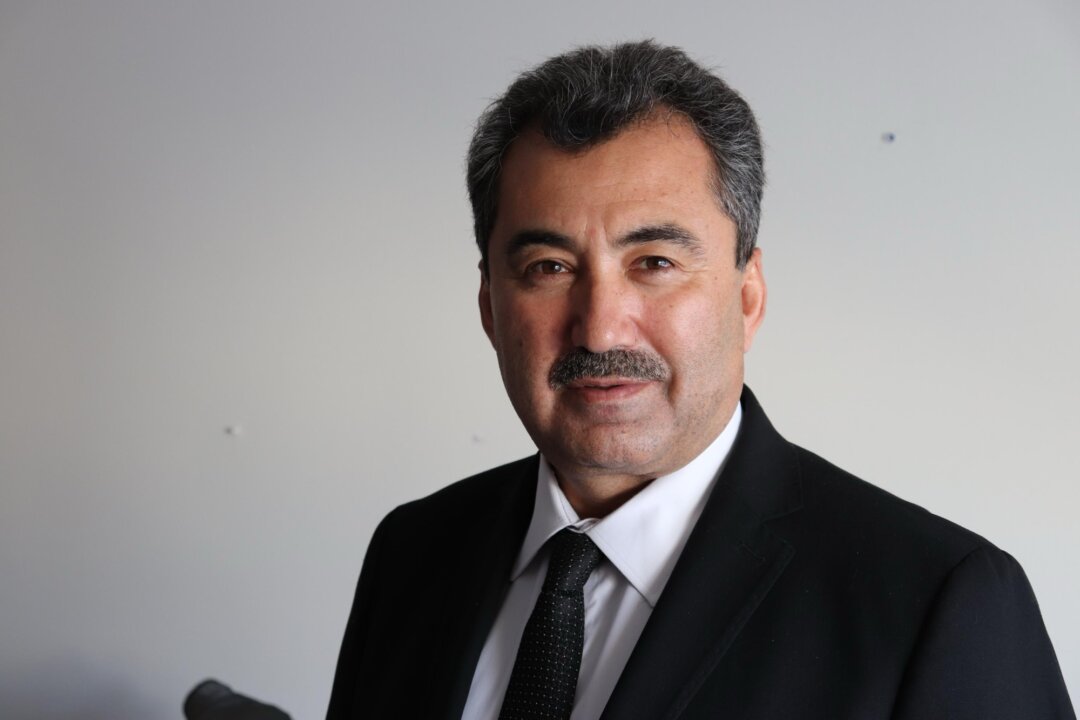
When Abdulhakim Idris landed in Kuala Lumpur, Malaysia, on March 29, he expected a book launch, university events, and meetings with students. Instead, the Uyghur scholar said Malaysian authorities pulled him aside at immigration, took his U.S. passport, interrogated him for about five hours, held him for roughly 21 hours, and put him on a flight out of the country before dawn.No official reason was given. His Malaysian host later told him the order had come directly from Beijing.Idris, a U.S. citizen and executive director of the Washington-based Center for Uyghur Studies, said the episode was not a routine immigration issue but a clear case of the Chinese regime’s transnational repression—efforts to silence, surveil, and punish critics far beyond China’s borders.He said he was disturbed that the Chinese Communist Party’s (CCP) influence now appears to extend even into Muslim-majority countries like Malaysia—places where many share the same faith Beijing is suppressing in Xinjiang.“China has now successfully used a third country to detain and expel a U.S. citizen,” Idris told The Epoch Times. “If this stands, it sets a dangerous precedent for every American advocate, journalist, and researcher operating abroad.”Trip Months in the MakingIdris had traveled to Malaysia before. Since 2022, he has been carrying out Uyghur advocacy work there, including an in-person meeting with Prime Minister Anwar Ibrahim. This time, his Malaysian partners had arranged a 10-day program of university events and student meetings tied to the launch of the Malay-language edition of his book, “Menace: China’s Colonization of the Islamic World & Uyghur Genocide.” The book has already been translated into Turkish, Arabic, and Indonesian.Two days before his trip, the Center for Uyghur Studies also released a report on Chinese influence in South Asian countries, including Malaysia, Idris said.He arrived at Kuala Lumpur International Airport at 7 a.m. An immigration officer took his passport and led him into a side office. A man who identified himself as a Royal Malaysia Police officer told him he would be denied entry and deported, Idris said. Under Malaysian rules, U.S. citizens do not need a visa for business or tourism stays under 90 days.“From the moment I was pulled aside at immigration, I feared for my life,” he said. “I was now being held by Malaysian law enforcement at the request of a state [China] that has already made people like me disappear.”Several men in plain clothes and dark glasses stood in the room, he said.“They did not identify themselves, said nothing to me, and just watched in silence. I did not know who they were or who they worked for,” he added.The Detention RoomAfter about five hours of questioning, officers moved Idris into a temporary holding area. More than 30 people were inside, and there was no visible police guard, he said. Some detainees were speaking Chinese.“This made me very scared, because I thought they might attack me,” he said.He spent roughly 15 hours sitting in a corner of a cell, alone with the knowledge that Uyghur activists have been killed abroad in cases traced back to Beijing.“They threw me into a very crowded, extremely unsanitary and dirty cell where many people were being held,” Idris said. “That single short day felt as long as a century. All kinds of strange and frightening thoughts came to my mind. I thought about the possibility that the Chinese government could take advantage of such an environment I was in to harm me.”At 4:25 a.m. on March 30, he was placed on a Turkish Airlines flight and sent back to the United States via Istanbul, where his passport was finally returned. After roughly 70 hours of detention and travel, he arrived at Dulles International Airport outside Washington.Chinese Security Chief in TownIdris believes the timing was not a coincidence.Three days before his arrival, on March 26, China’s Minister of State Security, Chen Yixin, met Prime Minister Anwar in Kuala Lumpur for talks on bilateral security cooperation.While Idris was being held, his Malaysian host told him that members of Chen’s delegation were still in the country and that his deportation resulted from direct pressure from Beijing. Idris said he suspects some members of the Chinese delegation may even have been present at the immigration office during his detention.The Malaysian government has not publicly explained why he was denied entry.The Epoch Times has reached out to the Malaysian Foreign Ministry for comment.Three Decades of AdvocacyIdris, 57, was born in Hotan, in China’s far-western Xinjiang region, which Uyghurs call East Turkistan. He studied at Al-Azhar University in Egypt before seeking asylum in Germany in 1990, becoming one of the first Uyghurs to do so.He helped found the East Turkistan Union in Europe, the World Uyghur Youth Congress, and the World Uyghur Congress. He moved to the United States in 2009 and in 2017 cofounded Campaign for Uyghurs with his wife, Rushan Abbas.Campaign for Uyghurs founder Rushan Abbas speaks during an event commemorating the Tiananmen Square Massacre that happened in China on June 4, 1989, at the Victims of Communism Memorial in Washington on June 4, 2025. Madalina Vasiliu/The Epoch TimesHis book has made him a particular target, Idris said. After its publication, he and his wife received coordinated death threats and faced digital harassment. During a launch event in Jakarta, Indonesia, he said, the Chinese embassy mobilized local proxies to stage protests, where copies of the book and his photograph were burned.“Beijing’s goal is to silence my research before it reaches Malay-speaking communities,” Idris said. His only “crime,” he added, “is being a dissident from a community persecuted by the Chinese government and exposing China’s broader threats to humanity, freedom, and democracy.”Transnational RepressionMalaysia is not the first place where Idris has encountered Beijing’s influence abroad.During a 2024 trip to Indonesia, immigration officials in Pontianak told him he could not speak at events on a tourist visa. On a follow-up trip in 2025, he was held at Jakarta airport for three hours before being allowed entry after U.S. intervention.But in Malaysia, that intervention failed. Idris said the U.S. State Department and the U.S. Embassy in Kuala Lumpur escalated his case to Malaysian immigration, but “Beijing prevailed.”The case fits into a broader pattern. In February 2025, Thailand deported 40 Uyghurs to China at Beijing’s request, prompting U.S. sanctions on the officials involved. In April 2025, Malaysian police raided a private venue in Kuala Lumpur and detained dozens of Falun Gong practitioners ahead of a state visit by Chinese leader Xi Jinping.Since 1999, the CCP has subjected Falun Gong practitioners in China to mass arrests, torture, forced labor, and even forced organ harvesting, in a bid to eliminate the practice. Practitioners of Falun Gong, a spiritual discipline based on the principles of truthfulness, compassion, and forbearance, have practiced freely in Malaysia for more than 30 years.Rushan Abbas, Idris’s wife and the executive director of Campaign for Uyghurs, said her husband’s case should serve as “a wake-up call” for the international community.“Beijing successfully weaponized a third country to detain and expel a U.S. citizen,” she said in an April 16 statement.Adrian Zenz, a senior fellow at the Victims of Communism Memorial Foundation, who has extensively documented abuses in Xinjiang, called it “transnational repression at its most brazen.”“If the international community allows this precedent to stand, no American advocate, journalist, or researcher operating abroad is safe from Beijing’s reach,” Zenz said in a statement.Family as LeverageFor Idris, the pressure is also deeply personal.Since mass detentions began in Xinjiang in 2017, he has lost contact with 24 relatives, including his mother, siblings, and all of his nieces and nephews. In August 2023, an anonymous source informed him that his father had died seven months earlier in Hotan. The last time he heard his father’s voice was in April 2017.“In Uyghur culture, family is everything,” Idris said. “Being severed from one’s roots is a form of psychological warfare.”His sister-in-law, retired physician Gulshan Abbas, was forcibly detained in September 2018—just days after his wife, Rushan Abbas, publicly spoke about the family’s situation. In December 2020, China’s Foreign Ministry confirmed she had been sentenced to 20 years in prison on charges her family says are baseless.‘I Refuse to Live in Fear’Idris said he returned home from Malaysia deeply traumatized and has had trouble sleeping since. He now thinks about his safety every time he travels.Still, he said the experience has not changed his plans.“I refuse to live in fear,” he said. He said he will continue to speak at the European Parliament, the United Nations, and across Muslim-majority countries.The CCP, he said, is “waging a systematic assault on faith, identity, and human dignity,” and the only response is to keep speaking out.“Every threat I receive and every sacrifice my family has been forced to make only strengthen my determination,” he said.

Uyghur Scholars Book Tour Ends With Malaysian Airport Detention He Says Beijing Ordered








Related Articles

China Business & EconomyChina NewsChina Technology
China Tech Index Plunges More Than 40 Percent From July Peak
China’s technology-heavy STAR 50 index has fallen by more than 40 percent...
China Military NewsChina NewsChinese RegimeInside CCP OfficialdomSpecial TopicsZhang Youxia
Xi Opens CCP Plenum Amid Sweeping Purges, Record-Low Attendance Forecast
Chinese Communist Party leader Xi Jinping opened a four-day meeting of senior...

China Business & EconomyChina NewsChinese RegimeFinance & Business TiesInside CCP OfficialdomSpecial Topics
Chinas Economic Woes Deepen as CCP Plenum Focuses on Political Control
The Chinese Communist Party (CCP) opened a four-day leadership meeting in Beijing...


China NewsEuropeGlobalUK NewsWorld News
UK Must Be Ready for War in 1,000 Days, Says British Defense Secretary
British Defense Secretary Wes Streeting has said the country must be ready...
