PARIS—The fire that ignited on July 22 in Saumos, a village in the pine forests northwest of Bordeaux, grew within days into the summer’s largest blaze in France. Before it was stabilized, it had swept across 42,000 hectares (about 104,000 acres), destroyed some 240 homes, and forced the preventive evacuation of roughly 220,000 people from 23 towns at the height of the tourist season, according to the Gironde prefecture.More than 230 firefighters were injured while battling the flames, and two others were killed a day earlier at nearby Mérignac. Nationwide, fires have charred 120,000 hectares (approximately 297,000 acres) since the beginning of summer, according to French authorities; nine out of 10 fire starts in France are of human origin, lightning being the only natural cause, according to statistics compiled by French state agency Forest Observatory for the 2010–2024 period.As the flames advanced, so did the handcuffs. According to the Interior Ministry’s latest tally, 474 suspects, including at least 175 minors, have been arrested since the start of the season, largely over allegedly setting fires deliberately.Authorities have not published a detailed offense-by-offense breakdown of the cases, but an earlier count is indicative: On July 30, Interior Minister Laurent Nuñez reported 275 arrests, 70 percent involving suspected deliberate fire-setting, the rest for imprudence or negligence.Thirty-six of those arrested were behind bars, convicted, or in pretrial detention, Nuñez said on Aug. 4. The suspects’ fates now rest with a justice system that experts interviewed by The Epoch Times call far more severe on paper than in practice.From Fines to Life ImprisonmentThe penal code separates careless fire-starters from deliberate ones.Involuntarily setting woods ablaze through negligence, such as a stray cigarette, carries a sentence of two years in prison and a 30,000-euro fine, rising to three years in the event a safety rule is violated, such as the violation of a prefectural fire ban, and to 10 years when the fire causes death.Deliberate destruction by fire that endangers people carries a 10-year prison sentence and a 150,000-euro fine, and torching woods in conditions exposing people to harm or causing irreversible environmental damage is a crime punishable by 15 years’ imprisonment, toughened in 2004 after the deadly 2003 heat wave.Penalties climb to 20 years and 30 years when victims are injured, and to life imprisonment when a forest fire kills or permanently maims. Minors, more than a third of this summer’s arrestees, benefit from reduced penalties.‘The Real Problem’ in SentencingWhether sentences will approach those maximums is another matter, a legal scholar said. “The problem here is not the severity of the penalties provided by the code, which are quite high enough. The real problem lies in the decisions the judges will make,” Bertrand Saint-Germain, an adviser affiliated with the France-based Observatory of Judicial Decisions, told The Epoch Times.Saint-Germain traces the gap to the “new social defense,” a rehabilitation-first doctrine theorized in the 1950s by French jurist Marc Ancel that he says has shaped sentencing law and judicial training for 70 years, steering judges away from incarceration.Sentences under one year are rarely served behind bars, he noted, and terms under two years are typically converted into an electronic bracelet compatible with employment. Unlike in the United States, France does not stack penalties; only the heaviest applies, he said.As a cautionary precedent, he points to a July 2025 ruling in southern France: A 51-year-old repeat offender of Moroccan origin, previously convicted of deliberate fire-setting and of glorifying Islamist terrorism, received a fully suspended one-year term, with treatment and work obligations, for a forest fire lit during a red heat-wave alert, despite prosecutors demanding jail and a 10-year ban from France. “The penalties will not be heavy; they will be far from exemplary,” Saint-Germain said of his prediction for the recent cases, adding that their execution will be “much lighter than what public opinion might expect,” and that the risk of reoffending remains “permanent.”First VerdictsCourts have already begun ruling.On July 29 in Toulon, a 39-year-old Tunisian national was convicted of deliberate destruction by fire and given 12 months in prison plus a five-year ban from France for igniting roadside vegetation near a supermarket that had just turned him away. Prosecutors, who said the act was “intentional,” had sought 15 months.On Aug. 7, two cousins, one from Chechnya and the other a French citizen, according to information obtained by Le Figaro, were sentenced to six months in prison and a 42-month suspended sentence after setting a fire “for fun.”On Aug. 11, another arsonist who admitted guilt was sentenced to six months under electronic monitoring, along with a six-month suspended sentence subject to two years of probation and an obligation to undergo treatment.On Aug. 12, a court in western France gave a 45-year-old farm worker with no prior criminal record three years in prison, with one year suspended, plus a treatment order, for igniting 11 fires that caused the mobilization of 117 firefighters. During the hearing, he said he had “had visions” and “heard voices” telling him to “set fire to things.”The Bordeaux megafire itself may yet land in the negligence column: Investigators’ lead hypothesis is an accidental start at a brush-clearing worksite beneath a power line, prosecutor Renaud Gaudeul told public broadcaster France Info. His office has referred 11 people to courts over fire-related offenses during the disaster and now prosecutes cigarette-butt tossing in the region’s forests as endangerment, punishable by a year in prison.Lack of ResourcesIn parliament, Matthieu Bloch, a deputy from the conservative UDR party, introduced a bill on July 28 that would create an aggravating circumstance for deliberately lit fires during officially declared periods of very high or extreme fire risk, with penalties of up to 30 years in the gravest cases.“The higher the risk, the greater the responsibility,” Bloch told The Epoch Times, likening it to premeditation in murder cases. Reacting to the arrest figures, he said “the message has not gotten through” and that people “are not sufficiently afraid of their justice system.”Saint-Germain attributed what he perceives as a lack of sufficiently deterrent sentences to ideological factors, noting that the progressive Syndicat de la magistrature regularly wins a third of the vote among judicial personnel.Bloch, while stating that many ideologues sit on the bench, says the core problem is resources: France devotes just 0.2 percent of its GDP to justice, while Germany spends nearly twice as much per inhabitant.Successive governments, he argued, have lacked the political will to build the needed number of prisons, and prisons near Bloch’s own district are running at up to 200 percent capacity, he said.“The entire French criminal justice system is sick,” he said, stressing that he regularly meets magistrates who “want to do their jobs but cannot, because prisons have run out of space.”Since Aug. 6, 330 gendarmes have been patrolling forest tracks and manning checkpoints under “Operation Nemus,” Latin for sacred wood. For Bloch, that will not suffice.“Those who set fires must actually go to prison,” he said. “It is an environmental crime, but also a crime against people and against society.”The cost of fighting the wildfires, along with the harder-to-predict cost of reconstruction nationwide, is expected to run into several billion euros.

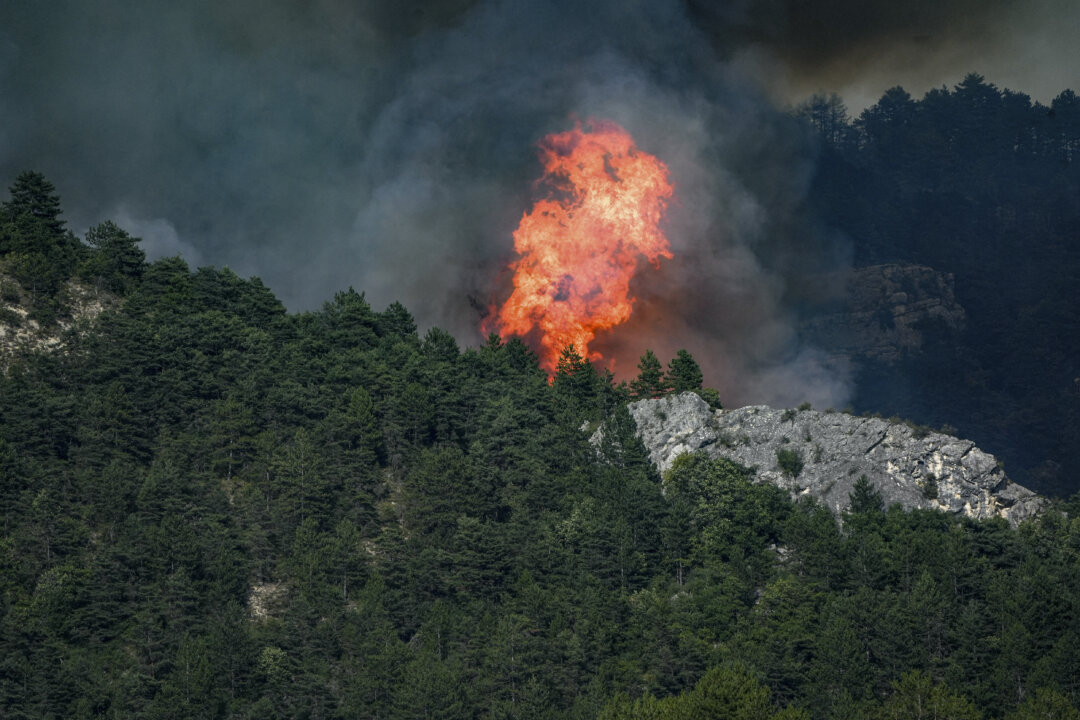
What Awaits the 474 People Arrested So Far Over Frances Summer Fires









Related Articles

EuropeThe Final wakeup call
Lula wins a miracle election in Brazil. Now comes the hard part: putting the country back on the right track
Three weeks ago, Brazilian President Luiz Inácio Lula da Silva’s political obituaries...

EuropeThe Final wakeup call
US midterms: what a new Congress could and could not change for Europe
US midterm elections traditionally attract fewer voters than presidential contests. But this...
EuropeThe Final wakeup call
Political power without balance leads to the erosion of democracy, what Montesquieu can teach modern-day France
KEY TAKEAWAYS Democratic erosion does not start by doing away with elections;...



China Business & EconomyChina NewsChina Technology
China Tech Index Plunges More Than 40 Percent From July Peak
China’s technology-heavy STAR 50 index has fallen by more than 40 percent...
