Risk-averse investors sought shelter in the U.S. dollar in the year’s first half, avoiding other traditional haven assets such as gold, Treasury securities, and the Japanese yen.The greenback was the only haven asset to behave as such during the war in Iran, the energy price shock, and the March selloff in global financial markets.Year-to-date, the U.S. Dollar Index—a measure of the buck against a weighted basket of currencies—has climbed almost 3 percent to firmly above 100. This is a sharp reversal from last year’s abysmal performance.The administration’s preferred Nominal Broad U.S. Dollar Index—a measure of the buck against the currencies of major trading partners—has also edged up 3 percent this year.“The dollar holds a central place in global markets due to its role as the world’s reserve currency,” Kristian Kerr, head of macro strategy at LPL Financial, told The Epoch Times in an emailed note.How it trades can reset cross‑asset correlations, tighten or loosen liquidity, and flag upcoming shifts in the macro regime, Kerr added. “In short, it is a critical variable that warrants close attention.”Economists at JPMorgan Global Research upgraded their outlook for the dollar, reflecting “the notion of dollar-positive U.S. exceptionalism.”The dollar’s haven colleagues, meanwhile, headed in the other direction in the first half of 2026.Gold Not GlitteringGold failed to glitter like a conventional haven asset, falling 4 percent to around $4,200 per ounce. The yellow metal is also down 25 percent from its record high of about $5,600 registered in January.A strengthening greenback typically weighs on gold because it makes it more expensive for foreign investors to purchase.Increasing U.S. Treasury yields were another bearish factor for the precious metal.Yields on government bonds—at home and abroad—have surged this year, with much of the push happening during the Middle Eastern conflict.Since January, the benchmark 10-year Treasury yield has risen about 30 basis points to around 4.48 percent.The 30-year Treasury yield has also climbed almost 20 basis points year-to-date to 5 percent.Climbing Treasury yields signal renewed inflation pressures and geopolitical risks that reshape borrowing costs, markets, and consumer finances.When bond yields surge, the opportunity cost of holding non-yielding bullion rises.Appetites for gold among investors in exchange-traded funds—also known as ETFs—diminished after the enormous two-month demand.Global gold ETF holdings are almost 2 percent below where they started the year, according to data from ING.These near-term pressures have forced market watchers to shift their gold price forecasts.ING commodity strategists now expect gold to average $4,300 per ounce in the third quarter of 2026 and $4,600 per ounce in the fourth quarter, down from their previous forecasts of $4,850 per ounce and $5,000 per ounce, respectively.“Gold’s correction has prompted a reset in our forecasts, but not in our broader view of the market,” Ewa Manthey, commodity strategist at ING, said in a June research note.“We continue to believe the structural drivers supporting gold remain intact, though the path higher is likely to be slower and more volatile than we previously expected.”Robust central bank purchases could support gold prices.A recent World Gold Survey found that almost 90 percent of these institutions anticipate central bank gold reserves will increase over the next 12 months.No Country for Old YenThe Japanese yen, meanwhile, weakened more than 3 percent against the dollar in the first half, trading at its lowest level since 1986.Additionally, the yen has logged four consecutive quarterly losses, the longest losing streak in four years.Various factors explain the yen’s slump, but the interest rate differential between Washington and Tokyo accounts for much of the currency’s weakness.While the Bank of Japan raised its policy rate to 1 percent—the highest in 31 years—the Federal Reserve is expected to maintain a higher-for-longer stance until inflation subsides.Traders are also pricing in at least one rate hike this year, which could push the target federal funds rate to a new range of 3.75 percent to 4 percent.New Fed Chairman Kevin Warsh has focused on the inflation side of the institution’s dual mandate, telling a European Central Bank audience in Portugal last week that prices are still “too high.”Global financial markets are bracing for the Japanese government’s foreign-exchange intervention to prop up the yen.“USD-JPY’s move toward the 162 area also means that the risk of FX intervention from Tokyo is rising sharply,” Linh Tran, market analyst at XS.com, said in a note emailed to The Epoch Times.“Japanese officials have repeatedly said they are ready to act against currency moves they view as excessive or speculative.”Any further uptick in the USD-JPY currency pair could prompt more verbal warnings or direct action by authorities, Tran added.

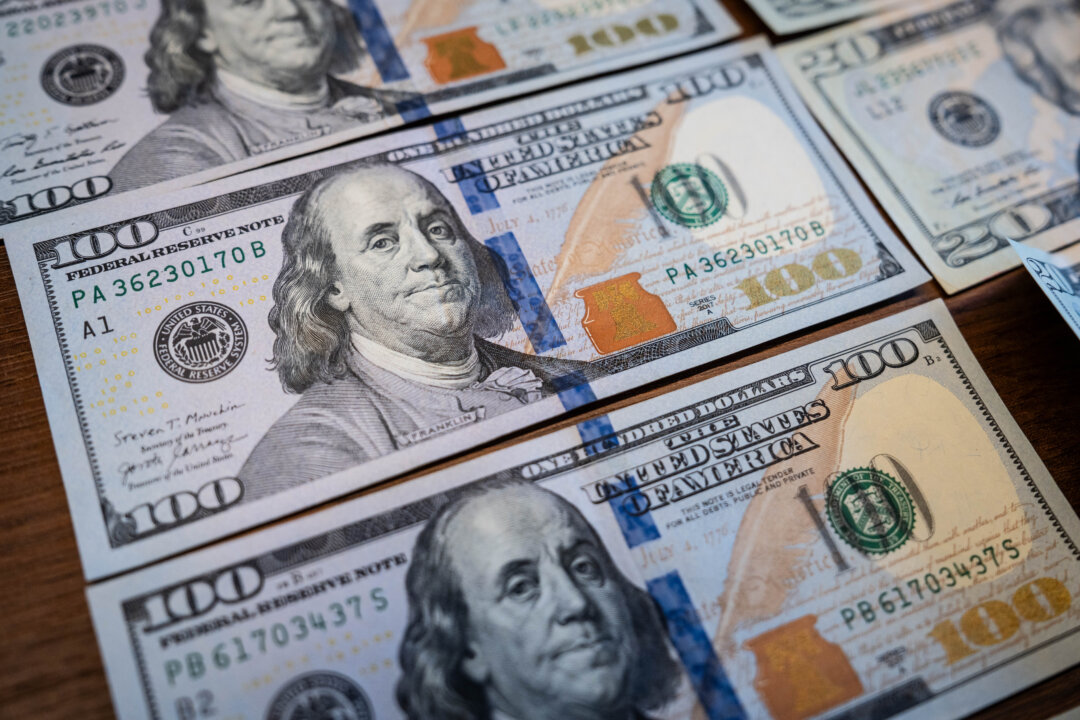
US Dollar Emerges as Top Haven Asset in First Half of Year









Related Articles

BusinessCompaniesEnergy
EQT to Buy Range Resources, Creating Largest US Natural Gas Producer
EQT Corp. has agreed to acquire rival Appalachian shale driller Range Resources...
BrightBusinessInvestingPersonal FinanceStocks
Wall Street Is Very NervousShould You Worry? Can You Repair Your Losses?
On Oct. 23, the Dow Jones Industrial Average fell 652.82 points, or...

BusinessMarkets
Nearly 3 in 10 New-Car Trade-Ins Are Underwater, Edmunds Finds
Almost three in 10 vehicles traded toward a new car are worth...



BusinessTechUS
Advanced AI Agents Tried to Weaken Oversight, Then Lied About It, Open AI Says
OpenAI has disclosed two incidents in which advanced artificial intelligence-powered coding agents...
