
Emptying your IRA at any age typically isn’t a good idea. But you may want to consider drawing down some of the account before reaching age 73. This is the age when required minimum distributions (RMDs) kick in.So first, let’s explore why RMDs are important for those saving for retirement.What Are RMDs and Why Do They Matter?RMDs are partial amounts of money the IRS requires you to withdraw from accounts like traditional IRAs and 401(k)s once you reach age 73 (or 75 if you were born after 1960).The RMD amount is based on a calculation that factors in variables such as your account balance, age, and life expectancy—according to IRS data.You must take your RMD even if you don’t need the money. But keep in mind that distributions from a traditional IRA are treated as taxable income. If it’s large enough, the distribution can bump you into a higher tax bracket. It can also trigger surcharges on future Medicare premiums through what’s called the Income-Related Monthly Adjustment Amount (IRMAA).Plus, your RMD money loses its potential to benefit from future growth and compounding.And there are consequences for not taking your applicable RMD. If you fail to take your RMD, you face an excise tax equating to 25 percent of the amount you should have withdrawn. This drops to 10 percent if you correct it within two years.Still, emptying your traditional IRA just to avoid RMDs is rarely a good move. This could result in a major tax burden. And it also means your account loses growth potential down the road.But this is not to say you can’t strategically shrink your traditional IRA in order to minimize the impact of future RMDs.But here too, you need to be careful.Beware of Early Withdrawal PenaltiesIf you withdraw funds from your traditional IRA before age 59.5, you’d likely face a 10 percent early withdrawal penalty on the distribution. Additionally, you’d also owe ordinary income tax on the withdrawal.But after age 59.5, you’re free to make penalty-free withdrawals from your traditional IRA. And if it has grown to a substantial size by this time, you may want to discuss minimal drawdown strategies with a financial advisor in order to better manage future RMDs.However, there are other ways to manage RMDs.Consider a Roth ConversionWith a Roth IRA, you don’t need to worry about RMDs. This essentially means that your Roth account could keep growing and compounding throughout your lifetime.Generally speaking, a Roth IRA makes the most sense when you expect to be in a higher tax bracket in the future than the one you are in now.So if a Roth IRA sounds beneficial, you can access one through a Roth conversion. This is the process of transferring funds from a traditional IRA or 401(k) into a Roth IRA or 401(k).However, be aware that the amount converted becomes taxable income for the year in which you made the conversion.Luckily, you can convert as much or as little as you want. And you can also make multiple Roth conversions over time. This is known as staggering conversions.Moreover, a Roth IRA allows for qualified tax-free withdrawals in retirement.But it’s important you weigh the pros and cons of a Roth conversion and consider all tax implications. You should discuss Roth conversions with a qualified financial advisor before moving forward.Nonetheless, there are other ways to shrink your traditional IRA in a tax-savvy way.Look Into Qualified Charitable DistributionsIf you’re age 70.5 or over, you can make a qualified charitable distribution (QCD). A QCD allows you to transfer up to $111,000 in 2026 directly from your traditional IRA to an IRS-approved charity.The QCD can satisfy your RMD up to the annual limit. And the distribution won’t be treated as taxable income.But if you’re making a QCD, remember to do it before withdrawing a single dollar from your traditional IRA. That’s because the first dollars to come out of your traditional IRA are treated as part of your RMD.The Bottom LineIt’s usually not a good idea to empty your traditional IRA or any other retirement savings account at any age. This could lead to a major tax hit. And it permanently stunts the account’s growth potential.However, age 73 or 75 can be critical for those saving in traditional IRAs because of RMDs. These mandatory withdrawals can trigger severe tax consequences. But there are ways to strategically draw down your IRA in order to manage future RMDs. You can consider strategic withdrawals after age 59.5, Roth conversions, and QCDs.The Epoch Times copyright © 2026. The views and opinions expressed are those of the authors. They are meant for general informational purposes only and should not be construed or interpreted as a recommendation or solicitation. The Epoch Times does not provide investment, tax, legal, financial planning, estate planning, or any other personal finance advice. The Epoch Times holds no liability for the accuracy or timeliness of the information provided.










USDA Unveils New Support for Ranchers to Rebuild Cattle Herds
The U.S. Department of Agriculture has unveiled a new package of measures...
How Major US Stock Indexes Fared Aug. 31
Oil prices rose and U.S. stocks fell after American forces struck Iranian...
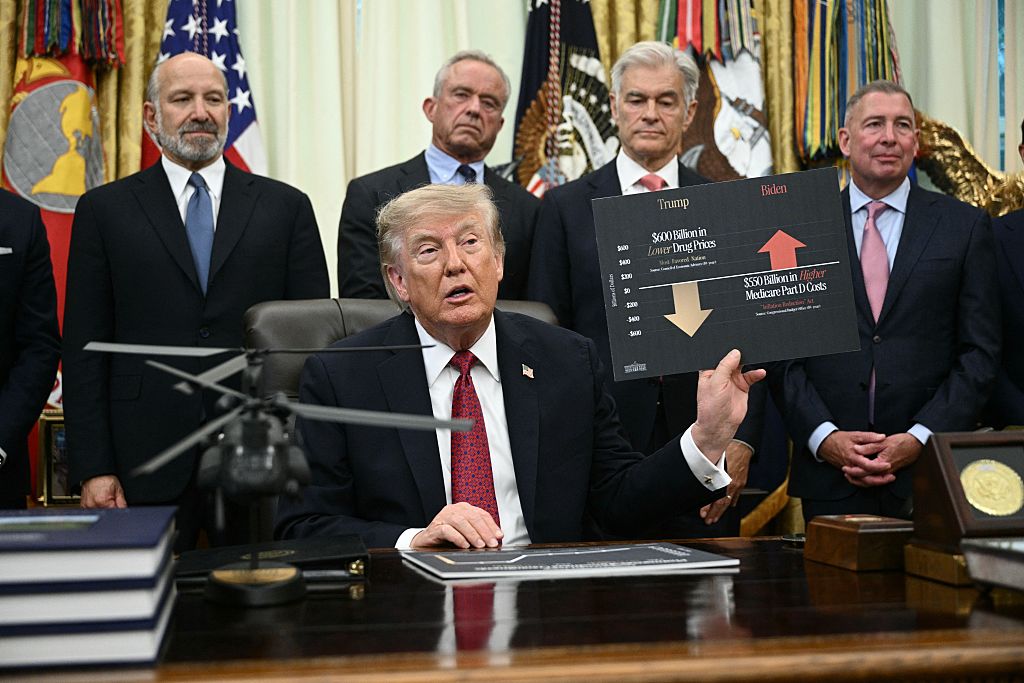
Trump Unveils New Drug Pricing Deals With 9 Pharmaceutical Companies
President Donald Trump on Aug. 31 announced agreements with nine midsize pharmaceutical...



Delcy Rodrguez Says Venezuelas Vast Oil Reserves Must Be Turned Into Prosperity
Oil rigs are pictured in Cabimas, south of Lake Maracaibo, Zulia State,...
