
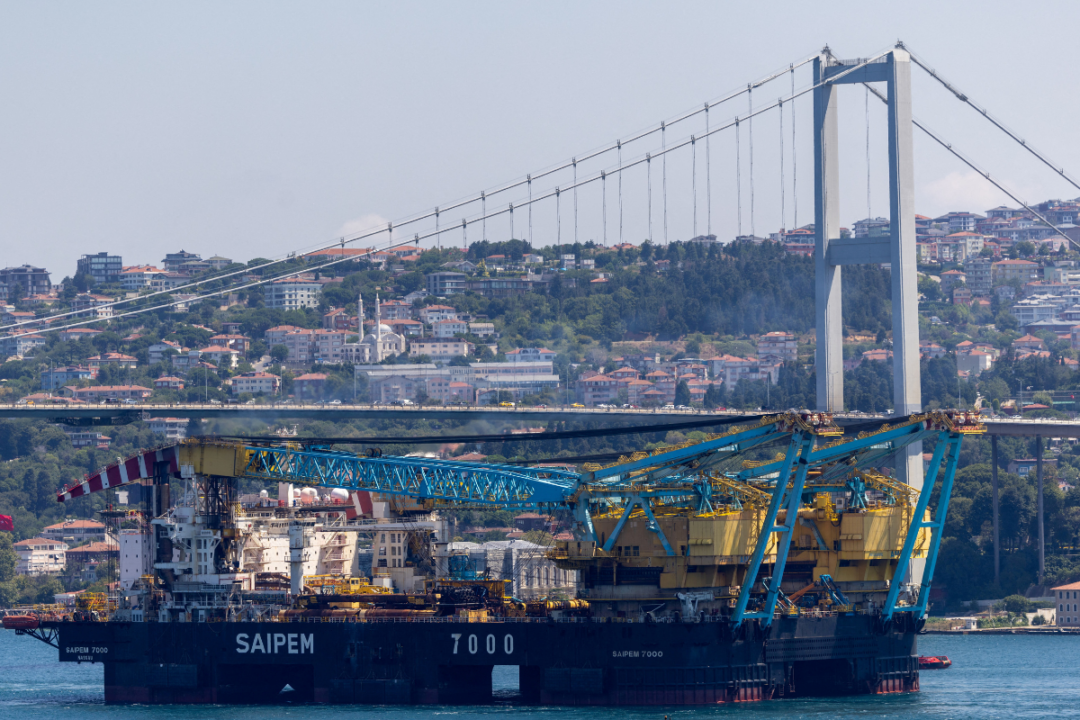
Divers from the Romanian Naval Forces have destroyed two unmanned aerial vehicles (UAVs) floating in the Black Sea in the country’s exclusive economic zone near a major offshore gas project, Neptun Deep.Due to come online in 2027, Neptun Deep will make Romania the European Union’s largest gas producer.The Romanian Ministry of National Defense said in an Aug. 11 statement that two Gerbera model UAVs were destroyed in controlled detonations.“The systems were reported at around 08:00, in the exclusive economic zone of Romania, approximately 90 nautical miles across from Constanța, in the vicinity of the Neptun Deep perimeter, by the personnel of a civilian ship carrying out works in the area,” the statement said.The drones may have had explosives, and a fragment from one of the drones was taken aboard the Coast Guard ship, the statement said.The ministry did not specify where it believed the drones originated, but said that the naval command contacted Kyiv, which confirmed that they didn’t belong to Ukrainian forces.According to the U.S. Army’s Operational Environment Data Integration Network (ODIN) portal, the Gerbera is a Russian-made decoy One-Way Attack Drone (OWAD), whose primary purpose is to increase the survivability of other OWADs by overwhelming Ukrainian air defense systems and drawing fire.ODIN says that while Gerberas are not normally equipped with a warhead, they can carry a payload of up to around 22 lbs.Romania has had other recent incidents involving alleged Russian drones in their territory, but Russian officials have said that Bucharest has not provided evidence that the drones were of Russian origin.Russia and Ukraine have been increasing aerial assaults on each other, with eastern flank NATO member states seeing drones from both sides straying unintentionally into their territories.On Aug. 8, Bulgarian officials said that a UAV, likely a decoy Maya drone, exploded near the village of Kardam close to the border. There were no casualties or damage.Bulgarian officials said this type of drone is used by Ukrainian forces and that they believed the incursion was unintentional.3 Drones Shot DownRomania, a NATO member state, shares a 382-mile land border with Ukraine, and in the four years since the war began has seen drones breach its airspace, as well as mines in the Black Sea.In July, Romania said its F-16 jets had shot down a suspected Russian UAV after it breached NATO airspace, the third such incursion over three days.The incident prompted Bucharest to summon the Russian ambassador, Vladimir Lipaev, and demand his expulsion on July 27.Moscow denied violating Romanian airspace and condemned the diplomat’s removal.In another incident in May, a Russian drone hit an apartment building in southeastern Romania, injuring two people.Black SeaNATO member states Bulgaria, Romania, and Turkey share the Black Sea with Georgia, Russia, and Ukraine.In early July, the three agreed at a NATO summit to expand a joint task force on clearing mines in the Black Sea to include missions to protect critical infrastructure.The de-mining task force was formed in 2024 to handle floating mines, which are interfering with crucial trading lanes. Around 150 mines have been neutralized since then, with the bulk being handled by Turkey.“Protecting critical infrastructure in the Black Sea requires a complex, integrated, and long-term approach,” the Romanian Ministry of National Defense said on July 8.“Through missions carried out by the Romanian Naval Forces alongside regional partners, a permanent naval presence is maintained within the area of responsibility—including throughout Romania’s entire Exclusive Economic Zone—serving not only as a deterrent but also as a tool for immediate response.”Along with Romania, Bulgaria and Turkey have gas exploration or production projects in the Black Sea.Reuters contributed to this report.









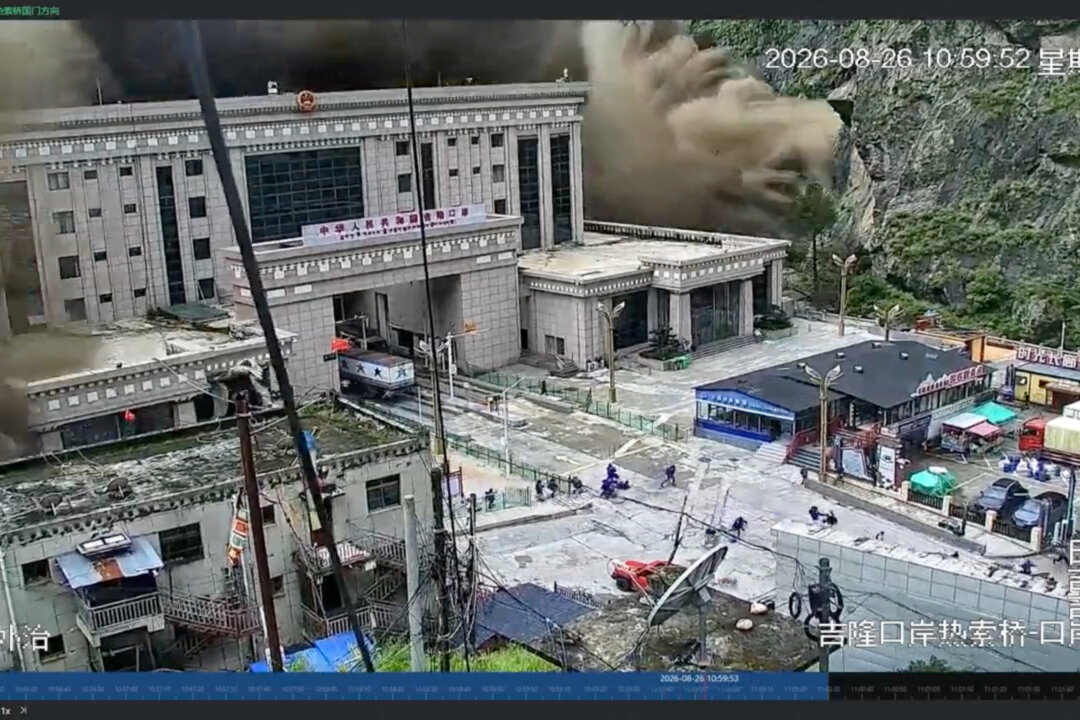
Chinese Scientists Flagged Glacial Flood Danger One Year Before Nepal Catastrophe
More than a year before the catastrophic flash flood devastated the China–Nepal...
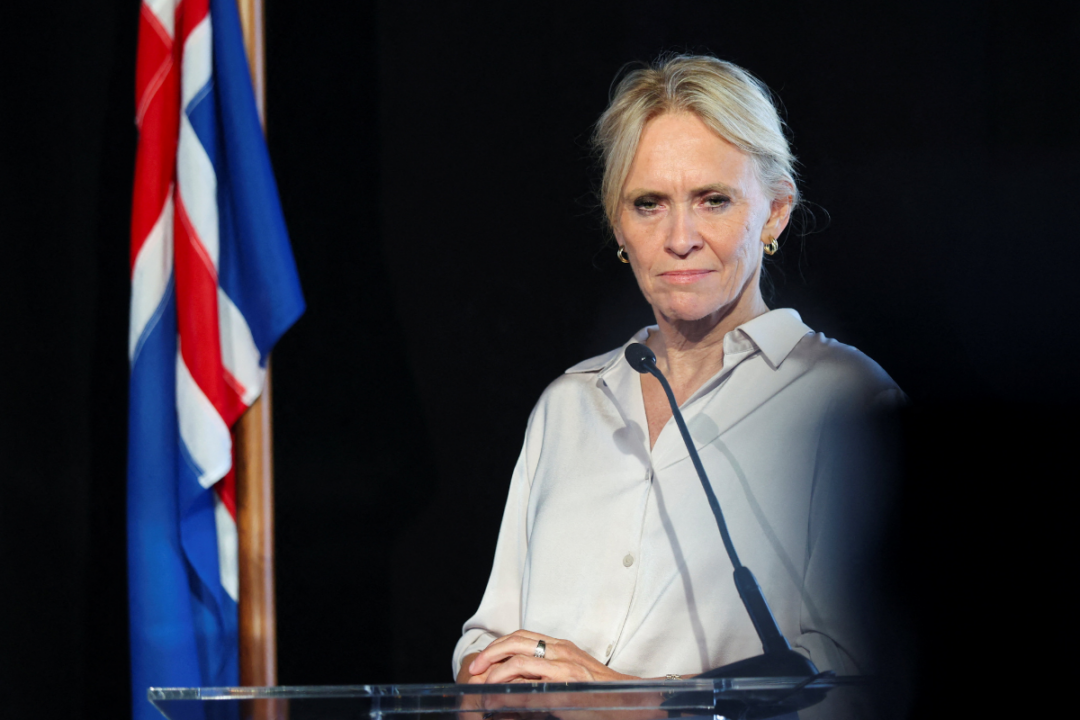
Iceland Focuses on Security Partnerships After Voters Reject Opening EU Membership Talks
Icelandic Minister for Foreign Affairs Thorgerdur Katrin Gunnarsdottir attends a press conference...

Italy, Spain Extend Tit-for-Tat Border Curbs After Ceuta Illegal Immigrant Crisis
Immigrants gather on a hill as they attempt crossing from the border...



Vaccine Maker Halts Trial on mRNA Cancer Shot
A pharmacist administers the Pfizer-BioNTech vaccine in Los Angeles, Calif., on October...
