Ontario Premier Doug Ford visited northern communities on July 18 as wildfires continued to spread across the region and First Nations leaders expressed “frustration with the bureaucratic processes” surrounding the province’s evacuation procedures.Rescue teams were engaged in 40 missions to rescue 300 campers and other individuals not in communities, Ford said while speaking at a news conference in Thunder Bay, Ont.The comments come three days after the Chiefs of Ontario issued a statement calling on the federal and provincial governments to provide coordinated emergency support for First Nations across northern Ontario whose communities were threatened by wildfires.First Nations leaders were holding meetings to discuss plans to declare states of emergencies and evacuate communities, it said.“During the discussions, Chiefs expressed frustration with the bureaucratic processes in place to access emergency response services and a lack of communication from government officials regarding practices in place to declare a state of emergency,” they wrote.The Namaygoosisagagun, also referred to as the Collins, and three other First Nations are under mandatory evacuation notice, according to a report by APTN.“I had time to run home and pack a bag and get to the beach where the boats were waiting,” a Collins community member said. “We literally had minutes to get on the boats and flee before it took our town.”The Whitesand First Nation, Lac des Mill Lacs First Nation, and Gakijiwanong Anishinaabe Nation were also ordered to evacuate.At the news conference, Ford said Ontario was battling 191 wildfires, 73 of which were out of control, he said, as he thanked the Ontario Provincial Police (OPP) and other rescue teams. The OPP are working with indigenous police forces and local Thunder Bay police on rescue operations.There have been 532 wildfires recorded in Ontario this year as of July 18, higher than the 362 fires recorded during the same period in 2025 and above the 333-fire 10-year average, according to data from the province.Ford urged community members and campers not to return to homes and camps, which would inhibit fire suppression efforts.“Right now, there are 155 fire crews and approximately 80 water bombers and helicopters … right across the north, with about 40 more aircraft ready to deploy where needed,” he said.“The incident room told me to send a message to the people out there. Do not, I repeat, do not go to your campsites. Do not go back to your homes. …When the water bombers go over and they see any citizens that aren’t theirs, they won’t drop the water. So, it’s critical that you move out of these areas.”Ford said the province would provide accommodation and food to those displaced by the fires. As of the morning of July 18, 10 communities had been evacuated, and three were still preparing or under warning for potential evacuation, he said.A street stands deserted as smoke from wildfires fills the night air in Thunder Bay, Ont., on July 17, 2026. The Canadian Press/Chris Young“What I’m understanding, the Dash 8s will go in the communities, load up 35 or so [people], bring them to Thunder Bay, and then from there they get onto the large planes to go to Toronto, Niagara Falls, or other cities,” he said.Responding to allegations that Whitesand did not receive provincial help while trying to protect infrastructure, Ontario Natural Resources Minister Mike Harris said the province has set up teams to help protect infrastructure.“As you can imagine, we’re spread pretty thin across the province right now, not just here in the Northwest, but also in the Northeast,” he said.“We’ve been working with multiple First Nations communities, the federal government, and also our folks on the ground.”Harris also fielded a question from a reporter about why the Collins First Nation wasn’t warned about the fire sooner.“The challenge in Collins is that fire actually started very, very close to the community, and given the certain weather circumstances that were in place at the time, it was actually moving at a rate of around 4 to 8 kilometres an hour towards the community,” he said.“It started only about 15 kilometres away. So, you can imagine how quickly that actually got on top of everyone.”Harris said the community made the decision to self-evacuate, which is “highly recommended” in such circumstances.Patty Hajdu, who is the federal minister responsible for the Federal Economic Development Agency for Northern Ontario, said the government would compensate First Nations communities who have been hosting members of other First Nations communities that were evacuated.“What I want to say to First Nations who are hosting evacuees across the province is that we will be there for you, and your expenses will be covered—and the department will work with each First Nation on those expenses,” she said.“I’d also say … to elected First Nations leaders, to keep your receipts, to keep your documentation to the degree that it’s possible, so that when all of that reconciliation of what’s been spent and what’s owed happens, it’s just a lot more efficient.”

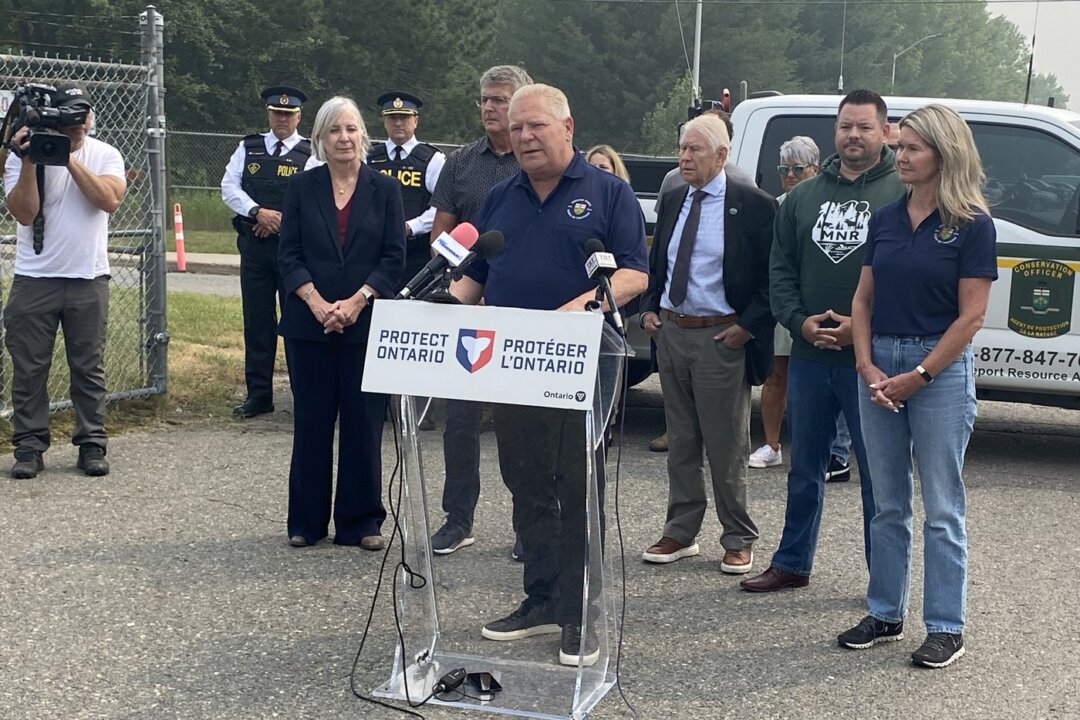
Premier Ford Visits Thunder Bay as Nearly 200 Wildfires Rage in Ontario








Related Articles

China NewsEuropeGlobalUK NewsWorld News
UK Must Be Ready for War in 1,000 Days, Says British Defense Secretary
British Defense Secretary Wes Streeting has said the country must be ready...

China NewsEuropeGlobalUK NewsUK Top NewsWorld News
UK Prime Minister Says He Agrees With Principle of Migration Reform
British Prime Minister Andy Burnham said on Oct. 26 that he agreed...

China NewsEuropeGlobalWorld News
Serbian President Concedes Election Defeat to Student-Led Coalition
Serbian President Aleksandar Vucic has conceded defeat in the Oct. 25 election...



Asia & PacificChina NewsEuropeInternational RelationsNational SecurityPolicies & ImpactsUSUS NewsUS-China RelationsWorld News
Japan Defense Academy Chief Calls for 3 Red Lines in Competition With China
Japan’s former top uniformed military officer has called for establishing three “red...
